
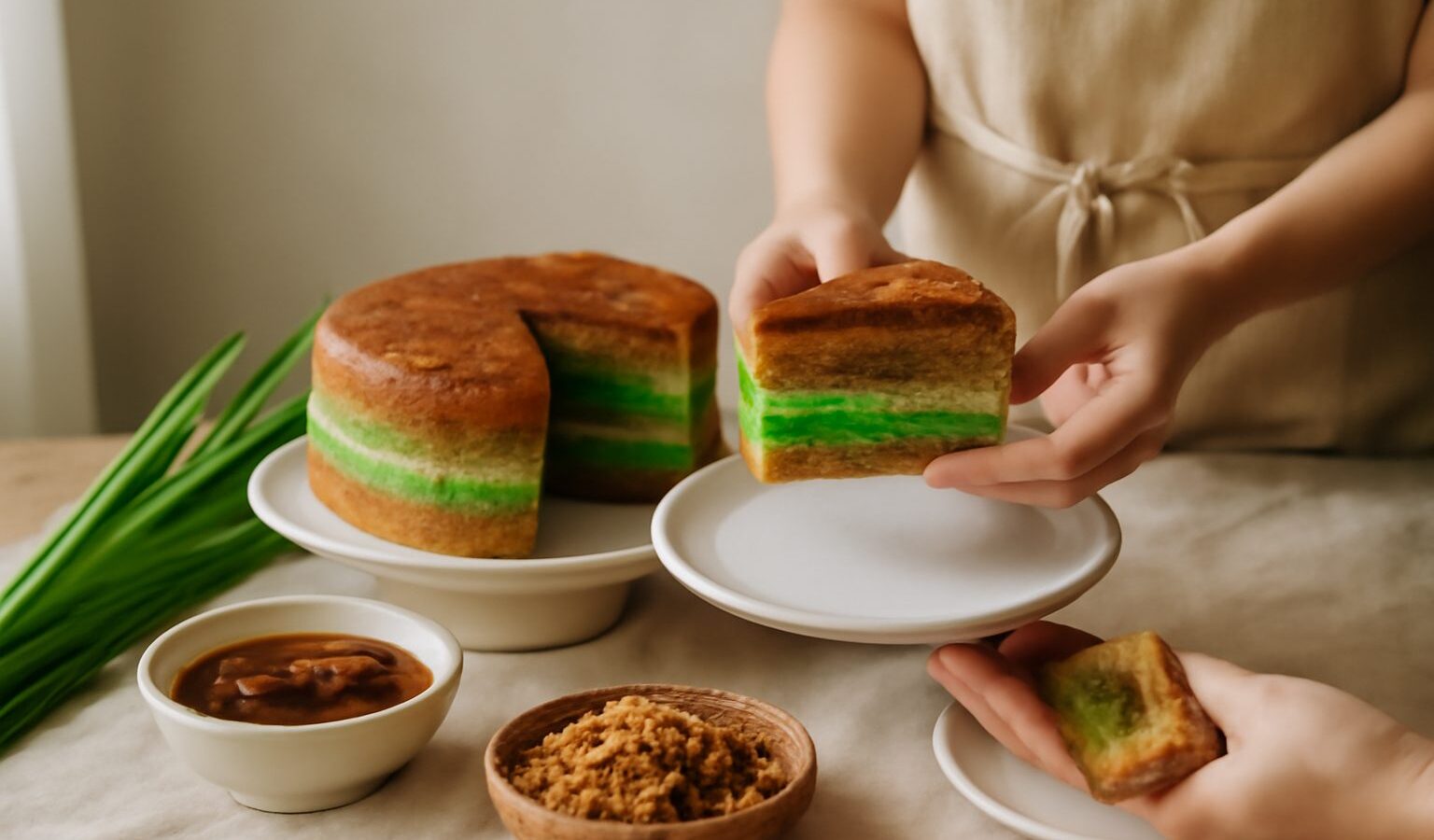
Pandan baking in Singapore is where home bakers get to make their cakes taste like home. Once you can bake a plain butter cake or a batch of cookies, the natural next step is to fold in the flavours we grew up with: the grassy vanilla-like fragrance of pandan, the smoky caramel of gula melaka, and the richness of coconut. These three ingredients turn an ordinary bake into something unmistakably local, and they are all sitting on the shelves of the wet market and supermarket waiting for you.
This guide shows you how to work these flavours into cakes, cookies and simple bakes: how to get colour and aroma from pandan, how to melt gula melaka into a usable syrup, and how coconut milk and cream change a batter. None of it is difficult, and the results smell incredible.
Getting the Most From Pandan
Pandan, the screwpine leaf, gives that green fragrance you know from kaya and chiffon cake. You can use it in three ways, each with trade-offs.
Fresh pandan leaves, sold in bundles at the wet market and most supermarkets, give the truest aroma. To make pandan juice, blend a handful of cut leaves with a little water and strain through a fine sieve or cloth. The juice adds fragrance and a gentle natural green, though the colour bakes out paler than you might expect. Some bakers let the juice settle and use the thick paste at the bottom for a stronger hit.
Pandan extract or paste, sold in small bottles, is the convenient option. It delivers strong colour and scent from just a few drops, but a heavy hand can taste artificial and turn a batter neon, so add it sparingly and build up. For a balanced result, many home bakers use fresh juice for flavour and a drop of extract for colour. Store fresh leaves wrapped in the fridge, where they keep for a week or so, or freeze them; in our humidity they yellow and wilt quickly on the counter.
Working With Gula Melaka
Gula melaka, the dark palm sugar sold in solid discs or cylinders, brings a deep, smoky caramel note that pairs beautifully with coconut and pandan. It is hard and will not simply stir into a batter, so you need to melt it first.
Chop or grate the block, then melt it gently in a small pan with a splash of water until it dissolves into a thick syrup. A knotted pandan leaf dropped in while it melts adds fragrance. Strain the syrup, as blocks can contain grit, and let it cool before adding to batters or drizzling over a finished bake. This syrup is the workhorse: swirl it through cake batter, brush it over warm cookies, or use it to replace some of the sugar in a recipe.
Because gula melaka is less sweet and more moist than white sugar, swapping it in changes texture as well as flavour, giving a softer, denser crumb. Start by replacing part of the sugar rather than all of it, then adjust to taste. Store the blocks in an airtight container, as they soften and attract ants in our humid heat.
Comparing Local Flavours in Your Bakes
Each of these ingredients behaves differently in the oven. This table helps you decide what to reach for.
| Ingredient | What it adds | How to use it | Watch out for |
|---|---|---|---|
| Pandan juice | Fresh aroma, gentle green | Blend and strain fresh leaves | Colour fades when baked |
| Pandan extract | Strong colour and scent | A few drops into batter | Too much tastes artificial |
| Gula melaka | Smoky caramel, moisture | Melt into a strained syrup | Grit in the block; softens in heat |
| Coconut milk | Richness, tender crumb | Replace some liquid or milk | Thicker than milk, adjust batter |
| Desiccated coconut | Texture and nutty flavour | Fold into dough or topping | Absorbs moisture, can dry a bake |
Mix and match, but change one element at a time so you learn how each affects your batter before combining them.
Easy Local-Flavour Bakes to Try
You do not need special recipes to start; you can flavour bakes you already know.
- Pandan butter cake: take your usual butter cake batter, replace the milk with pandan juice, and add a drop of extract for colour. Soft, fragrant, and pretty when sliced.
- Gula melaka cookies: stir cooled gula melaka syrup and a little desiccated coconut into a basic cookie dough for chewy, caramel-scented cookies.
- Coconut and gula melaka cake: use coconut milk in place of some liquid and swirl gula melaka syrup through the batter for a marbled, moist loaf.
- Pandan coconut muffins: fold pandan juice and desiccated coconut into a simple muffin batter for a quick breakfast bake.
Coconut milk, sold fresh at the wet market or in cans and packets at the supermarket, makes batters richer and more tender. Fresh coconut milk spoils fast in our heat, so refrigerate it and use it the same day, or open a can when you need it. If you like a coconut topping, toast desiccated coconut briefly in a dry pan until golden and fragrant, watching closely so it does not burn.
Storing and Buying Local Ingredients
Bakes made with coconut milk and fresh pandan juice carry more moisture, which is lovely for texture but means they spoil faster in our climate. Cool them fully on a rack, store in airtight containers, and keep anything with coconut or cream in the fridge, especially in the afternoon heat. These bakes freeze well, so portion and freeze extras, then thaw as needed. As always, if a bake smells sour or shows any mould, throw it out.
Sourcing is easy. Fresh pandan leaves, gula melaka blocks, and coconut, whether freshly pressed or canned, are staples at the wet market and stocked by most supermarkets, often near the other Asian baking ingredients. Baking-supply shops carry pandan paste and desiccated coconut in useful sizes. Buy gula melaka and coconut in amounts you will use soon, since both are happiest fresh and sealed against our humidity.
Bringing local flavours into your baking is one of the most rewarding steps a home baker can take. Your first pandan cake might come out paler than the vivid green you imagined, and that is completely fine, because the fragrance is what counts. Play with the balance of pandan, gula melaka and coconut, and you will soon have bakes that taste like Singapore.
Explore more
New to the oven? Build your foundation with our baking basics for complete beginners before adding local flavours. These ingredients shine in a simple base, so learn baking a simple cake from scratch and easy cookies to bake at home first. For no-oven local sweets that use the same flavours, see how to make traditional kueh at home.