

Moving to Singapore usually means buying a lot of things in a short time: bedding, a rice cooker, hangers, a fan, storage boxes, maybe a sofa. Online shopping is often the cheapest and least tiring way to do it, but the best online shopping deals are not always the ones with the biggest red percentage sign. As a newcomer you also need to know which platforms to trust, how the sale calendar works, and how long things really take to arrive at a new address.
This guide focuses on that setting-up-home stage: where to shop, how deals are structured, and what delivery looks like in practice.
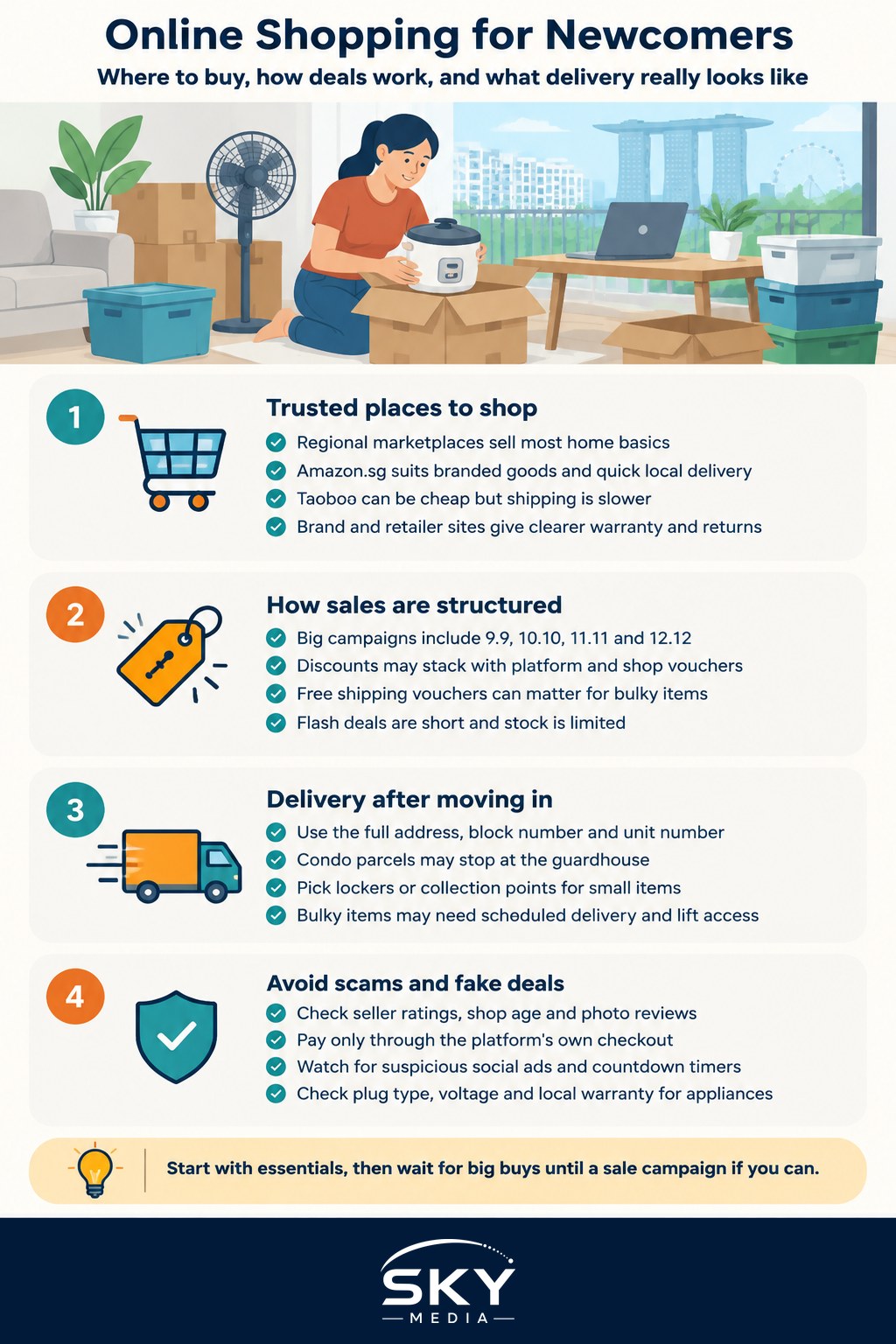
Trusted Platforms for Setting Up a New Home
Most households in Singapore use a mix of a few large marketplaces and a handful of direct retailer websites. The main types you will meet are:
- Regional marketplaces such as Shopee and Lazada. They carry almost everything, from household basics to small appliances, and run the biggest sale campaigns. Many listings come from third-party sellers, so quality varies a lot between shops.
- Amazon.sg, which is useful for branded goods and generally predictable delivery, especially on items fulfilled by Amazon itself.
- Overseas platforms such as Taobao, which can be very cheap for furniture and home items but involve longer shipping and more effort if something goes wrong.
- Retailer and brand websites, including furniture stores, electronics chains and supermarkets. Prices are not always the lowest, but warranty, returns and delivery are usually clearer.
If you want a deeper side-by-side look, our comparison of online shopping platforms in Singapore covers each one in more detail, and Shopee and Lazada vs Taobao helps if you are weighing local marketplaces against ordering from China.
Within a marketplace, look for official brand stores or “Mall” style sections for anything with a plug, a warranty or safety implications. Save the cheapest third-party listings for low-risk items such as hangers, storage boxes and kitchen utensils.
How Deal Formats Actually Work
Singapore’s online sales follow a fairly predictable rhythm. The big marketplaces run “double-date” campaigns, such as 9.9, 10.10, 11.11 and 12.12, plus mid-year and payday sales. Many brands and retailers also run their own year-end and festive promotions. If you arrive a few weeks before one of these, it can be worth buying only the essentials first and waiting for the rest.
The discount itself usually comes in layers:
- Listed discounts: the price shown already reduced by the seller.
- Platform vouchers: issued by the marketplace, often with a minimum spend.
- Shop vouchers: issued by the individual seller, which can sometimes be stacked with platform vouchers.
- Free shipping vouchers: important for bulky items where delivery fees can wipe out the saving.
- Coins, cashback and card offers: credited later, or tied to a particular payment method or bank card.
- Flash deals: short time slots with limited stock, often for popular appliances.
Because rules and caps change with every campaign, read the voucher terms before checking out. A common trap is buying extra items just to hit a minimum spend. The 11.11 shopping checklist is a good way to stay on budget during any big sale, not only November.
Comparing Your Options at a Glance
| Option | Best for | Typical delivery expectation | Watch out for |
|---|---|---|---|
| Local marketplace, official store | Small appliances, branded household goods | A few working days for local stock | Higher price than third-party sellers |
| Local marketplace, third-party seller | Low-risk basics like storage and kitchenware | Varies, some items ship from overseas | Inconsistent quality, slower dispute handling |
| Amazon.sg | Branded goods, books, everyday essentials | Often quick for items fulfilled locally | Third-party listings can ship from abroad |
| Overseas platform such as Taobao | Furniture, decor, bulk home items | Weeks rather than days, via a forwarder or consolidated shipping | Shipping costs, GST on imports, harder returns |
| Retailer or brand website | Mattresses, large furniture, major appliances | Scheduled delivery slots, sometimes with installation | Delivery fees and limited sale periods |
Delivery Expectations After a Move
Delivery is where newcomers most often get caught out. A few things to plan for:
- Your address must be complete. Singapore addresses rely on the unit number and the six-digit postal code. For HDB flats and condos, always include the block number and unit number in the format the building uses, or couriers may fail the delivery.
- Condo deliveries. Many condominiums require couriers to register at the guardhouse, and some do not let them go up to units. Check whether parcels are left at the guardhouse or whether you need to be home.
- Parcel lockers and collection points. If you work long hours, choose a locker or pickup point near home or the MRT station. This is often the fastest way to receive small items.
- Bulky items. Large furniture usually needs a scheduled slot, and lift access matters. Check whether the price includes delivery to your floor, assembly and disposal of packaging or old items.
- Overseas orders. Items shipped from abroad take longer and may attract GST under Singapore’s rules for imported goods. Customs and tax treatment can change, so check the current position on the Singapore Customs and IRAS websites before placing large overseas orders.
When you are still in temporary housing, think twice before ordering large items to a short-term address. Ordering small essentials now and scheduling furniture for your move-in date avoids paying for delivery twice.
Avoiding Fakes and Scams While Hunting for Deals
A deal that looks unusually good, especially on electronics, branded skincare or appliances, deserves a second look. Practical checks include:
- Look at the seller’s rating, how long the shop has been active, and recent reviews with photos.
- Stay inside the platform’s own chat and payment flow. Never pay a seller by bank transfer outside the app.
- Be wary of social media ads that link to unfamiliar shop websites with countdown timers and heavy discounts.
- For appliances, confirm the plug type and voltage suit Singapore, and that the warranty is valid locally.
Our guide to spotting fake online shops and marketplace scams goes through the warning signs in detail. If something does go wrong, raise it through the platform’s dispute or refund process quickly, as most have time limits.
A Simple Plan for Your First Month
To keep costs down without living out of a suitcase for weeks, it helps to buy in stages:
- Week one, essentials only. Bedding, towels, basic cookware, a fan or extension cords, cleaning supplies. Buy from official stores or sellers with strong reviews so you are not dealing with returns while settling in.
- Weeks two to three, compare and wishlist. Add bigger items to your cart or wishlist on several platforms. Note normal prices so you can tell whether a sale price is genuinely lower.
- Next sale campaign, the big buys. Use stacked vouchers and free shipping on appliances, furniture and storage once you know your space and measurements.
- Ongoing, groceries and household restocks. Supermarket apps and subscription options can save time for heavy items like rice, water and detergent.
Small Habits That Save the Most
- Check the final price at checkout, after shipping and vouchers, rather than the headline discount.
- Compare the same model number across platforms, not just similar-looking products.
- Keep receipts and order confirmations for warranty claims.
- Turn off saved cards on apps you rarely use to reduce impulse buys.
- Set a monthly budget for setting up home, and track spending against it.
With a little patience, most newcomers can furnish a flat comfortably by mixing trusted sellers for important items with sale-day bargains for the rest. The best deal is the one that arrives on time, works properly and does not need to be returned.
Frequently Asked Questions
Is it safe to buy from Taobao as a newcomer in Singapore? It can be safe for low-risk items if you check seller ratings, use the platform’s payment system and accept longer delivery. Returns are harder than with local stores, and GST may apply to imports. Start with a small order before committing to furniture.
How do I choose between a Mall-type store and a third-party seller? Pick official or Mall-type stores for appliances, electronics and anything with a warranty or safety concern. Third-party sellers are fine for simple, low-risk items such as hangers or storage boxes. Check recent reviews with photos before ordering either.
What should I do if an online order arrives damaged? Take clear photos and keep the packaging, then raise a refund or dispute through the platform’s own system quickly, as most have time limits. Avoid taking the conversation outside the app. For retailer websites, contact customer service with your order number.
Do I need to pay GST on things I order from overseas? It can apply to imported goods, depending on the value and how the item is shipped. Rules change, so check the current position on the Singapore Customs and IRAS websites before placing a large overseas order. Factor shipping into your price comparison.
How do I get a parcel delivered if nobody is home during the day? Choose a parcel locker or pickup point near your home or MRT station at checkout. Condo guardhouses may also hold parcels, so ask your management. For larger items, schedule a delivery slot when someone can receive it.