
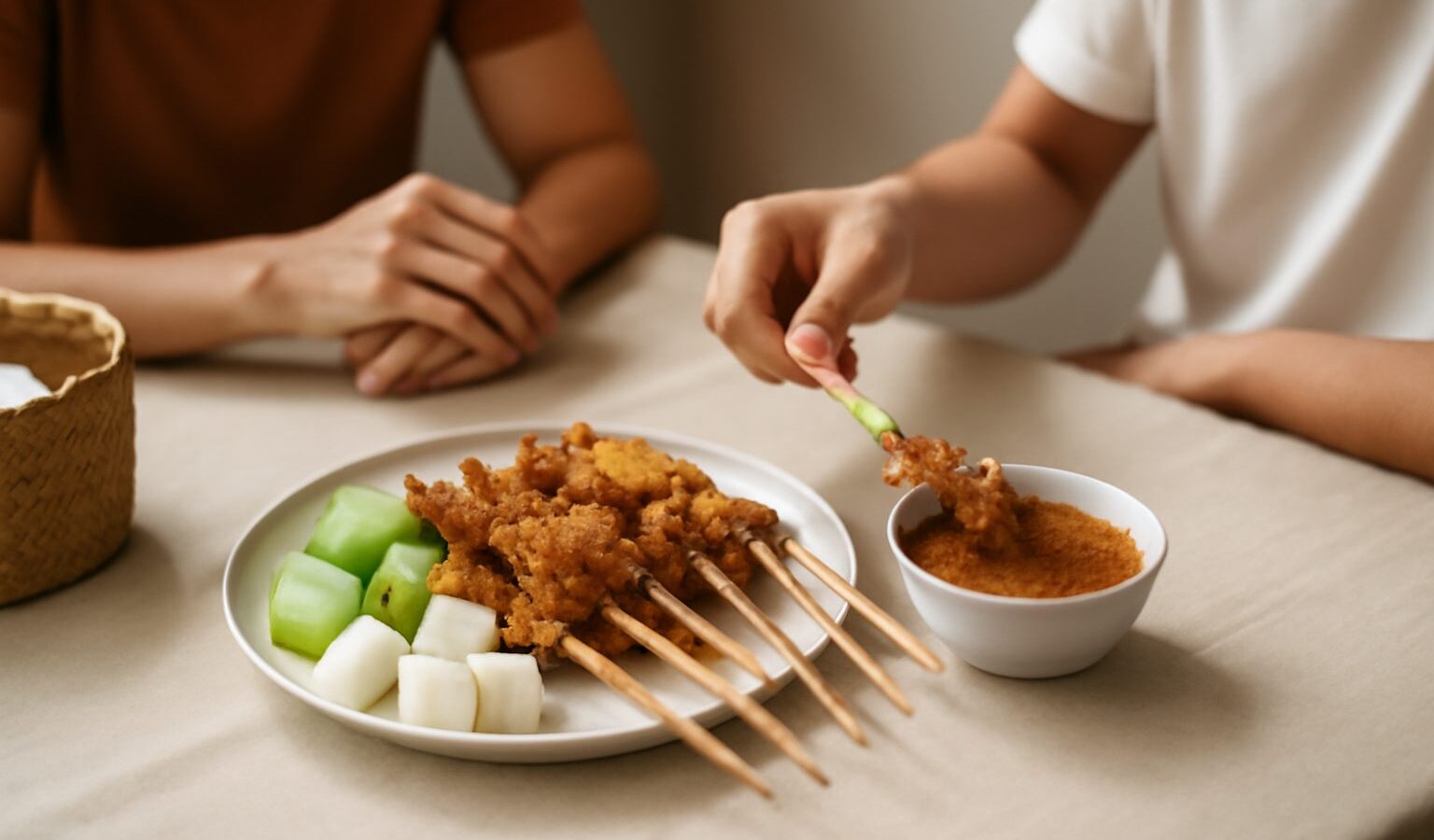
Few smells pull a crowd like satay grilling over charcoal, and the search for the best satay singapore has to offer is a happy one, usually conducted in the evening with a cold drink in hand. Satay is skewered, marinated meat cooked over glowing coals and served with a rich peanut sauce. Instead of ranking stalls, this guide helps you understand what makes great satay so you can find the one you love best.
Satay has deep roots in Malay and wider Southeast Asian cooking, and in Singapore it has become a beloved communal dish, ordered by the dozen and shared around a table. The basics are simple: small pieces of meat threaded onto skewers, marinated, grilled, and dipped. Everything good about satay lives in the details.
What Makes Great Satay
A great stick of satay balances smoke, spice, sweetness, and tenderness, and every part of the process contributes.
The marinade is the starting point. A good one blends turmeric, lemongrass, shallots, garlic, and other spices, giving the meat a fragrant, slightly sweet character before it ever touches the grill. The meat should be tender and juicy, not dry or stringy, which comes down to the cut, the marinade, and careful grilling.
The grilling itself is where skill shows. Satay is cooked over charcoal, fanned to keep the coals hot, and often brushed with oil or marinade so the edges caramelise. The best satay carries a light char and a whisper of smoke, with the meat cooked through but still moist. Watch for a cook who tends the skewers attentively, turning them so they cook evenly rather than burning.
Then there is the peanut sauce, which many people judge a stall by. A great sauce is thick, nutty, and balanced, with a gentle sweetness, a savoury base, and sometimes a little heat and sourness. It should coat the meat without being cloying. Alongside it you will usually get cucumber, raw onion, and cubes of compressed rice cake called ketupat, which cut through the richness.
Allergen note is important here: satay peanut sauce contains peanuts, a common and serious allergen, and marinades sometimes include other ingredients, so always ask if you or your companions have allergies.
Styles and How to Order
Satay comes in several types, and trying a mix is the best way to find your favourite.
The common choices are chicken, beef, and mutton, each with a slightly different texture and flavour. Chicken is tender and mild, beef is richer, and mutton is the most robust and gamey. Some stalls also offer other options, and there are pork satay stalls run by Chinese hawkers as well, though pork is not served at Malay or halal stalls. The sauce and sides tend to stay similar across styles, so you can order a spread and dip freely.
Ordering satay is sociable and easy. You typically order by the number of sticks and by type, for example ten chicken and ten mutton, and the sauce, cucumber, onion, and ketupat come alongside. Satay is meant to be shared, so a table of friends can happily work through several dozen sticks between them.
Where to Look and How to Spot a Good Stall
Satay is an evening favourite in Singapore, and the best experience is often at a stall grilling to order as the sun goes down.
Hawker centres across the island have satay stalls, and there are areas long associated with the dish where clusters of stalls set up in the evening, filling the air with charcoal smoke. Some of these open air satay streets have become part of the city’s food culture, though you should check current listings and reviews, since locations and hours shift over time.
To spot a good stall, follow your nose and your eyes. A stall with a lively charcoal grill, a cook fanning the coals, and skewers cooking fresh to order is far more promising than one where the satay sits pre grilled. A queue in the evening is a strong sign. Look for meat that chars nicely and stays juicy, and a peanut sauce that looks freshly made and generously thick.
In the end, the best satay is the one you find yourself craving. Taste across chicken, beef, and mutton, compare the sauces, and let your own palate decide. For a deeper look at the dish, read our dedicated satay guide for Singapore, and if you are building a night of grazing, our guide to hawker centres in Singapore will help you plan where to go.