
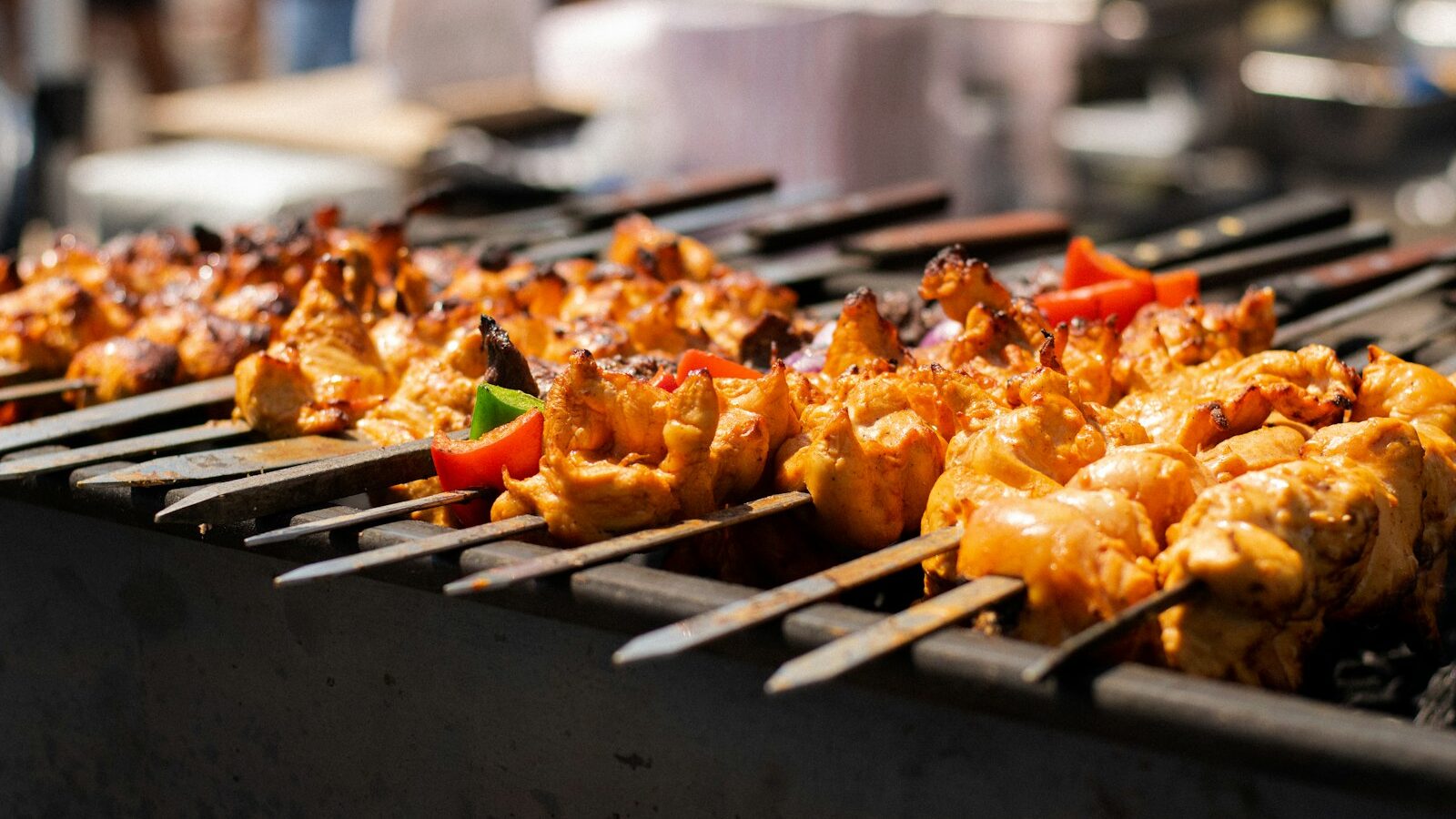
Few smells say “come and eat” quite like satay singapore style: skewers of marinated meat charring over glowing coals, fat dripping and hissing, a fan waving the smoke into the evening air. Satay is one of those dishes that locals grew up on and newcomers fall for fast. It is social, hands-on and built for sharing, and once you understand how it works you can order like you have been doing it for years.
This guide covers what satay actually is, the meats you will meet, the accompaniments on the plate, that famous peanut sauce, a few halal considerations, and where the culture is at its liveliest.
What satay actually is
At its simplest, satay is bite-sized pieces of meat threaded onto thin skewers, marinated, then grilled over charcoal. The marinade usually leans on turmeric, lemongrass, garlic, shallots and a touch of sugar, which is why the meat takes on that golden colour and slightly sweet, smoky edge as it cooks. The charcoal is not a small detail. That live-fire char is a big part of what makes a good stick taste the way it does.
Satay has deep roots across the Malay world and is beloved across Malaysia, Indonesia and Singapore. In Singapore you will find it at hawker centres, food courts, night markets and dedicated satay stalls, and it sits comfortably alongside the rest of the island’s much-loved street food.
The meats
Satay is usually ordered by the type of meat, and the classics are simple to remember.
- Chicken: the most popular and the most approachable, tender and mildly sweet.
- Mutton: richer and more robust, with a deeper flavour that many regulars swear by. Chicken mutton satay ordered together is a common way to get the best of both.
- Beef: hearty and satisfying, with a good chew.
- Pork: available at non-halal stalls only, prized for its fat and sweetness.
A quick note worth understanding early: halal stalls will not serve pork, while stalls that do serve pork are not halal. This matters for how you choose where to eat, and we cover it more below.
What comes on the plate
Satay is rarely eaten on its own. The classic accompaniments round out the meal and cut through the richness of the grilled meat.
- Ketupat: compressed rice cakes, traditionally steamed in woven palm-leaf pouches and cut into cubes. They are firm, mild and perfect for soaking up sauce.
- Cucumber: cool, crisp wedges that refresh the palate between smoky mouthfuls.
- Raw onion: sharp little chunks that add bite and contrast.
Together they turn a handful of skewers into something that feels like a proper meal rather than a snack, though plenty of people happily treat satay as a snack too.
The peanut sauce
If the charcoal is the heart of satay, the peanut sauce is its soul. This thick, warm dip is built from ground peanuts loosened into a sauce, seasoned and spiced, and often carrying a gentle sweetness with a chilli kick. Some versions fold in a little pineapple or tamarind for a fruity, tangy lift; others lean savoury and nutty. Each stall guards its own recipe, and regulars often pick a favourite stall on the strength of its sauce alone.
The way to eat it is straightforward: pull the meat off the skewer, or dip the whole stick, and let the peanut sauce do its work. Do not be shy about asking for more sauce if you run low, and use the ketupat to mop up whatever is left.
A good rule of thumb: judge a satay stall by three things, the char on the meat, the tenderness of each bite, and the peanut sauce. Get all three right and you have found a keeper.
Halal considerations
Satay is a genuinely welcoming dish for a wide range of diners, but it pays to know how halal works in practice.
- Many satay stalls in Singapore are Muslim-owned and halal, serving chicken, mutton and beef but never pork.
- Stalls that offer pork satay are, by definition, not halal, and they may cook everything on shared equipment.
- If halal food matters to you, look for the certification or ask the stall directly before ordering. Vendors are used to the question and will tell you plainly.
As a general guide, if you stick to chicken, mutton or beef at a halal-certified stall you are on safe ground. When in doubt, ask, and treat certification as the thing to confirm rather than assume.
Where satay culture thrives
Satay is everywhere in Singapore, but a few settings show it off best. Hawker centres and food courts across the island almost always have a satay stall, and night markets are another reliable bet, especially when the grills fire up in the evening.
The most famous home of the dish is Satay Street. In the evenings, a stretch near Lau Pa Sat is closed to traffic and given over to satay hawkers who set up their grills roadside, sending clouds of fragrant smoke down the street while diners sit at communal tables. This Lau Pa Sat satay street scene is a genuine institution, part meal and part atmosphere, and it is one of the easiest ways for a newcomer to experience satay the way locals do. Beyond this well-known spot, trust your nose: the smell of charcoal and grilling meat will usually lead you somewhere good.
How to order by the stick
Satay is priced and ordered per skewer, which is what makes it so easy to share.
- Choose your meats. Call out what you want, for example chicken and mutton, or a mix across the table.
- Order by the stick. You typically ask for a number of sticks, often in batches of ten, so a group might order twenty or thirty at a time.
- Add ketupat. Order rice cakes separately if you want them, usually by the portion.
- Wait for the grill. Fresh satay is grilled to order, so give it a few minutes and let it arrive hot.
- Dip and enjoy. Peanut sauce, cucumber and onion come alongside. Order more sticks as you go, because you almost always will.
Quick tips
- Order in rounds rather than all at once so every stick lands hot off the coals.
- Ten sticks per person is a comfortable starting point for a hungry eater, less if you are grazing.
- Ask for extra peanut sauce early rather than late.
- If halal matters, confirm before you order, not after.
- Bring cash. Smaller stalls and roadside setups often prefer it.
Satay rewards a relaxed, unhurried approach. Grab a table, order a first round, and settle in as the plates of skewers keep coming. It is street food at its most sociable, and it tastes even better shared.
Explore more: Must-try hawker food in Singapore · A guide to halal food in Singapore