

The months before a wedding are full of fittings, vendor calls and family negotiations, so it is no surprise that many couples reach for a drastic diet in the final weeks. It rarely ends well. A sensible bridal fitness plan, started three to six months out and shared between both partners, does far more for how you look, feel and cope on the day than any last-minute starvation.
This guide sets out a realistic phased plan for couples, covering training, food, sleep and the practical Singapore details (heat, hawker meals, long workdays) that make or break it. It is general information, not medical or dietetic advice. If you have a health condition, are pregnant, or have a history of disordered eating, speak to your doctor or a registered dietitian before changing how you eat or exercise.
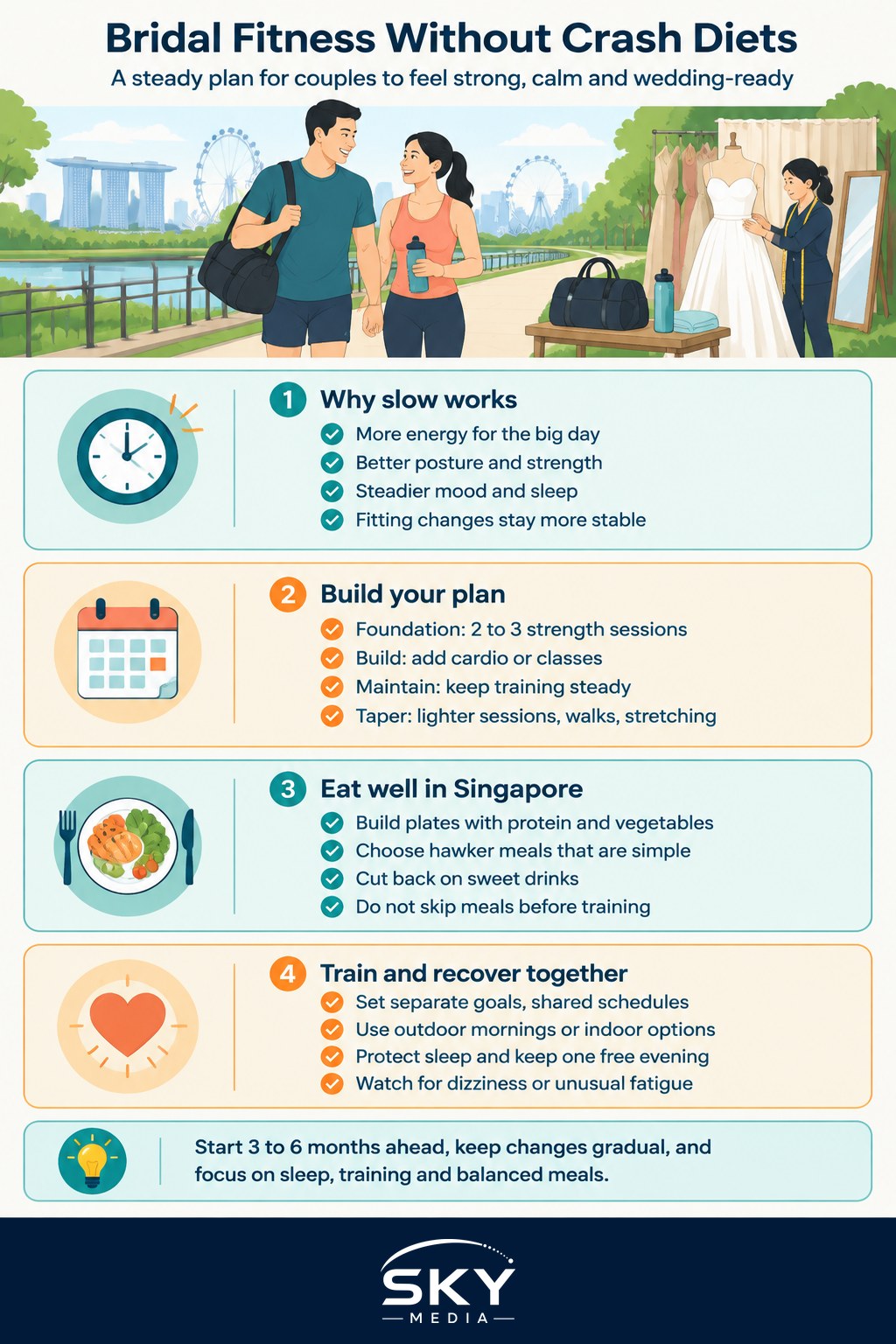
Why Crash Diets Backfire Before a Wedding
Very low calorie diets and extreme cutting tend to leave people tired, irritable and short of focus, which is the opposite of what you need during wedding planning. Rapid weight changes can also make gown and suit alterations harder to get right, since your fitter needs a stable shape to work with. Many couples who crash diet find the weight returns quickly after the honeymoon, sometimes with interest.
A slower plan aims for different goals:
- More energy to handle a long wedding day, from the morning tea ceremony or solemnisation through to the dinner.
- Better posture and strength, which show up in photos far more than a number on the scale.
- Steadier mood and sleep, so the stress of planning does not spill into the relationship.
- Habits you keep, so the work carries into married life.
Your 3 to 6 Month Bridal Fitness Plan, Phase by Phase
The plan below assumes a six-month runway. With three months, compress the first two phases and keep the final phase unchanged. Adjust the intensity to your current fitness: a complete beginner should start gently and build.
| Phase | Timing before wedding | Training focus | Food focus |
|---|---|---|---|
| Foundation | 6 to 4 months | Build a routine: 2 to 3 strength sessions plus regular walking | Notice patterns, add vegetables and protein to meals you already eat |
| Build | 4 to 2 months | Progress strength, add 1 to 2 cardio or class sessions | Plan weekday lunches and dinners, cut back on sugary drinks |
| Maintain | 2 months to 2 weeks | Keep strength steady, focus on posture and mobility | Stay consistent, no new extreme rules |
| Taper | Final 2 weeks | Lighter sessions, walks, stretching | Familiar foods, steady hydration, avoid trying anything new |
Foundation (6 to 4 months out)
The goal here is simply showing up. Pick two or three fixed slots a week and protect them like vendor meetings. A full-body strength session of squats or sit-to-stands, a push (push-ups against a wall or bench), a pull (rows with a band or machine), a hinge (such as a hip bridge or deadlift variation) and a carry is enough. Add brisk walking on the other days, whether around your estate park connector or on the way home from the MRT.
Build (4 to 2 months out)
Gradually add a little weight or a few more repetitions each week. This is the phase to add one or two sessions of something you enjoy for cardio: swimming, cycling, a dance class or a run. Group classes can help couples stay accountable together. If you want help structuring sessions, our guide to using AI for fitness and workout plans explains how to draft a plan and where to be cautious.
Maintain (2 months to 2 weeks out)
This is when gown and suit fittings get serious. Keep training steady rather than pushing for big changes, so your measurements stay stable. Shift attention to posture work (upper back, shoulders and core) and mobility, which helps you stand tall through hours of photos. Our bridal gown fittings and alterations timeline shows when your measurements matter most.
Taper (final 2 weeks)
Do not start a new class, a new supplement or a new diet now. Keep sessions light, prioritise sleep and stretch out the tension from planning. A gentle walk the morning of the wedding can settle nerves.
Eating Well in Singapore Without Extreme Rules
You do not need special meal plans or expensive products. The aim is regular, satisfying meals that support training.
- Build plates around protein and vegetables. At hawker centres, options like fish soup, yong tau foo with clear soup, chicken rice with extra vegetables, or economy rice with more vegetable dishes are easy wins.
- Watch the drinks. Sweetened kopi, teh and bubble tea add up quickly. Asking for less sugar or no sugar is a simple swap.
- Plan workday lunches. Long office days are where most plans fall apart. Decide on a few go-to options near work.
- Do not skip meals before training. It often leads to overeating later and low-energy sessions.
- Keep alcohol modest, especially in the final month, as it affects sleep and skin.
Avoid cutting out entire food groups unless a doctor has told you to. If you want personalised targets, a registered dietitian is the right person to ask, and the HealthHub website has general guidance on balanced eating.
Training as a Couple: Making It Work for Both of You
Grooms often get left out of wedding fitness advice, but training together has real advantages. You share the motivation, cover for each other on busy weeks, and turn a stressful planning period into time spent together.
Some tips for couples:
- Set separate goals, shared schedules. One partner may want strength, the other stamina. You can still train at the same time.
- Make one session a week fun. Hiking, badminton, a dance lesson for your first dance, or a swim all count.
- Do not compare progress. Bodies respond differently to the same plan.
- Agree on food at home. If one person cooks, plan meals that work for both of you rather than cooking twice.
Beating the Heat, Sleep Debt and Wedding Stress
Singapore conditions shape what is realistic. Train outdoors early in the morning or in the evening, carry water, and switch to indoor options on very hot or hazy days. Watch for dizziness, nausea or unusual fatigue and stop if you feel unwell.
Sleep is the most underrated part of any bridal fitness plan. Late-night planning calls, spreadsheet sessions and pre-wedding gatherings all eat into it. Aim for a consistent bedtime, keep screens out of the bedroom where possible, and treat one evening a week as wedding-free.
Stress also shows up physically. If planning is causing frequent arguments, persistent low mood or trouble sleeping, it is worth speaking to someone, whether a counsellor, your doctor or a trusted friend.
Signs Your Plan Is Working (That Are Not the Scale)
Measure progress in ways that matter on the day:
- You climb stairs without getting winded.
- Your posture in photos looks taller and more relaxed.
- You lift a little more or move with more control than when you started.
- You sleep better and feel calmer during planning.
- Your gown or suit fits comfortably at each fitting, without big changes.
A wedding is one day, but the habits you build in the months before can last for years. Start early, move consistently, eat well, and arrive at your wedding rested and ready to enjoy it.
Explore more: Bridal Gown Fittings and Alterations: A Timeline · Using AI for Fitness and Workout Plans · Financing Your Wedding Without Debt in Singapore