
Finding the gown is only half the job. Almost every bride needs some wedding dress alterations before the big day, whether it is a hem taken up for her shoes, a bodice nipped in for a secure fit, or a bustle added so the train can be lifted for the reception. Planned well, fittings are calm and even enjoyable. Left too late, they become a source of stress in the busiest weeks of wedding planning.
This guide sets out a realistic fitting timeline, explains what to bring to each appointment, and covers the factors that affect alteration costs in Singapore. Every bridal studio, tailor and gown is different, so use this as a framework and agree the details with whoever is doing your alterations.
Why Alterations Matter, Even for “Perfect” Gowns
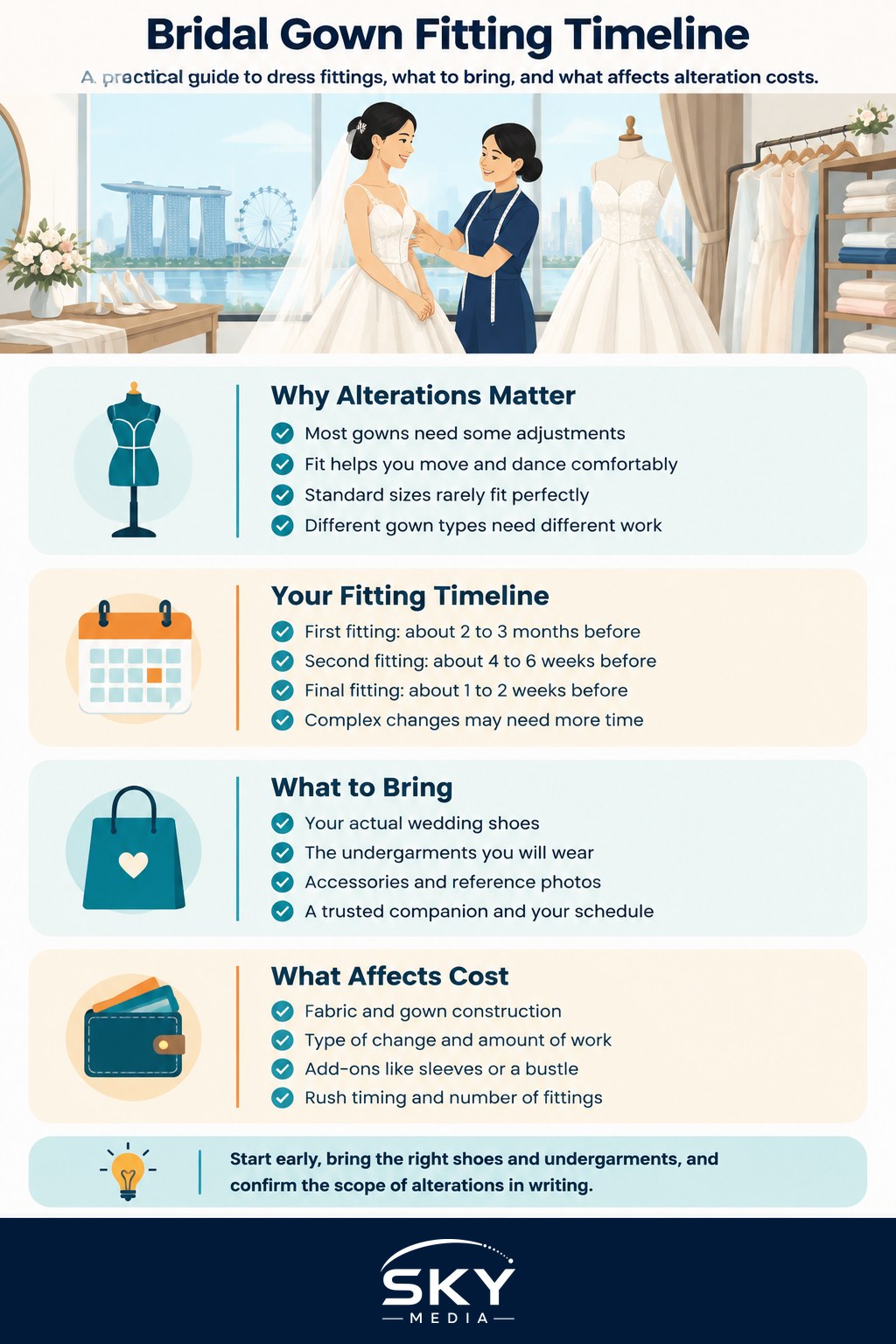
Bridal gowns are usually made or ordered to a standard size chart, and very few bodies match a size chart exactly. A gown that fits beautifully at the waist may be loose at the bust or too long at the hem. Alterations bring the dress to your shape, so you can move, sit, dance and hug relatives without adjusting it all day.
How much work is needed depends on how you got the gown:
- Made-to-measure or custom gowns are built around your measurements, so alterations tend to be refinements rather than major changes.
- Ordered gowns from a bridal boutique arrive in the nearest standard size and usually need fitting adjustments.
- Off-the-rack, sample or pre-loved gowns often need more work, because they were made for someone else.
- Rental gowns from bridal studios are commonly adjusted temporarily, for example with pinning, lacing or removable tucks, since the gown must be returned. Our comparison of renting vs buying a wedding gown covers the trade-offs.
A Typical Fitting Timeline
Most brides have two to three fittings, sometimes more for complex gowns or significant changes. Timings below are common guidelines, not fixed rules. Ask your bridal studio or tailor what they recommend for your gown.
| Fitting | Typical timing before the wedding | What usually happens |
|---|---|---|
| First fitting | About two to three months | Gown is pinned to your shape, hem length is set with your shoes, major changes are agreed |
| Second fitting | About four to six weeks | Main alterations are checked, fine adjustments made, bustle or straps tested |
| Final fitting | About one to two weeks | Last check with full outfit, practise bustling and walking, confirm pickup or delivery |
If you are working to a shorter engagement or ordered a gown late, tell the studio at the outset. Many can compress the schedule, but complex changes such as reshaping a bodice or reworking beadwork need time, and rush work may cost more. For the bigger picture, see our wedding planning timeline for Singapore.
What happens at the first fitting
This is the most important appointment. The seamstress will pin the gown so it sits correctly at the bust, waist and hips, and set the hem to the height of your wedding shoes. It is the time to raise anything you want changed, such as adding straps or sleeves, adjusting the neckline, or removing a feature you are unsure about. Be clear and specific. Photos of the look you want help.
What happens at the second fitting
Here you see the alterations sewn in rather than pinned. Walk, sit, raise your arms and do a few dance steps. The bodice should feel secure without digging in, and you should breathe and eat comfortably. If the gown has a train, the bustle (the hooks, buttons or ribbons that lift the train for dancing) is often fitted now.
What happens at the final fitting
The gown should be essentially finished. Wear your full outfit and check everything together. Bring the person who will help you dress on the day, often your mother, a sister or a bridesmaid, so they can learn how to fasten the gown and bustle the train.
What to Bring to Every Fitting
Bringing the right items makes each fitting accurate. A hem set with the wrong shoes, or a bodice fitted over the wrong bra, can mean extra appointments.
- Your actual wedding shoes, or shoes of exactly the same heel height if they have not arrived.
- The undergarments you plan to wear, such as a strapless bra, bodysuit, shapewear or petticoat.
- Key accessories, such as a belt, veil, headpiece or statement jewellery, especially for the final fitting.
- Reference photos of the gown details or adjustments you want.
- A trusted companion, ideally the same person each time, who will help you on the day.
- Your schedule for the day, so the seamstress knows if you will change outfits, for example from a church or ROM (Registry of Marriages) ceremony to a dinner banquet.
What Affects the Cost of Wedding Dress Alterations
Alteration pricing in Singapore varies widely between bridal studios, independent tailors and gown boutiques, so it is worth asking for a written quote. Costs are usually driven by:
- Fabric and construction. Lace, beading, layered tulle and structured bodices take more time than plain satin.
- The type of change. A simple hem on one layer is quicker than hemming a multi-layer skirt with lace edging. Taking in seams is usually simpler than letting them out, which depends on how much seam allowance exists.
- Additions. New straps, sleeves, a bustle or cups sewn into the bodice are often priced separately.
- Number of fittings and rush timing. Extra appointments or a tight deadline may add to the bill.
- Whether alterations are included. Some packages, especially bridal studio bundles, include basic adjustments. Check exactly what “included” covers.
Before agreeing, ask for the scope in writing: which changes are covered, how many fittings, and what happens if your measurements change before the wedding.
Common Fitting Mistakes and How to Avoid Them
- Starting too late. Leave a buffer for delays, especially if the gown is shipped from overseas. If yours is, our guide to sourcing your wedding dress overseas has more on timing.
- Planning big body changes after the first fitting. If you expect your weight or shape to change, tell the seamstress so she can plan. Sudden changes close to the date can be hard to accommodate.
- Skipping the movement test. A gown that looks perfect standing still may slip when you dance or bow during a tea ceremony.
- Forgetting Singapore’s heat. Outdoor photos and humid venues can make heavy, tightly fitted gowns uncomfortable. Discuss breathable linings or lighter layers if needed.
- Not planning gown care. Agree who collects the gown, how it will be stored before the day, and who will steam it.
After the Wedding
Once the celebrations are over, think about what happens to the gown. A purchased dress can be cleaned and stored properly, or even altered again into something you will wear later. Rental gowns go back to the studio, so check the return deadline and any cleaning terms. Our guide to preserving your wedding dress covers cleaning and storage in Singapore’s humid climate.
Further reading: How to Sell Your Wedding Gown After the Wedding in Singapore · Fresh vs Preserved Bridal Bouquets in Singapore · Bridal Fitness: Getting Wedding-Ready Without Crash Dieting