
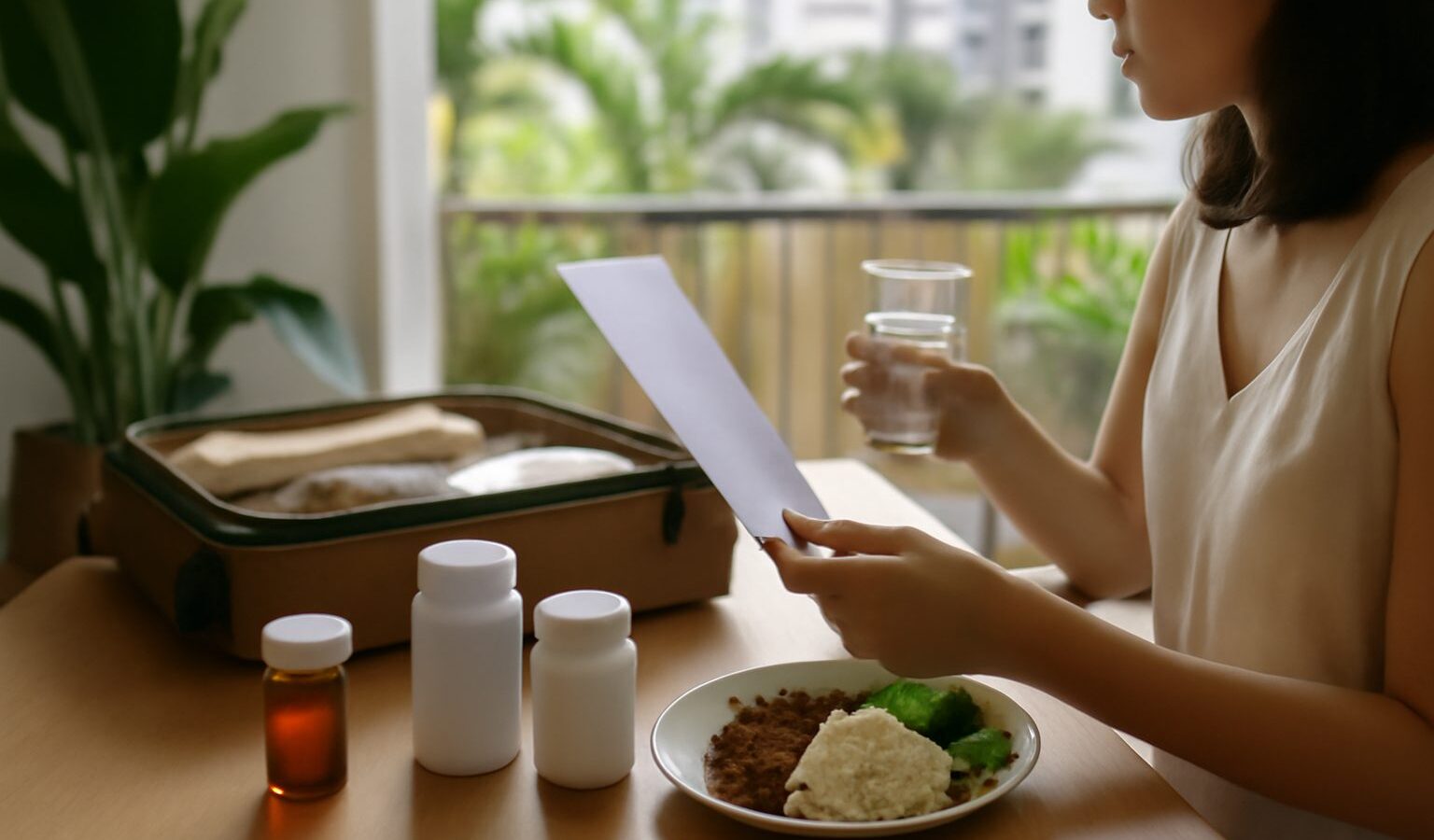
If you are relocating, one of the first practical questions is whether you can bring medicine to Singapore, and how much. Many newcomers take regular medication for blood pressure, diabetes, thyroid conditions, allergies, mental health or contraception, and want enough supply to cover the first few weeks while they register with a local doctor.
Singapore allows travellers to bring in medicine for their own personal use, but the rules are strict for certain categories, and some medicines that are ordinary elsewhere are controlled here. This guide explains how the system generally works so you can prepare your documents before you fly. It is general information, not legal or medical advice. Requirements can change, so always confirm the current rules with the Health Sciences Authority (HSA) before you travel.
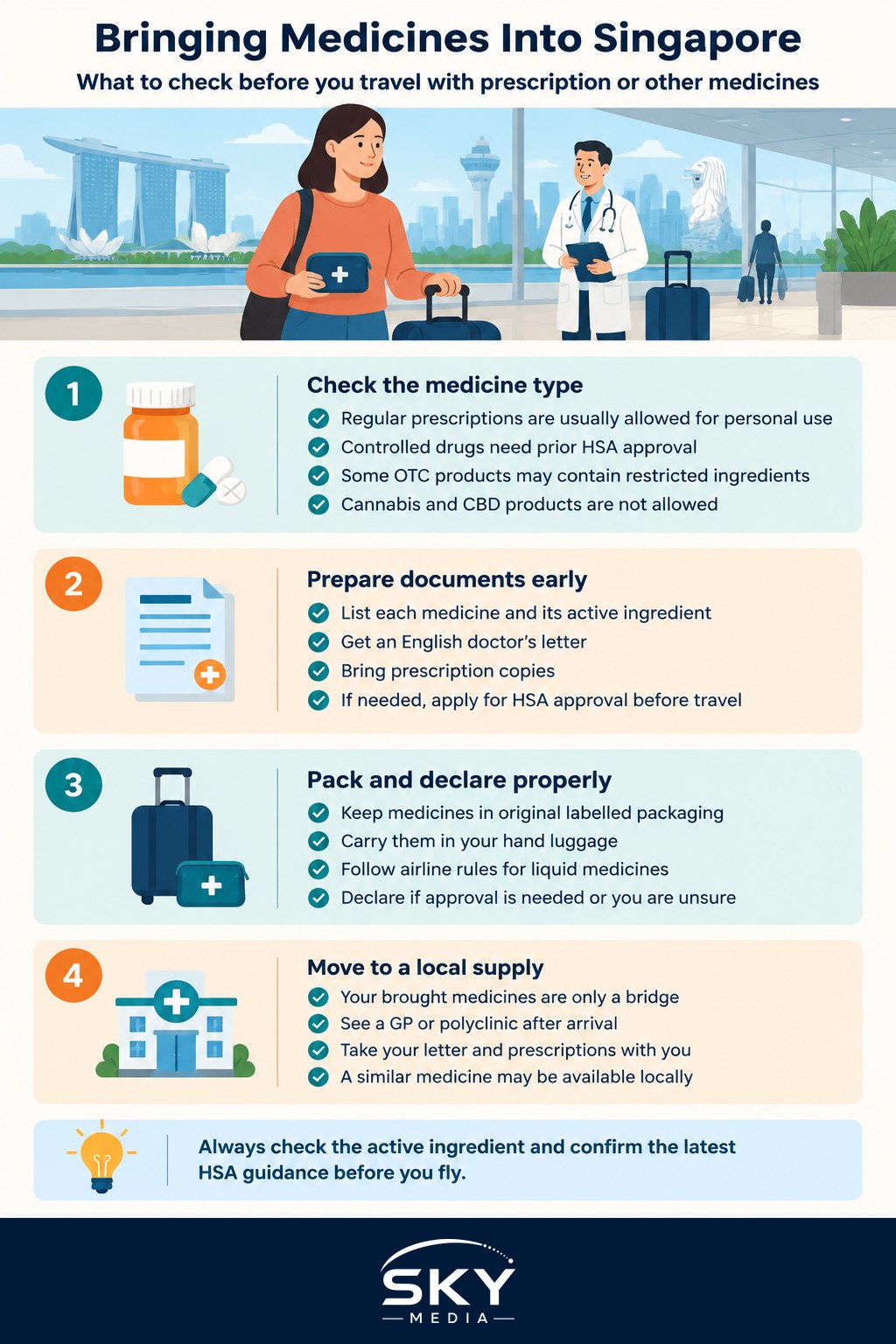
Who Sets the Rules
Two agencies matter most.
- Health Sciences Authority (HSA). HSA regulates medicines and health products in Singapore, including what individuals may bring in for personal use. Its website has a dedicated section on bringing personal medication into Singapore, and that is the most important page to read.
- Immigration & Checkpoints Authority (ICA) and Singapore Customs. Officers at airports, sea ports and land checkpoints may check your luggage. If you are carrying items that must be declared, you will be expected to declare them on arrival.
Singapore’s drug laws are serious, and some substances are prohibited outright. Do not assume that because a medicine is legal or sold over the counter in your home country, it is fine to bring here.
Ordinary Medicines Versus Controlled Medicines
The key distinction is whether your medicine is a regular prescription medicine or falls into a controlled category.
| Type of medicine | Common examples (vary by product) | What usually applies | What to prepare |
|---|---|---|---|
| Regular prescription medicines | Many blood pressure, cholesterol, diabetes, thyroid and asthma medicines | Generally allowed for personal use within a limited supply | Original packaging, prescription or doctor’s letter |
| Controlled drugs and psychotropic substances | Some strong painkillers, sleeping pills, anxiety medicines, ADHD medicines and certain cough medicines | Usually require prior HSA approval before you arrive | HSA approval, doctor’s letter, original packaging |
| Over-the-counter and supplements | Cold medicines, vitamins, traditional remedies | Some are fine, some contain restricted ingredients | Check ingredient lists against HSA guidance |
| Prohibited substances | Cannabis and products derived from it, including CBD products | Not allowed | Do not bring |
The exact list of controlled and psychotropic substances is set by law and HSA guidance, not by brand name. A cold medicine or painkiller you buy freely abroad may contain an ingredient that is controlled in Singapore. Look up the active ingredient, not just the product name.
For mainland Chinese newcomers, our article on medicines you cannot bring into Singapore from China covers common products that cause problems at checkpoints.
Steps to Take Before You Travel
Start at least a few weeks before your move, because some steps involve your doctor and an online application.
- List every medicine you take. Include the brand name, the active ingredient, the strength and how often you take it. Do this for every family member travelling with you.
- Check each active ingredient against HSA guidance. HSA’s personal medication pages explain which categories need approval and how much supply is allowed for personal use.
- Apply for HSA approval if needed. If any medicine is a controlled drug or psychotropic substance, apply through the process HSA describes before you travel. Allow time for processing, and keep a copy of the approval with you.
- Get a doctor’s letter. Ask your current doctor for a letter in English stating your name, the medical condition being treated, the medicine name and active ingredient, the dosage and the supply you are carrying. A letter on the clinic’s letterhead with contact details is more helpful at a checkpoint.
- Get your prescription copies. Bring a copy of the prescription as well as the letter.
- Plan your supply. Bring only what you need for personal use within the permitted limit. Your longer-term supply should come from a doctor in Singapore.
Do not assume a translation app will do. If your documents are not in English, consider getting a certified translation.
Packing and Declaring Medicines on Arrival
How you pack makes checkpoint checks quicker and avoids misunderstandings.
- Keep medicines in their original packaging with the pharmacy label showing your name. Loose pills in an unlabelled box are harder to verify.
- Carry them in your hand luggage, together with the doctor’s letter, prescription and any HSA approval. Checked bags can be delayed.
- Follow airline liquid rules for liquid medicines, and carry a note for medical liquids above the usual limits.
- Declare when required. If your medicine requires approval or you are unsure whether it should be declared, use the red channel or approach a checkpoint officer and show your documents. Being upfront is always better than having medicines discovered.
Injectable medicines, such as insulin, and medical devices like needles should also be packed with supporting documents.
Sending Medicines by Post or Courier
Some people ask family to post medicines after they arrive. Importing medicines through mail or courier is treated differently from carrying them in your luggage, and may need separate approval or be refused. Parcels can be held. Check HSA’s guidance before asking anyone to send medicine to you. In most cases, it is simpler and safer to see a local doctor for an equivalent prescription.
Switching to a Local Supply
Your imported supply is a bridge, not a long-term solution. Once you arrive, register with a general practitioner (GP) clinic or a polyclinic and bring your doctor’s letter and prescription so the new doctor can review your treatment. The same brand may not be available here, but an equivalent medicine with the same active ingredient often is. The doctor decides what is suitable.
Our guides on how to refill long-term medicines after moving to Singapore and repeat prescriptions and refilling medication explain how ongoing prescriptions, clinic visits and pharmacy collection work.
A Quick Pre-Departure Checklist
- Every medicine listed with its active ingredient.
- Each ingredient checked on the HSA website.
- HSA approval obtained for any controlled or psychotropic medicine.
- An English doctor’s letter and prescription copies.
- Medicines in original, labelled packaging in your hand luggage.
- A plan to see a local doctor within your supply period.
Taking these steps before your move means you can arrive with peace of mind and keep your treatment uninterrupted while you settle in. When in doubt about any specific medicine, contact HSA directly and speak with your doctor.
Frequently Asked Questions
Can I bring vitamins or traditional Chinese medicine into Singapore? Some are fine and some contain restricted ingredients, so do not assume. Check the full ingredient list against HSA guidance before you pack, and keep products in their original labelled packaging. When in doubt about a specific product, ask HSA before you travel.
Can a family member carry my medicine for me? Personal-use allowances are meant for the traveller’s own treatment, so medicine carried for someone else is a grey area that can cause trouble at the checkpoint. Check HSA’s guidance on whether it is allowed, and carry the prescription and doctor’s letter in the patient’s name.
What happens if my usual brand is not sold in Singapore? A local doctor can often prescribe an equivalent medicine with the same active ingredient. Bring your doctor’s letter and prescription so the new doctor can review your treatment. Do not switch or stop medicines yourself, as the doctor decides what is suitable.
What if officers find controlled medicine I did not declare? It can be treated seriously, because Singapore’s drug laws are strict and some substances need prior approval. Medicines may be seized and further action is possible. To avoid problems, check each ingredient with HSA beforehand, carry your approval and documents, and declare anything you are unsure about.
How do I find a doctor to continue my prescription after moving? Register with a general practitioner clinic or a polyclinic soon after you arrive, and book a visit before your imported supply runs out. Bring your doctor’s letter, prescription copies and medicine packaging so the new doctor can see your history.
Official sources: Health Sciences Authority (HSA)
Further reading: Finding Singapore Equivalents of Common China OTC Medicines · Is CBD Oil Legal in Singapore? What Newcomers Should Know · Is Melatonin Allowed for Children in Singapore?