
A cup of kopi left at the edge of the table, a pot handle sticking out over the stove, a bath run a little too hot. Most burns in young children happen at home, in seconds, and usually from hot liquids rather than flames. Knowing child scald first aid before you need it means you can act calmly in the first few minutes, which is when you can make the biggest difference to how the skin heals.
This guide covers what to do straight away, how to judge how serious a burn looks, how to cover it, and when to head to a GP, a children’s emergency department or call 995. It is general information, not medical advice. If you are ever unsure, get your child seen by a doctor.
Why Hot Drinks and Kitchens Cause Most Scalds
A scald is a burn from hot liquid or steam. Children’s skin is thinner than adult skin, so a liquid that would only sting you can cause a deeper burn on a toddler. A hot drink can still scald well after it has stopped steaming.
Common situations parents in Singapore describe include:
- A toddler pulling a mug, bowl of soup or tablecloth down from a table or counter.
- Reaching for a kettle cord, an air fryer or a rice cooker releasing steam.
- Hot noodles or porridge spilling on a lap during a meal.
- Bath or shower water that is hotter than expected, especially with storage heaters.
- Hot oil spitting while frying, or a child standing too close to the stove.
Child Scald First Aid: The First 20 Minutes
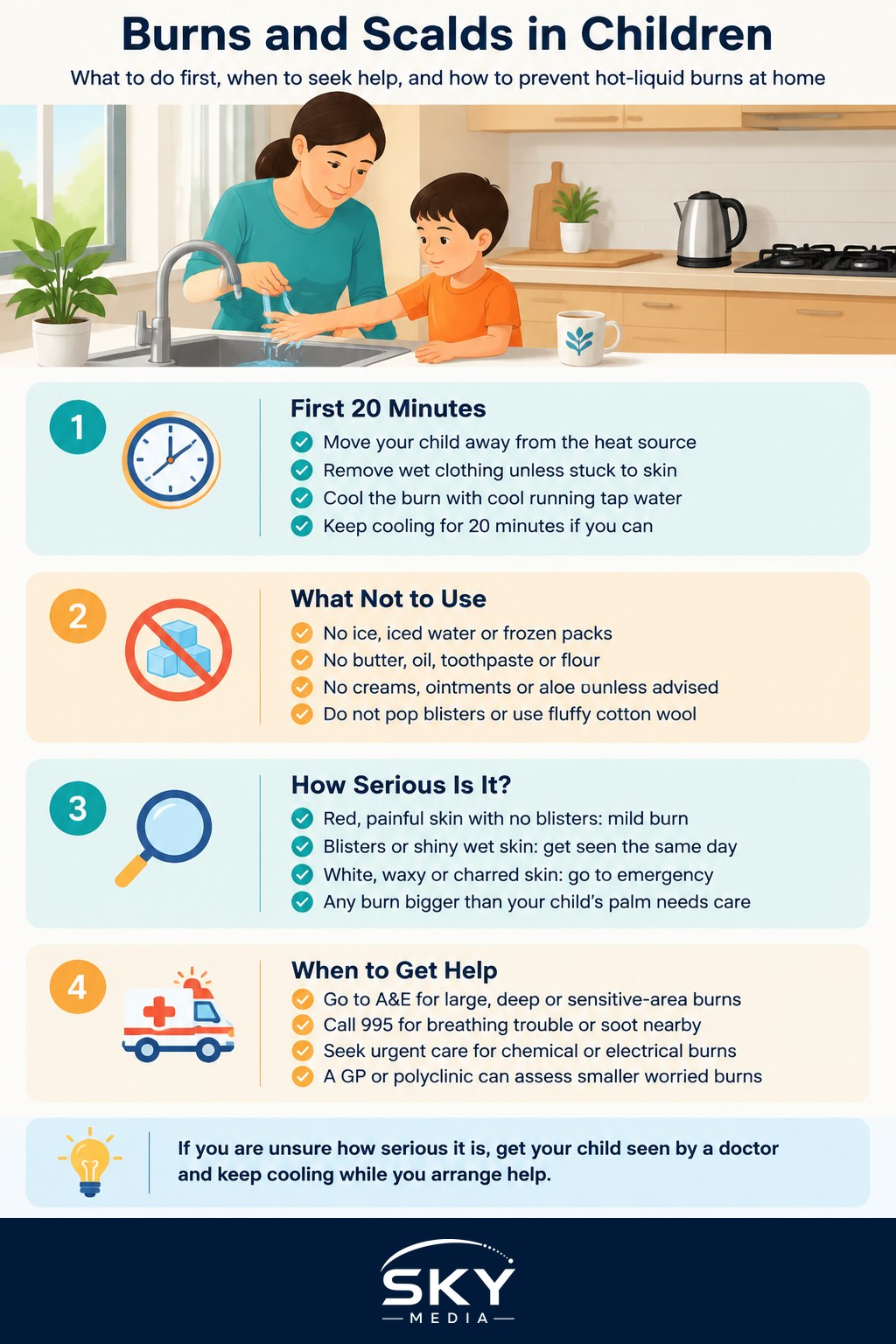
The aim is to stop the burning, cool the skin and protect it. Widely taught first aid advice follows these steps:
- Stop the burn. Move your child away from the source. If clothing is soaked in hot liquid, remove it quickly, because wet fabric keeps holding the heat against the skin. If anything is stuck to the skin, leave it in place and cool over it.
- Cool with cool running tap water for 20 minutes. Ordinary cool tap water is what you want, not ice-cold water and not ice. Twenty minutes feels long with an upset child, so sit them in the shower tray or on your lap by the sink, and use a timer. Cooling is still worth doing if you only realise a little later.
- Keep the rest of your child warm. Small children lose body heat quickly. Cool only the burnt area and wrap the rest of them in a dry towel or blanket.
- Remove tight items near the burn. Take off rings, bracelets, nappies or snug clothing near the area before swelling starts, unless they are stuck.
- Cover loosely. After cooling, lay a strip of clean cling film over the burn (lay it on, do not wrap it tightly round a limb), or use a clean, non-fluffy dressing. This protects it and reduces pain from air.
- Get advice. Decide whether you need a GP, a children’s emergency department or an ambulance using the guide below.
For pain, ask a pharmacist or doctor what is suitable for your child’s age and weight. Do not guess doses.
What Not to Put on a Burn
Many families grew up with home remedies, but these can trap heat, irritate the skin or raise the risk of infection:
- No ice, iced water or frozen packs. Extreme cold can damage the skin further.
- No butter, oil, toothpaste, soy sauce, egg white or flour.
- No creams, ointments or aloe on a fresh burn unless a doctor or nurse has advised it.
- Do not pop blisters. They protect the healing skin underneath.
- Do not use fluffy cotton wool or sticky plasters directly on the burn, as fibres and glue stick.
How to Tell How Serious a Burn Is
Doctors look at depth, size and location. You do not need to diagnose the burn yourself, but a rough sense of what you are seeing helps you decide how fast to act. Burns can also look milder at first and change over the next day or two, so if in doubt, have it checked.
| What you see | Commonly described as | What to do |
|---|---|---|
| Red, painful skin, no blisters, like mild sunburn | Superficial burn | Cool for 20 minutes; see a GP if it is larger than a small coin, on the face, hands, feet or groin, or your child is very young |
| Blisters, wet or shiny skin, very painful | Partial thickness burn | Cool, cover with cling film, and get it seen the same day at a GP or children’s emergency department |
| White, waxy, brown or charred skin, may feel less painful | Deep or full thickness burn | Cool, cover and go to an emergency department or call 995 |
| Any burn bigger than your child’s palm, or on face, hands, feet, genitals or across a joint | Needs medical assessment regardless of depth | Go to a children’s emergency department |
A simple size check: the area of your child’s palm with fingers together is roughly one per cent of their body surface. Anything larger than that should be assessed by a doctor.
When to Call 995 or Go to A&E
Call 995 for the Singapore Civil Defence Force (SCDF) ambulance, or go straight to an emergency department, if:
- The burn is large, deep, or on the face, neck, hands, feet, genitals or a major joint.
- Your child has breathing difficulty, a hoarse voice, coughing, or soot around the mouth or nose, which can mean a smoke or steam injury to the airway.
- The burn is from electricity or chemicals. For chemicals, rinse with plenty of running water and bring the product label.
- Your child is drowsy, pale, cold, unusually floppy or will not settle.
- Your baby is under one year old and the burn is more than very small.
For smaller burns that still worry you, a GP or polyclinic can assess and dress the wound. Keep cooling while you organise transport, and do not delay going to hospital to finish the full 20 minutes if the burn is serious. Cool on the way if you can.
If your child is anxious about the doctor’s visit, our guide on helping your child cope with doctor and hospital visits has practical ways to prepare them for dressing changes and follow-ups.
Caring for a Burn Over the Next Few Days
Follow the instructions you are given by the doctor or nurse, as burn dressings vary. General points parents find useful:
- Keep the dressing clean and dry, and go back for scheduled reviews or dressing changes.
- Watch for signs of infection: increasing redness spreading out from the burn, swelling, a bad smell, pus, or a fever. Get medical help promptly if you see these.
- Healing skin can itch. Short nails and loose cotton clothing help. Ask the clinic before using any cream.
- New skin is sensitive to the sun for many months. Keep it covered and ask about sun protection once it has healed.
- Make sure your child drinks enough, especially in hot weather, as larger burns can increase fluid loss. Our guide to recognising and treating dehydration in children lists the warning signs.
Accidents happen in careful homes. Focus on comfort and on small changes that make the next one less likely.
Simple Ways to Prevent Scalds at Home
- Put hot drinks down in the middle of the table, never at the edge, and never hold a hot drink while carrying a child.
- Use placemats rather than tablecloths that toddlers can pull.
- Turn pot handles inwards and cook on back burners where you can.
- Keep kettle, air fryer and rice cooker cords out of reach, and watch steam vents.
- Run cold water into the bath first, then add hot, and test the water with your elbow before your child gets in.
- Set a “no zone” around the stove when you are cooking.
- Show helpers, grandparents and older siblings the 20-minute cooling rule so everyone responds the same way.
Official sources: HealthHub