

A good meal can do what a slide deck cannot. Deals are warmed up over lunch, partnerships are sealed across a dinner table, and a thoughtful host is remembered long after the plates are cleared. Business dining in Singapore sits at a lovely crossroads, where a hawker centre supper can be as effective as a hotel restaurant, as long as you read the room and plan with care. This guide walks you through choosing the venue, hosting well and looking after the details so you can focus on the person across the table.
None of this is about spending the most money. It is about making your guest comfortable, respecting their time and dietary needs, and letting the conversation do its work. Get the basics right and the food becomes a backdrop to a relationship, which is exactly the point.
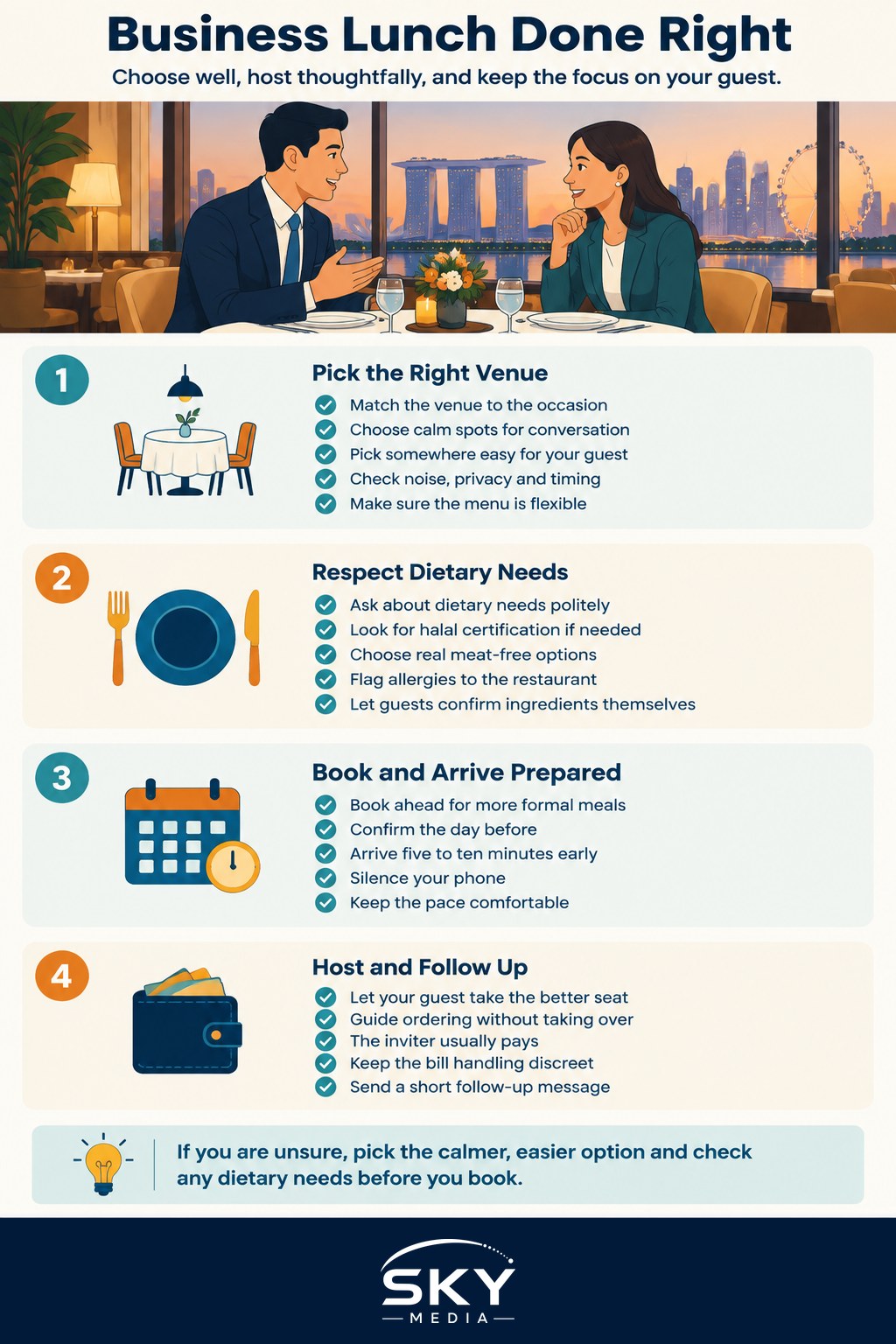
Choosing the Right Venue for the Occasion
Match the setting to the purpose and the person. A first, exploratory chat suits a relaxed cafe or a quiet coffee, where nobody feels locked into a long commitment. A serious negotiation or a thank you for a closed deal earns a proper restaurant with space to talk. When in doubt, aim for somewhere calm enough to hear each other, since a venue that is too loud or too cramped works against you no matter how good the food is.
Location matters more than prestige. Pick somewhere convenient for your guest, ideally near their office or the meeting venue, so you are not asking a busy person to cross the island. The Central Business District, Marina Bay and Orchard are packed with options, but a well chosen spot near Tanjong Pagar, Raffles Place or your guest’s own neighbourhood often lands better than a famous name that is a hassle to reach.
Think about a few practical filters before you book:
- Noise level, so conversation flows without shouting.
- Privacy, with a booth or a quieter corner for sensitive talk.
- Timing, since a fast kitchen suits a tight lunch hour.
- Parking or an MRT station close by for easy arrival.
- A menu broad enough for different diets and appetites.
Handling Dietary Needs and Singapore’s Diversity
Our multicultural scene is a strength, but it means you should never assume what a guest eats. Before you pick the restaurant, find a polite way to ask about preferences and restrictions. A simple “any dietary needs I should plan around” shows care and saves an awkward moment at the table.
Halal awareness is basic courtesy here. If your guest eats only halal food, choose a venue with MUIS halal certification rather than guessing, and let the diner verify it if they wish. For vegetarian, vegetarian Hindu or Buddhist guests, look for a place with genuine meat free options rather than a token salad. Many colleagues avoid beef or pork, some abstain from alcohol, and others may be managing an allergy, so a flexible menu is your friend.
When you book, tell the restaurant about any allergies or strict requirements in advance, and remind your guest that they should still confirm ingredients and ask about cross-contamination at the table. This is general guidance, not medical advice, so for a serious allergy the diner should always speak to the staff themselves and follow their doctor’s plan.
Booking, Timing and Arriving Prepared
A reservation signals that you value your guest’s time. Book ahead for anything more formal than a coffee, especially for weekday lunches in the CBD, when tables fill fast. Confirm the day before, note the number of diners, and flag a preferred table if the setting matters. If plans change, cancel early so the restaurant can release your table.
As the host, arrive first. Getting there five to ten minutes early lets you check the table, settle any billing arrangement quietly with the staff, and greet your guest rather than rushing in flustered. Silence your phone or keep it out of sight, since nothing signals distraction faster than glancing at a screen mid sentence. Have a rough plan for the conversation, but let it breathe; the meal is a chance to listen, not to pitch non stop.
Keep the pace comfortable. Order at a similar level to your guest so nobody feels awkward, and steer clear of the messiest dishes when you are trying to make an impression. Lunch usually runs about an hour, while a dinner can stretch longer, so read whether your guest is relaxed or watching the clock.
Comparing Venue Types for Business Dining
Different settings suit different goals and budgets. The table below is a rough guide to help you match the occasion, and any specific venue will vary, so check the restaurant or app for current details.
| Venue type | Best for | Atmosphere | Rough budget |
|---|---|---|---|
| Cafe or coffee spot | First meetings, quick catch-ups | Casual, low pressure | Budget friendly |
| Hawker centre or food court | Friendly local guests, casual teams | Lively, informal | Very affordable |
| Mid-range restaurant | Most client lunches and dinners | Comfortable, quiet enough | Moderate |
| Hotel or fine-dining venue | Major deals, senior guests | Formal, impressive | Higher, plan ahead |
Use this as a starting point only. A trusted local restaurant where the staff know you can beat a grand venue that feels stiff, so weigh the relationship over the price tag every time.
Hosting the Table and Managing the Bill
Good hosting is mostly attentiveness. Let your guest take the better seat, offer menu suggestions if they seem unsure, and guide the ordering without taking over. Small gestures land well, such as recommending a house specialty or checking whether the spice level suits them. Keep the talk professional but human; a little warmth about family, travel or food itself often opens people up more than launching straight into numbers.
The person who extends the invitation usually pays, and the smoothest way to handle this is to settle it quietly. Where you can, arrange payment with the staff before your guest arrives, or step away discreetly near the end. A gentle tussle over the bill is normal, but as the host you should hold firm with grace. On service charge, most sit down restaurants in Singapore already add ten per cent, so tipping on top is optional rather than expected.
If you are claiming the meal as a work expense, keep the itemised receipt and note who attended and why, since your company will want that record. A few habits keep things clean:
- Ask for a tax invoice or itemised receipt, not just the card slip.
- Jot down the guest’s name, company and the purpose of the meeting.
- Stay within your firm’s entertainment policy and any per-head limit.
- Avoid ordering lavishly on the company’s tab when a modest meal will do.
After the Meal
The meal does not end when you stand up. Walk your guest out, thank them sincerely, and follow up within a day with a short message that recaps anything agreed and signals the next step. That small note turns a pleasant lunch into forward momentum, and it costs you nothing but a few minutes.
Done well, business dining in Singapore is less about the food and more about how you make someone feel, which is a skill worth practising one meal at a time.
Explore more
For bigger tables, our guide to dining out with large groups covers seating and ordering for a crowd, while restaurant reservations and booking apps makes securing that table painless. To settle the bill with confidence, read up on tipping and service charge in Singapore.
Further reading: Fine-Dining Etiquette for First-Timers