

Big tours sell out in minutes, and the scramble for concert tickets in Singapore has become a sport of its own. This guide is written from the fan’s side of the gate: how to prepare for a sale, choose seats you will actually enjoy, judge resale offers, avoid scams and get through entry without stress.
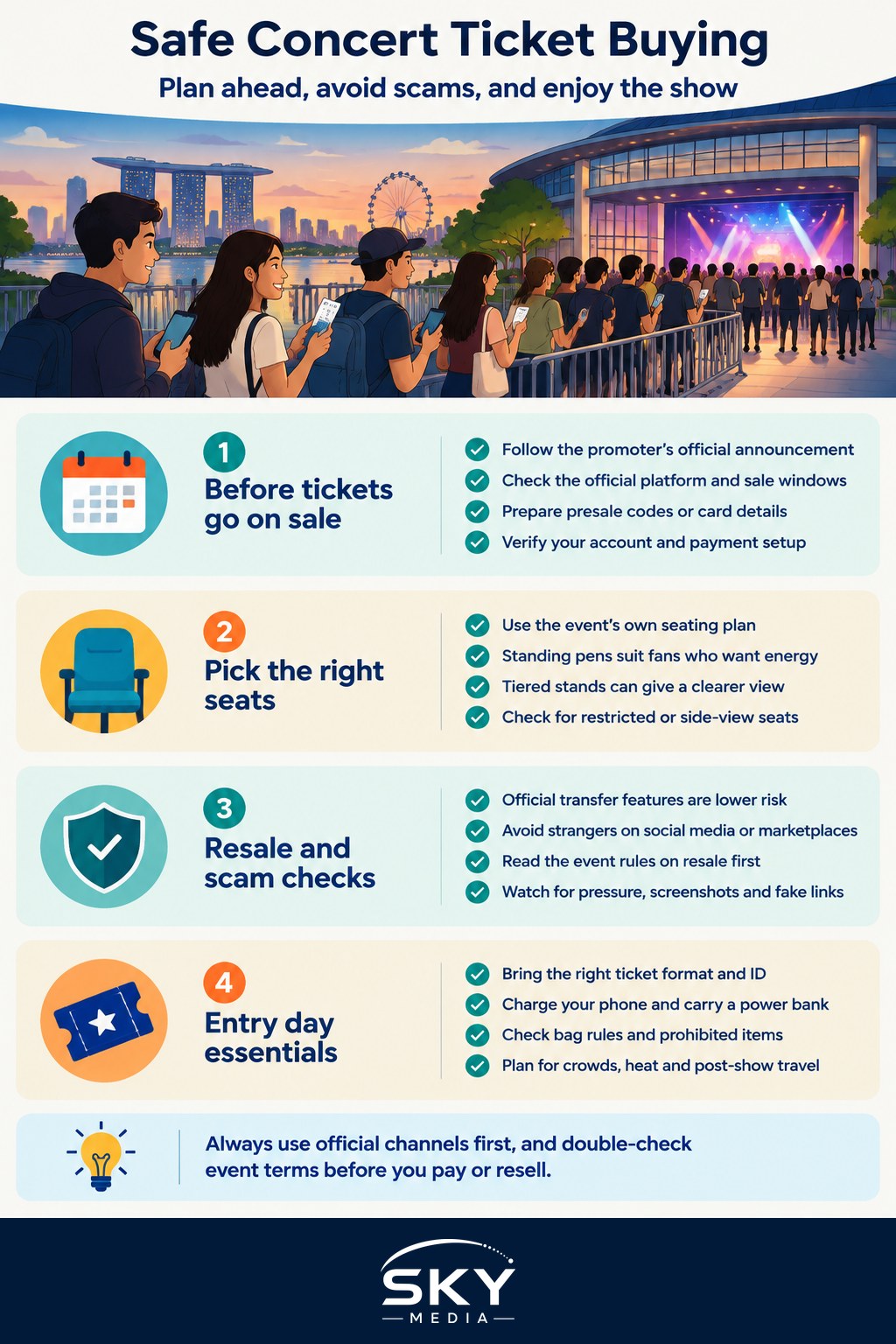
Before the Sale: Preparing for Presales and General Sale
Most major shows in Singapore are sold through an official ticketing agent appointed by the promoter, and the promoter’s announcement is your single most reliable source. It tells you which platform is selling, when each sale window opens and what (if anything) you need to qualify for a presale.
Common presale types you will see include:
- Fan club or artist presales. Usually tied to a membership or a sign-up on the artist’s official site, often with a unique code.
- Card or bank presales. Reserved for holders of a specific bank’s credit or debit cards. You normally need to pay with that card, not just own it.
- Promoter or venue presales. Offered to people on a promoter’s mailing list or a venue’s membership programme.
- General sale. Open to everyone, usually after the presales close.
To give yourself the best chance:
- Create and verify your account on the official ticketing platform well before the sale, with your name exactly as it appears on your ID. Some events print the buyer’s name on the ticket and check it at entry.
- Save your payment card to the account if the platform allows, and check that your card’s online transaction limit and one-time password (OTP) setup work.
- Read the per-customer ticket limit. Buying more than the limit can get the whole order cancelled.
- Join the virtual queue from one device and one browser tab unless the platform says otherwise. Many systems flag multiple tabs as bot behaviour, and refreshing can send you to the back.
- Agree with friends beforehand who buys, for how many, and which price tiers are acceptable.
Choosing Seats: Standing Pen, Floor Seats or Tiered Stands
Seat maps can be confusing, especially for stadium shows where the stage layout changes from tour to tour. Always check the event’s own seating plan rather than an older map of the same venue, because the stage position, standing pens and restricted-view areas differ by production.
| Ticket type | What you get | Good for | Watch out for |
|---|---|---|---|
| Standing pen (free standing) | Closest access to the stage, position decided by arrival time | Fans who want energy and do not mind hours on their feet | Long queues, heat, limited view if you are shorter, few exits |
| Floor seating | Assigned seats on the ground level | Being near the stage with a guaranteed spot | Flat floor means heads in front can block the view |
| Lower tiered stands | Raised seats with a clearer sightline | A balance of view, comfort and atmosphere | Side sections may have angled or partial views |
| Upper tiered stands | Higher seats, usually lower price tiers | Seeing the full stage production and lighting | Distance from the stage, steep stairs |
| Restricted or side view | Seats sold with a stated view limitation | Budget buyers who mainly want to be in the room | Screens or rigging may block part of the stage |
A few practical points: if you are attending with children or older relatives, seats near an aisle and closer to the concourse make toilet breaks easier. If you plan to take photos, our guide on how to photograph concerts and live music covers what tends to work from different parts of a venue, but always follow each event’s camera rules.
Resale: Official Channels Versus Private Sellers
Resale is normal, but the risk varies a lot by channel.
Lower risk options:
- Official resale or ticket transfer features run by the same platform that sold the original ticket. Where these exist, the ticket is reissued or transferred within the system, so you know it is genuine.
- Buying from people you know personally, with the ticket transferred through the official platform rather than sent as a screenshot.
Higher risk options:
- Strangers on social media, chat groups and online marketplaces.
- Overseas resale websites that are not authorised by the promoter.
Before buying any resale ticket, check the event’s terms. Some shows ban resale above face value, some void tickets that have been resold, and some require the attendee’s name to match the ID shown at entry. A ticket that looks fine on your phone can still be refused at the gate if it breaches these conditions.
Spotting and Avoiding Ticket Scams
Ticket scams spike whenever a popular tour sells out. The Singapore Police Force regularly warns about them, and the patterns are consistent.
Red flags include:
- A seller who insists on bank transfer or PayNow up front and will not use any platform with buyer protection.
- Prices noticeably below what others are asking for a sold-out show.
- A brand new account, or an account with reviews that all look recent and similar.
- “Proof” that is only a screenshot or a PDF, which can be edited or sold to several buyers at once.
- Pressure tactics, such as “three other people are asking, pay now to lock it”.
- Requests to move the conversation to a different messaging app, or to click a link to “verify” your payment.
Safer habits:
- Prefer transfers done within the official ticketing system, so the ticket appears in your own account.
- Never share OTPs, banking logins or Singpass details with a seller.
- Install the government’s ScamShield app and check the official ScamShield resources if something feels off.
- If you are scammed, report it to your bank immediately and make a police report. Act quickly, as early reporting gives the best chance of stopping funds moving.
If you have a dispute with a legitimate business over a ticket purchase, the Consumers Association of Singapore (CASE) is the usual first point of contact for consumer advice.
Entry Day Practicalities
The show starts long before the opening act. A little planning makes the day smoother.
Tickets and ID
- Check whether your ticket is a mobile e-ticket inside an app, a QR code or a physical ticket. Many mobile tickets use rotating codes, so screenshots may not scan. Log in to the app at home and confirm the ticket loads.
- Charge your phone fully and bring a power bank if the venue allows it.
- Carry the ID the event terms ask for, especially if tickets are named.
Bags and prohibited items
- Read the venue and event’s bag policy. Size limits, bans on professional cameras, umbrellas, outside food and drink, and power bank rules vary by event.
- Arrive with as little as possible. Bag checks are faster and you will not be stuck with an item that is not allowed in.
Getting there and back
- Major venues are well served by MRT and buses, but trains and stations get very crowded right after a show. Consider waiting a while inside, or walking to a different station.
Comfort and wellbeing
- Singapore’s heat and humidity make queueing tiring, so stay hydrated and eat before you go. For outfit ideas suited to the weather and long hours on your feet, see what to wear to a concert or festival.
- Earplugs are worth considering for loud shows, especially for children.
- Note where the first aid points and exits are when you arrive.
If the Show Is Changed or Cancelled
If a show is moved or cancelled, the promoter and official ticketing agent will announce what happens next, including any refund process. Follow those official channels only, because scammers sometimes send fake “refund” messages asking for bank details. Tickets bought from unofficial resellers may not be covered by the official refund process at all, which is another reason to buy through authorised channels.
For a wider look at the live music scene and how to find shows worth attending, read our concerts and gigs guide. If you also enjoy stage productions, the process is similar in many ways, as explained in how to buy theatre tickets in Singapore.
Frequently Asked Questions
Can I buy concert tickets for a friend, and will they get in? It depends on the event’s terms. Some events print the buyer’s name on the ticket and check ID at entry, so a ticket in the wrong name can be refused. Agree beforehand who buys what, and transfer tickets within the official platform where it is allowed.
What is the safest way to buy a resale concert ticket? Use the official resale or transfer feature of the platform that sold the original ticket, or buy from someone you know, transferred through the platform. Avoid strangers on social media and unauthorised overseas sites, and check the event’s resale terms first.
Should I pay a stranger by PayNow for a sold-out show ticket? It is risky and best avoided. Sellers who insist on upfront transfers and refuse any platform with buyer protection are a classic scam sign. Never share OTPs or Singpass details, and if scammed, tell your bank immediately and make a police report.
Are standing pen tickets worth it compared with seated tickets? They suit fans who want energy and a close view and do not mind hours on their feet. Standing means long queues, heat and a limited view if you are shorter. Seated tickets offer a guaranteed spot and more comfort, especially for children or older relatives.
What happens to my ticket if the concert is cancelled? The promoter and official ticketing agent will announce the next steps, including any refund process. Follow only those channels, as scammers send fake refund messages asking for bank details. Tickets from unofficial resellers may not be covered at all.