
If you live in an HDB flat, cleaning the inside of your car is not as simple as running a hose from the garage. Your car sits in a multi-storey or surface carpark, often several floors away from your home, usually with no power socket nearby. That is why choosing the right car vacuum in Singapore is less about raw power and more about what actually works in a carpark setting.
This guide focuses on picking a practical vacuum setup for cleaning your car’s interior at home, whether you park at an HDB block or a condo. It is not about washing the exterior.
The HDB Carpark Challenge
Before looking at products, think about the conditions you will be cleaning in:
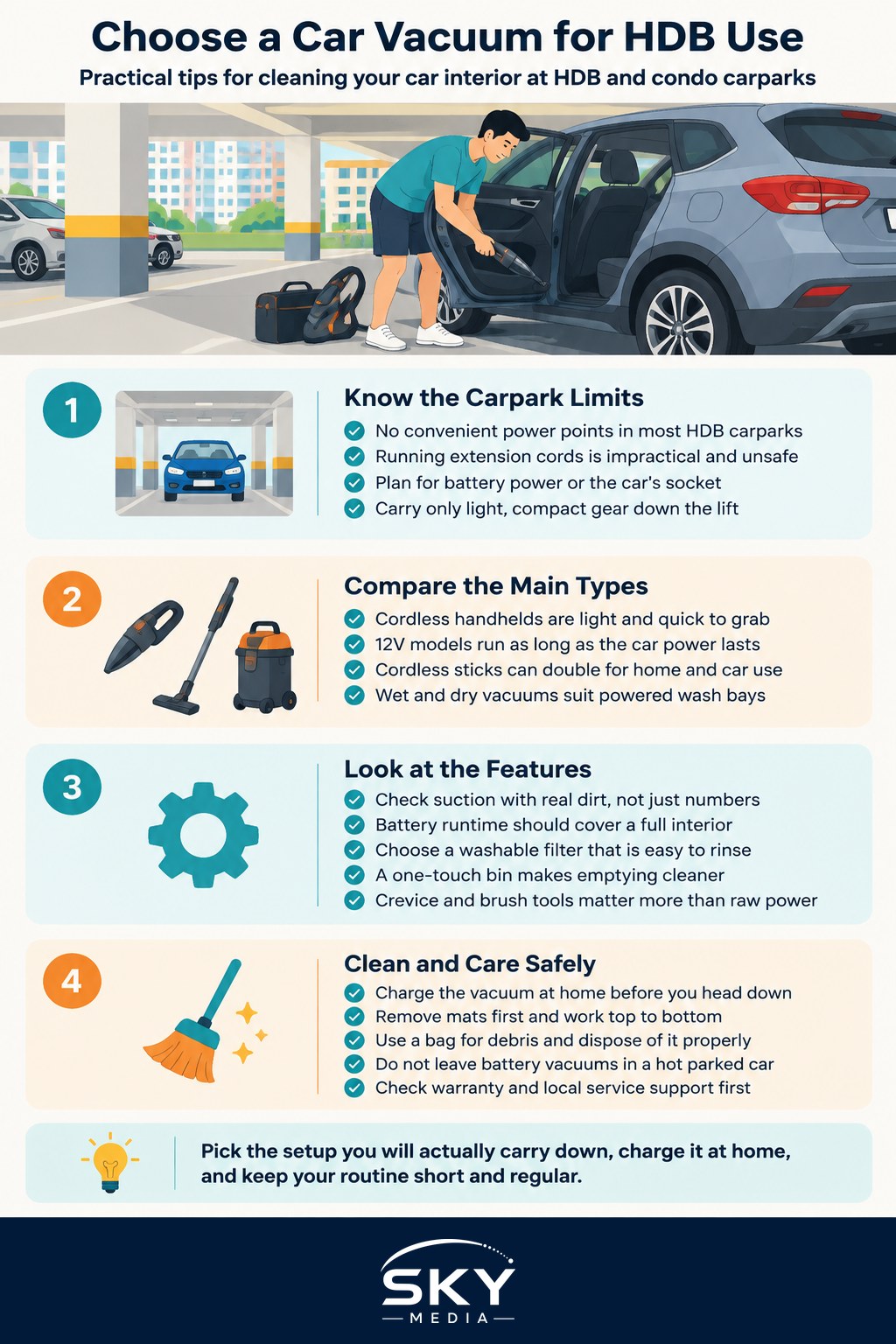
- No convenient power. Most HDB carparks do not offer power points for residents, and running an extension cord from your flat is impractical and can create a trip hazard in common areas. Plan around battery or car power.
- Distance from home. You may need to carry the vacuum, attachments and a bin bag down in the lift. Lighter, compact kits make this easier.
- Heat and humidity. Carparks can be hot, and a car’s interior heats up quickly. Short, efficient cleaning sessions are more comfortable.
- Shared space. Your neighbours are parked a metre away. Keep noise reasonable, especially early in the morning or late at night, and never leave dirt, sand or rubbish on the carpark floor.
- Condo variations. Some condos have car wash bays or designated areas with power. Check your MCST (Management Corporation Strata Title, the body that manages a condo’s common property) rules on what is allowed and when.
With these in mind, the three most common setups are cordless handheld vacuums, 12V plug-in car vacuums and wet and dry vacuums.
Comparing the Main Types of Car Vacuum
Each type suits a different kind of driver. This table summarises the trade-offs.
| Type | How it is powered | Strengths | Limitations | Best for |
|---|---|---|---|---|
| Cordless handheld | Rechargeable battery, charged at home | Light, quick to grab, no cables in the carpark | Limited runtime; suction can drop as the battery runs down | Regular quick clean-ups of crumbs, sand and dust |
| 12V plug-in | Car’s accessory socket | Runs as long as you need without recharging | Cord can be awkward around seats; may need the car’s ignition or accessory mode on; often less suction | Drivers who forget to charge, or longer cleaning sessions |
| Cordless stick vacuum with car tools | Home vacuum battery | One device for flat and car; often stronger suction | Bulkier to carry down; attachments may not reach tight gaps | Households that want one machine for everything |
| Wet and dry vacuum | Usually mains power, some cordless | Handles spills and wet mats | Heavy, noisy and usually needs a socket | Condos with powered wash bays, or occasional deep cleans |
For most HDB households, a good cordless handheld is the sweet spot, with a 12V model as a backup if you tend to forget charging. If you already own a cordless stick vacuum, see whether its accessories work for the car before buying another device. Our guide to choosing a cordless vacuum cleaner explains what to look for in those models.
Features That Matter Most
Once you have chosen a type, compare models on these points.
Suction. Brands may quote suction in pascals (Pa), air watts or simply motor watts. These figures are not always measured the same way, so use them to compare models from the same brand, and read reviews that test real dirt such as sand and pet hair.
Battery runtime and charging. A runtime that covers a full interior on one charge saves frustration. Check whether runtime is quoted at the lowest or highest power setting. Models that charge by USB-C are convenient because you can top them up with the same cables you use at home.
Filters. Car dust includes fine particles, sand and sometimes pet hair. A washable filter, ideally a fine-grade one, keeps suction steady and saves on replacements. Check how easy it is to remove and rinse, and whether replacements are easy to buy locally.
Dust bin capacity and emptying. A small bin fills quickly with sand and leaves. Look for a one-touch emptying design so you can tip debris straight into a bag without getting your hands dirty.
Attachments. The right tools matter more than raw power inside a car:
- A long, narrow crevice tool for gaps between seats and the centre console
- A brush head for dashboards, vents and fabric seats
- An extension hose for under seats and boot corners
- A soft brush for delicate surfaces and screens
Weight and size. You will carry it to the carpark and hold it at awkward angles. A light, well-balanced unit with a comfortable grip makes regular cleaning more likely.
Setting Up a Simple Carpark Cleaning Routine
A good vacuum works best with a routine that suits HDB life.
- Charge the vacuum at home the night before, so it is ready when you head down.
- Pack a small kit: vacuum, attachments, a microfibre cloth, a rubbish bag and a small brush for loosening sand from mats.
- Remove floor mats first and shake or brush them inside an open bag, not onto the carpark floor.
- Work top to bottom: dashboard and vents, then seats, then floor and boot. Dust falls downwards, so you only clean the floor once.
- Use the crevice tool along seat rails and around child car seats, where crumbs tend to collect.
- Bag the debris and dispose of it properly in your block’s refuse chute or bin centre, following town council guidelines.
A clutter-free boot makes vacuuming much quicker. Our guide to choosing a boot organiser for family use has ideas for keeping things tidy between cleans.
Storage, Safety and Care Tips
Keeping your vacuum in good condition helps it last.
- Do not leave a battery-powered vacuum in a parked car for long periods. Car interiors in Singapore get very hot, and heat is hard on lithium batteries. Store it at home and bring it down when needed.
- Use only the charger supplied or one recommended by the manufacturer, and avoid charging overnight on soft furnishings.
- Empty the bin and clean the filter after each session, and let washable filters dry fully before refitting.
- For 12V models, follow the car manufacturer’s guidance on using the accessory socket, and avoid draining the car battery by running the vacuum for long periods with the engine off.
- Keep wet and dry models away from water when plugged in, and follow your condo’s rules if using a powered wash bay.
- Check the warranty and local service support before buying, especially for imported models bought online.
Choosing the Right Setup for Your Household
There is no single best car vacuum in Singapore, but for most HDB drivers the right choice follows a simple logic: pick a light, cordless handheld with a good crevice tool and a washable filter, keep it charged at home, and use a short weekly routine. Families with children or pets may want stronger suction and more attachments, while condo residents with powered wash bays have more room to consider wet and dry models.
Choose the setup you will actually carry down and use. A modest vacuum used every week will keep your car cleaner than a powerful one that sits in the store room.
Explore more: How to Store Child Car Seats When Not in Use
Frequently Asked Questions
Is a cordless handheld or a 12V car vacuum better? A cordless handheld suits most people, as it is light and cable-free, though its runtime is limited. A 12V model never needs charging but the cord can be awkward and suction is often weaker, so it works as a backup for forgetful chargers.
Can I use my home cordless stick vacuum on my car? Often yes, if its attachments reach the car’s tight gaps. Try it with its crevice and brush tools before buying another device, though a stick vacuum is bulkier to carry down to the carpark.
Should I leave the car vacuum in the car? No. Singapore car interiors get very hot, and heat is hard on lithium batteries. Keep a battery-powered vacuum at home and bring it down only when you need it.
How do I vacuum a car without making a mess in the carpark? Shake floor mats inside an open bag rather than onto the floor, and bag all debris. Dispose of it in your block’s refuse chute or bin centre, and keep noise down early in the morning or late at night.
What attachments are actually useful for a car vacuum? A long crevice tool for seat gaps, a brush head for dashboards and fabric, an extension hose for under seats and boot corners, and a soft brush for delicate surfaces. These matter more inside a car than raw suction power.