
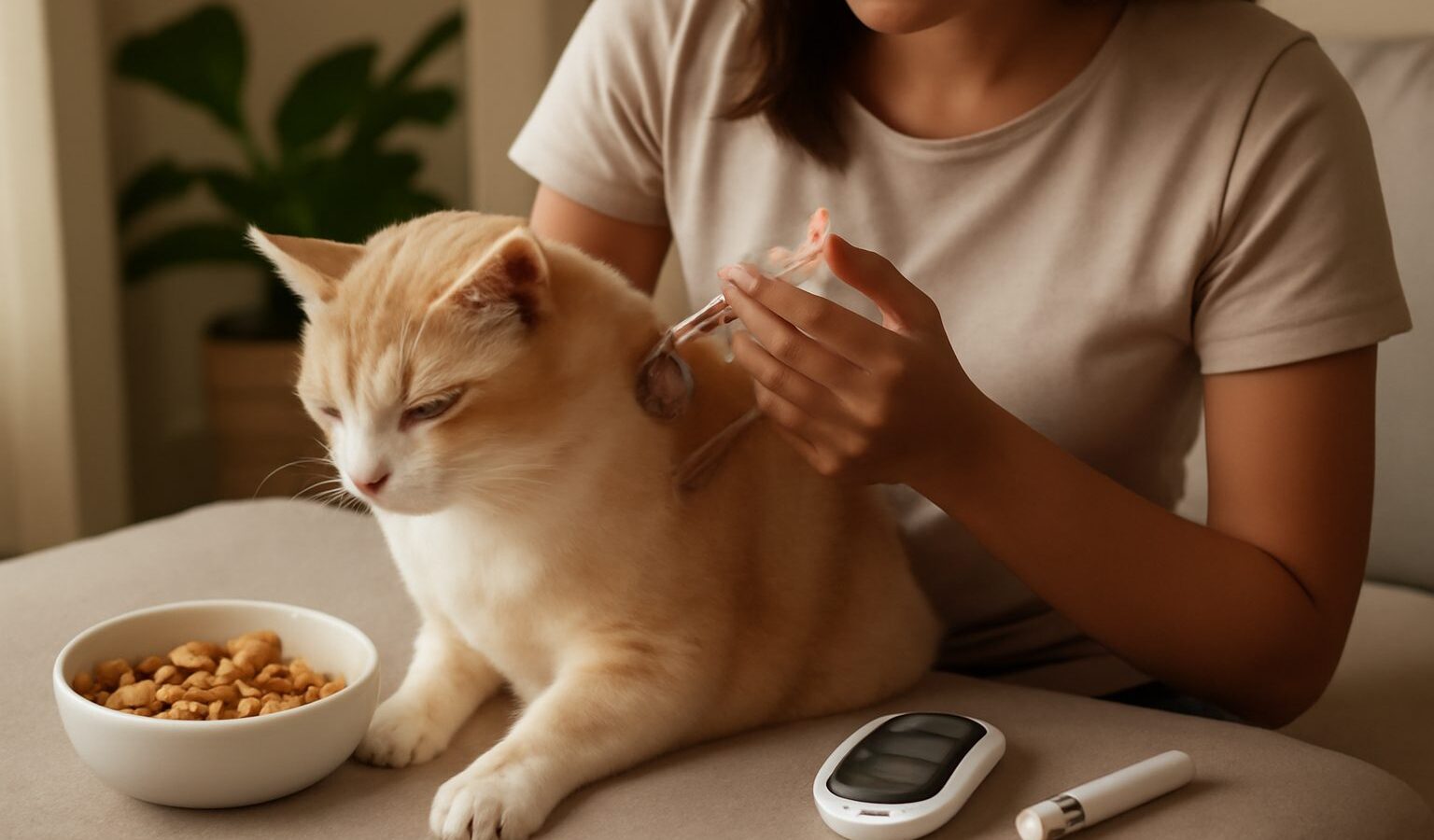
A diagnosis of diabetes can feel frightening, but many dogs and cats live full, happy lives once the condition is managed. Good diabetic pet care is really about routine: steady meals, medication given on time, and a calm eye on how your pet is doing day to day. This guide explains what diabetes means for your pet, how daily life usually looks, and the warning signs that mean you should not wait. It is general information to help you feel prepared, not veterinary advice. Every diagnosis, every choice of insulin and every dose must come from your own licensed vet, who knows your pet.
What Diabetes Means for Dogs and Cats
Diabetes mellitus happens when the body cannot properly use sugar (glucose) from food, either because it makes too little insulin or cannot respond to the insulin it has. Glucose then builds up in the blood instead of feeding the cells. It is a manageable long-term condition, not a death sentence, and it turns up in both dogs and cats, more often in middle-aged and older pets.
Common early signs owners notice at home include:
- Drinking a lot more water than usual, and needing to urinate more often
- A bigger appetite yet losing weight
- Low energy, a dull coat, or seeming generally off
- In cats, a change in how they walk, sometimes flat on their hocks
- Cloudiness in the eyes of dogs, which can point to cataracts
None of these on their own confirm diabetes. Only a vet can diagnose it, usually through blood and urine tests. If you spot this pattern, book an appointment rather than trying to interpret it yourself. In Singapore’s heat, increased thirst is easy to brush off, so the weight loss and toilet changes are the clues worth taking seriously.
Working With Your Vet on a Treatment Plan
Once diabetes is confirmed, your vet builds a plan around your individual pet. Most diabetic dogs and many cats need insulin injections, and this is where the golden rule sits: the type of insulin, the strength, the syringe and the dose are set only by your vet, and you never adjust them on your own. Two pets of the same weight can need very different amounts. Changing a dose because your pet seems “a bit off” can be dangerous.
What you can expect to do as the guardian:
- Give injections at the times your vet sets, usually paired with meals, often about twelve hours apart
- Keep insulin stored as directed, gently mixed not shaken, and never used past its life
- Return for follow-up checks so the vet can fine-tune the dose over the first weeks
- Keep a simple daily log of appetite, thirst, urination, energy and weight
Ask your vet to physically show you how to draw up and give an injection before you go home. Most owners are nervous at first and find that within a week it becomes a quick, calm part of the routine. Some cats, caught and treated early, can even go into remission and come off insulin, but only your vet can judge that.
Everyday Routine: Feeding, Timing and Monitoring
Consistency is the heart of diabetic pet care. The body copes best when meals, injections and activity happen at roughly the same times each day, in roughly the same amounts. A wildly different weekend throws things off.
Diet matters, but the right diet depends on your pet and comes from your vet, not from the internet or a shop shelf. In general terms, vets often steer diabetic dogs and cats towards consistent, measured meals rather than free grazing, and may recommend a particular therapeutic food. Do not switch foods, add supplements or start table scraps without checking first, because a diet change alters how much insulin is needed.
Home monitoring helps you and your vet spot trends. Your vet may guide you to:
- Watch water intake by measuring the bowl, since rising thirst can signal that things are drifting
- Check urine with simple strips if advised, noting the results in your log
- Learn home blood glucose testing, often with a tiny ear or paw prick, if your vet feels you are ready
- Weigh your pet regularly on the same scales
Never change the insulin dose based on a home reading unless your vet has given you a specific written plan to follow. Home numbers guide the conversation with your vet; they are not a licence to self-adjust.
Spotting a Hypoglycaemia Emergency
The most urgent risk in a diabetic pet is blood sugar dropping too low, called hypoglycaemia. It can happen if a pet gets too much insulin, misses a meal after an injection, vomits up food, or exercises much more than usual. This is an emergency, so know the signs before you ever need them.
Warning signs of low blood sugar include:
- Sudden weakness, wobbliness or trouble standing
- Confusion, restlessness or unusual quietness
- Trembling, twitching or, in severe cases, seizures
- Collapse or unresponsiveness
If your pet is conscious and can swallow, your vet may have already told you to rub a little sugar syrup or honey onto the gums on the way to the clinic. Then go straight to a vet or a 24-hour emergency clinic, even in the middle of the night. Do not give more insulin, and do not wait to “see if it passes”. Keep your regular vet’s number and the nearest emergency clinic saved in your phone. It is worth doing this on the day of diagnosis so you are never scrambling later.
Home Care Versus When to See a Vet
Diabetes management blends daily home care with prompt professional help. This table is a general guide to sort the everyday from the urgent; when in doubt, always ring your vet.
| Situation | Handle at home (as vet directed) | Contact or go to a vet |
|---|---|---|
| Eating and drinking normally | Give insulin on schedule, log the day | Book a routine check if trends drift |
| Slightly reduced appetite | Offer the usual meal, note it in the log | Call the same day for advice before the next dose |
| Refused a meal after insulin due | Do not guess the dose | Ring your vet now for instructions |
| Weakness, tremors or collapse | Rub syrup on gums if conscious, then move | Emergency vet immediately, any hour |
| Vomiting, not drinking, very flat | Not a wait-and-see situation | Emergency vet, as this can turn serious fast |
Living Well Together Long Term
A diabetic pet asks for structure, but that structure quickly becomes second nature, and the reward is a companion who feels well again. Budget realistically: insulin, syringes, follow-up visits and the odd blood test add up, so it helps to plan for the ongoing cost from the start and consider a pet emergency fund. Share the routine among the household so injections never get missed, and prepare a clear handover note for whoever cares for your pet if you travel.
Keep up the wider basics too. Sterilised diabetic dogs and cats are usually easier to stabilise, so speak to your vet about that if it has not been done. Guard against Singapore’s heat with fresh water and cool rest spots, since a poorly pet copes badly with humidity. Above all, keep your vet in the loop, go to every follow-up, and trust the routine. With steady, kind care, diabetes becomes just one more part of looking after a pet you love.