

You leave the vet clinic with a printout full of abbreviations, numbers and little arrows pointing up or down. Pet blood test results can look intimidating, especially when a value is flagged as high or low. Knowing what the main sections of a blood panel measure helps you ask better questions, follow your vet’s plan with confidence and avoid panicking over a single number.
This guide explains the common parts of a routine dog or cat blood panel in plain language. It is general information, not veterinary advice. Only your vet can interpret your pet’s results, because the meaning of any value depends on your pet’s age, breed, history, symptoms and other test findings.
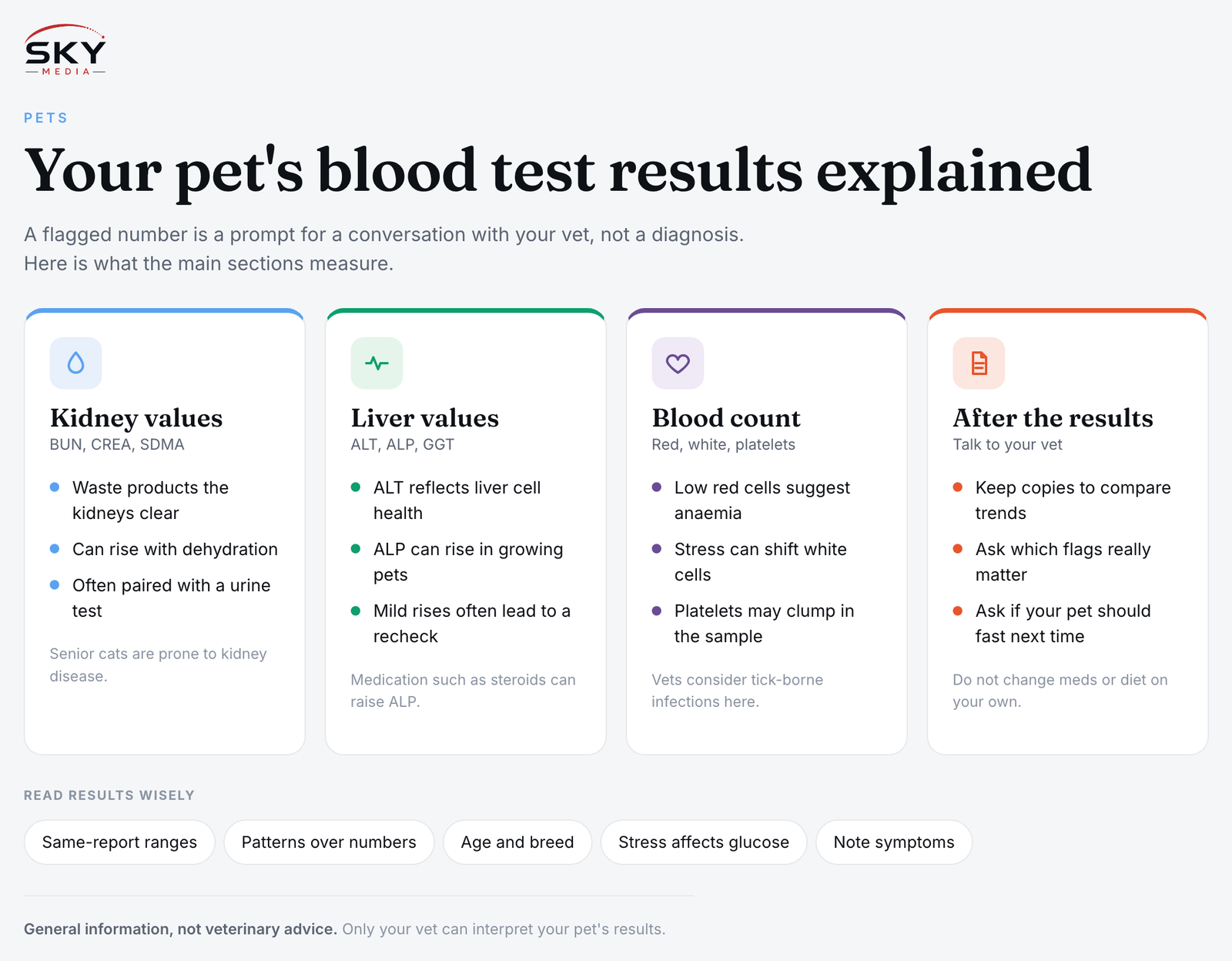
Why Vets Run Blood Tests
Blood tests let a vet look inside the body without surgery. They are commonly used:
- As a baseline for a healthy young pet, so future results can be compared.
- Before anaesthesia, for example ahead of dental cleaning or desexing, to check that organs can handle the drugs.
- For senior pets, as part of regular wellness checks, since kidney, liver and hormone problems become more common with age.
- When a pet is unwell, to help find the cause of vomiting, weight loss, drinking more water, lethargy or poor appetite.
- To monitor treatment, for pets on long-term medication that can affect organs.
Most routine panels have two main parts: a complete blood count (CBC), which looks at blood cells, and a biochemistry panel, which measures substances in the liquid part of the blood that reflect how organs are working. Your vet may add other tests, such as thyroid levels for older cats or urine tests alongside bloodwork.
Reading the Report: Reference Ranges and Flags
Each value on the report usually sits next to a reference range. That range comes from the laboratory or machine used, and it represents where most healthy animals of that species fall. A few points to keep in mind:
- Ranges differ between labs and machines, so compare your pet’s results with the range printed on the same report, not with numbers found online.
- Slightly outside the range is not always a problem. Some healthy animals sit just outside normal, and some values shift with stress, recent meals or dehydration.
- Patterns matter more than single numbers. Vets look at how several values move together and at trends over time.
- Breed and age affect results. Some breeds and young, growing animals have values that differ from the general range.
If you have had your own health check, the idea is similar to understanding your health screening results: a flagged number is a prompt for a conversation, not a diagnosis.
Common Values on a Pet Blood Panel
The table below summarises the values owners most often see. Exact names and abbreviations vary by clinic.
| Group | Common abbreviations | What it broadly reflects | Questions to ask your vet |
|---|---|---|---|
| Kidney values | BUN (urea), CREA (creatinine), SDMA, phosphorus | How well the kidneys filter waste from the blood | Is this a trend? Should we check urine too? |
| Liver values | ALT, ALP, GGT, total bilirubin | Liver cell health, bile flow and related organs | Could medication or another condition explain this? |
| Proteins | TP (total protein), ALB (albumin), GLOB (globulin) | Hydration, nutrition, inflammation and protein loss | Is my pet dehydrated or losing protein? |
| Red blood cells | RBC, HCT or PCV, HGB | Oxygen-carrying capacity, anaemia or dehydration | Is there anaemia, and what might cause it? |
| White blood cells | WBC, neutrophils, lymphocytes, eosinophils | Infection, inflammation, stress or immune responses | Is this a stress reaction or something to follow up? |
| Platelets and glucose | PLT, GLU | Clotting ability, blood sugar | Could clumping or stress have affected the reading? |
Kidney Values
Blood urea nitrogen (BUN) and creatinine are waste products the kidneys normally clear. When they rise, it can point to reduced kidney function, but they can also go up with dehydration or a high-protein meal. SDMA is a newer marker that some clinics use because it may pick up changes earlier. Phosphorus often rises alongside kidney changes. Vets usually pair kidney values with a urine test, especially urine concentration, to get a fuller picture. Cats in particular are prone to kidney disease as they age, so regular checks are often recommended for seniors.
Liver Values
ALT is an enzyme found mainly in liver cells, and higher levels can suggest liver cell irritation or damage. ALP and GGT relate more to the bile system, and ALP can also be raised by growing bones in young animals, certain medications such as steroids, or hormone conditions in dogs. Bilirubin is a pigment that can build up when the liver or bile flow is affected, or when red blood cells are breaking down. A mildly raised liver enzyme often leads to a recheck or further tests rather than an immediate diagnosis.
Proteins
Albumin is made by the liver, and low albumin can reflect liver disease, protein loss through the gut or kidneys, or poor nutrition. Globulins include antibodies, so they may rise with inflammation or infection. High total protein can sometimes simply reflect dehydration.
The Complete Blood Count
The red cell section shows whether your pet has enough red blood cells. Low values suggest anaemia, which has many possible causes, from blood loss and parasites to chronic illness. High values may point to dehydration. In Singapore’s warm, humid climate, tick-borne infections are something vets consider when blood counts are unusual, especially in dogs.
White blood cells are the immune system’s soldiers. A raised count may suggest infection or inflammation, but stress from the car ride or the clinic visit can also shift these numbers, particularly in cats. Platelets help blood clot. Low readings sometimes turn out to be caused by platelets clumping in the sample, so vets may check a blood smear under the microscope.
Glucose
Blood sugar can rise sharply in stressed cats, which is why a single high glucose reading in a cat is not always diabetes. Vets may run further tests that reflect blood sugar over a longer period. Persistently high glucose in dogs or cats, especially with increased thirst and urination, needs follow-up.
What to Do After You Get the Results
Use the results as a starting point for a conversation with your vet:
- Ask for a copy. Keep printed or digital copies in one folder so you and any future vet can compare trends.
- Ask what is significant. Your vet can tell you which flags matter for your pet and which are likely minor.
- Clarify next steps. These might include a recheck in a few weeks, a urine test, an ultrasound, a diet change or medication.
- Prepare for the next test. Ask whether your pet should fast beforehand, since a recent meal can affect some values.
- Note symptoms. Tell your vet about changes in drinking, appetite, weight, energy or toilet habits, as these help interpret the numbers.
Do not start supplements, change diets drastically or stop prescribed medication based on your own reading of the report. If your pet is unwell, contact your vet or an emergency clinic promptly rather than waiting for a routine appointment.
Bloodwork is one piece of preventive care. Some owners also look into pet DNA tests for breed and health screening, which can flag inherited risks worth discussing alongside blood results. For older pets, regular blood panels tie into wider planning for your pet’s future care, including budgeting for check-ups and possible long-term treatment.
Keeping Your Pet Comfortable on Test Day
A calmer pet often gives more reliable results. Bring cats in a secure carrier covered with a towel, bring a favourite blanket or treat if your vet allows, and keep the car cool. Ask whether a quieter appointment slot is available if your pet is anxious. After the blood draw, a small bruise can happen. If you notice ongoing bleeding, swelling or your pet seems unwell, call the clinic.
Explore more: Understanding Your Health Screening Results in Singapore and Pet DNA Tests in Singapore: Breed and Health Screening Explained.