
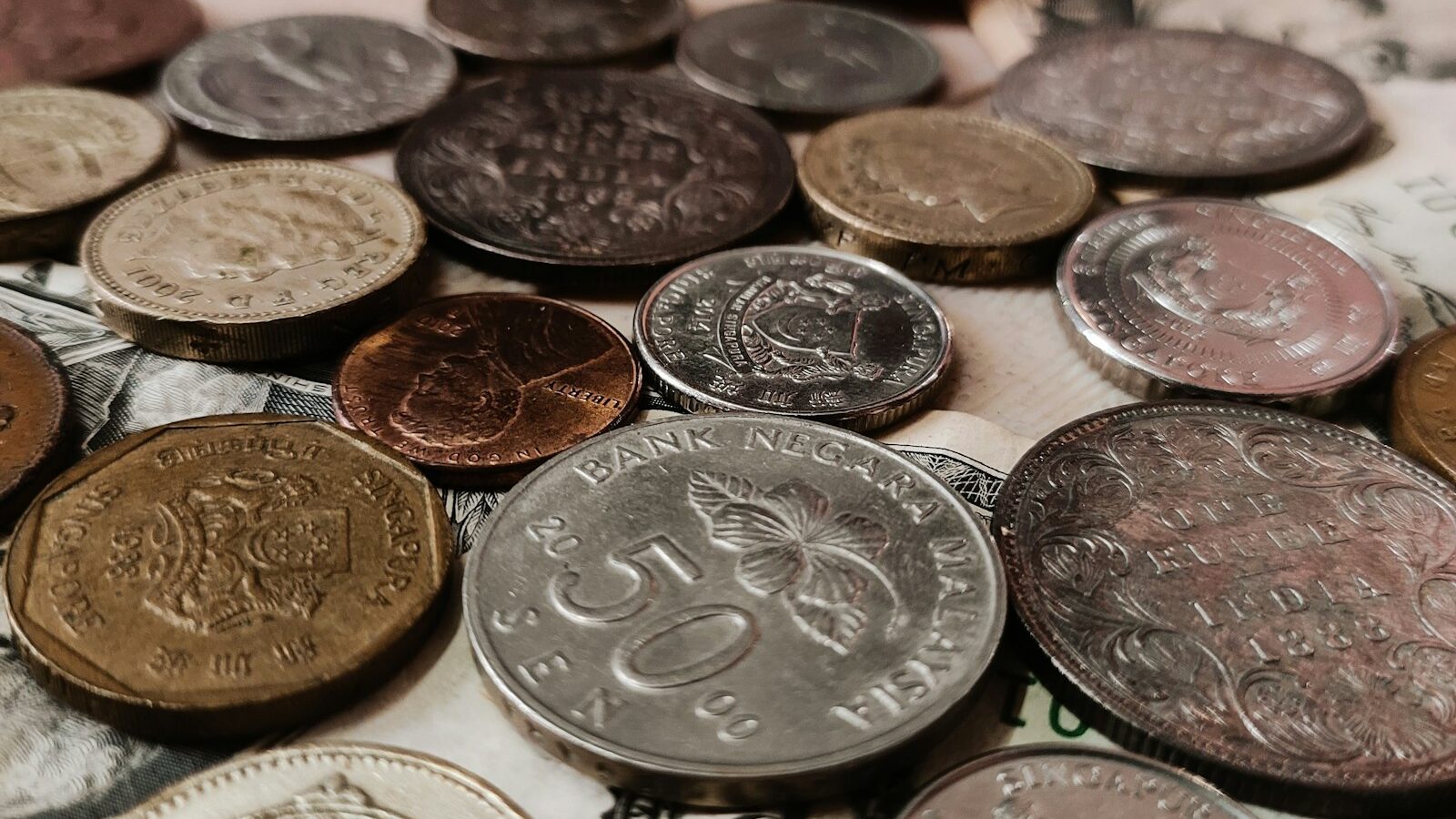
Almost every household in Singapore has one: a jar, biscuit tin or old Milo can slowly filling with 5, 10, 20 and 50 cent coins, plus the odd $1. At some point it gets too heavy to ignore. The good news is that you have several ways to turn it back into usable money, and a coin deposit machine in Singapore is usually the fastest if you have a bank account. This guide walks through how those machines work, how to prepare your coins, what charges to expect, and the alternatives if a machine is not convenient.
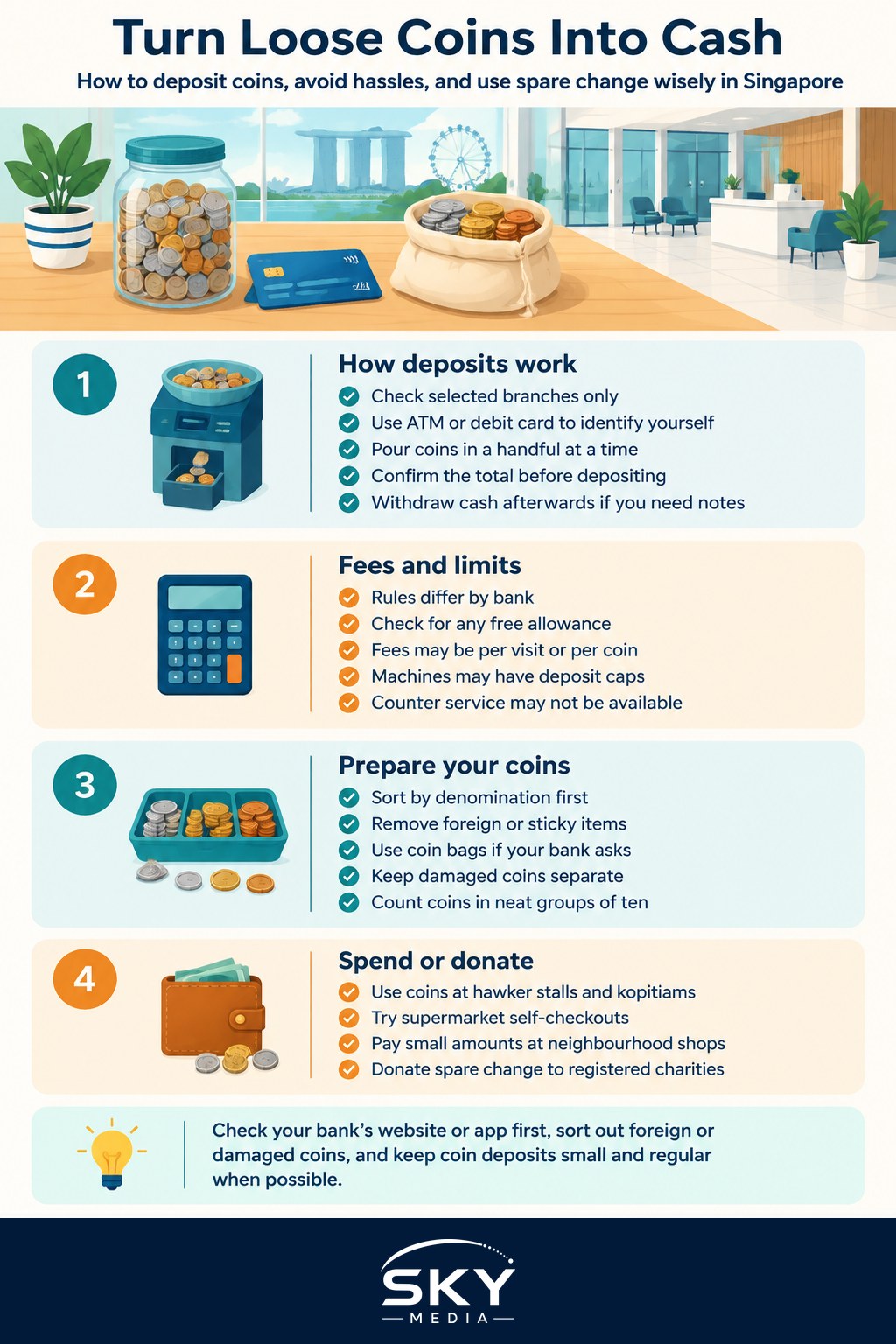
How Bank Coin Deposit Machines Work
Several of Singapore’s major retail banks have coin deposit machines at selected branches. They are not at every branch, and the list changes as branches are renovated, relocated or closed, so always check your bank’s website or app branch locator for “coin deposit” before you travel with a heavy bag.
The process is broadly similar across banks:
- Identify yourself. You usually insert or tap your ATM or debit card, or key in your account details, so the machine knows which account to credit.
- Pour in the coins. Most machines have a tray or hopper. You tip coins in a handful at a time rather than all at once.
- Let the machine count and sort. It checks each coin, counts the total and rejects anything it cannot read.
- Confirm the amount. The screen shows the total and any charge. You confirm, and the money goes into your account.
- Collect rejects and your receipt. Bent, dirty, foreign or very old coins usually drop into a reject tray. Take them out before leaving.
The money lands in your savings or current account, not in your hand as notes. If you actually want notes, simply withdraw the amount from an ATM afterwards. That two-step route is what most people mean by “changing coins to notes” today.
Tips for a smooth visit
- Go on a weekday morning or mid-afternoon to avoid queues.
- Check the coins first. Remove paper clips, hair ties, foreign coins, tokens and anything sticky. These jam machines and slow everyone down.
- Bring a sturdy bag. A full biscuit tin of mixed coins is heavier than it looks.
- Do not bring an enormous quantity in one go. Some machines limit how many coins you can deposit per transaction or per day. If you have years of savings, split it across visits.
Fees and Limits: What to Check Before You Go
Handling coins costs banks money, and Singapore’s banks have introduced charges for coin deposits in recent years. The exact structure differs by bank and can change, so treat anything you read online, including this article, as a starting point and confirm the current rules on your bank’s official fee schedule.
Things worth checking:
- Whether there is a free allowance. Some banks have offered a small number of free coin deposits for certain customer groups, such as seniors, students or young savers, while charging others.
- How the fee is worked out. Charges may be per transaction, per number of coins, or a percentage of the amount deposited.
- Daily or per-visit limits. Machines may cap the coins accepted per go.
- Whether counter service is available. Some branches no longer accept coins over the counter at all, while others do so only in bags or rolls.
For a small jar, a modest charge may be fine. For a large collection, the fee can add up, which is when the alternatives below become attractive.
Coin Deposit Machine vs Other Options
Here is a quick comparison of the common ways to clear loose change.
| Option | Best for | What to watch |
|---|---|---|
| Bank coin deposit machine | Large amounts going straight into your account | Limited branches, possible fees and daily caps |
| Bank counter with sorted coin bags | Very large, already-sorted amounts | Not all branches accept coins at the counter; ask first |
| Spending at shops and hawker stalls | A few dollars at a time | Be considerate at busy stalls; do not pay large bills in small coins |
| Self-checkout machines that take cash | Clearing small coins while doing groceries | Not all machines accept cash or every coin; feed slowly |
| Charity donation boxes | Spare change you do not need back | Use boxes from registered charities you recognise |
Preparing and Bagging Coins Properly
If your bank asks for coins to be bagged, or if you want to make the machine visit quicker, a little preparation helps.
- Sort by denomination. Separate $1, 50 cent, 20 cent, 10 cent and 5 cent coins into piles or containers. An ice cube tray or egg carton works well.
- Ask for coin bags. Banks that still accept counter deposits often provide plastic coin bags marked with the denomination and the number of coins each holds. Ask at the branch what they require.
- Count in tens. Stacking coins in tens makes it easy to check a bag is full and accurate.
- Set aside old or interesting coins. Singapore has issued several coin series over the decades, plus commemorative coins. If you find older designs, look them up before depositing. Our guide to the hobby of collecting stamps and coins explains how collectors think about condition and value.
- Keep damaged coins separate. Heavily bent, corroded or defaced coins are often rejected by machines. Ask your bank how it handles them, or check the Monetary Authority of Singapore (MAS) website for its guidance on damaged currency.
Using Coins in Everyday Spending
If fees put you off, spending coins gradually is free. A few practical ways:
- Hawker centres and kopitiams. Many stalls are happy to accept exact change for a drink or a plate of food. Keep a small pouch of coins for these purchases and refill it from the jar each week.
- Supermarket self-checkouts. Where a machine accepts cash, coins can be fed in to pay part of the bill, with the rest paid by card. Be patient and feed coins a few at a time.
- Neighbourhood shops and provision shops. Small purchases are a natural fit for coins.
Be courteous. Singapore has rules on how many coins of each denomination count as legal tender in a single payment, so a seller is not obliged to accept a huge pile of small coins for a large bill. MAS publishes the details. In practice, keep coin payments small and reasonable, and avoid paying in coins when there is a long queue behind you.
Donating Spare Change
If you would rather not bother, donating is a meaningful option. Collection boxes appear at some shops, community events and charity counters. For a large amount, contact the charity first to ask how they prefer to receive it. You can check that an organisation is a registered charity on the Charity Portal run by the Commissioner of Charities.
Building a Better Habit for Loose Change
Once the jar is cleared, spend coins first whenever you pay cash, keep them in one container, and deposit little and often. Small, regular deposits are easier to carry and may fall within any free allowance your bank offers.
If you are also hunting for crisp notes for festive red packets, see where to change new notes for Chinese New Year, which covers the bank booking process. And once your coins are safely back in your account, you might consider whether the money should sit in savings or something like fixed deposits in Singapore.
Quick Checklist Before You Head Out
- Confirm which branch near you has a coin deposit machine.
- Check your bank’s current coin deposit fees and limits.
- Remove foreign coins, tokens, debris and damaged coins.
- Sort and bag coins if your bank requires it.
- Bring your ATM or debit card.
- Withdraw notes from an ATM afterwards if you need cash in hand.
Bank services and fees change, so your bank’s website and MAS remain the best sources for the latest rules.
Frequently Asked Questions
Can I deposit coins without a bank account in Singapore? Bank coin deposit machines credit an account, so you generally need one. Without an account, you can spend coins gradually at hawker stalls, provision shops and cash-accepting self-checkouts, or donate them to a registered charity.
Why do coin deposit machines reject some of my coins? Machines reject coins they cannot read, usually bent, dirty, damaged, foreign or very old ones, plus tokens and debris. Check the reject tray before leaving and take your rejects back. Ask your bank, or check MAS guidance, about damaged currency.
Are there free ways to get rid of a heavy coin jar? Spending coins a few at a time is free. Use them for drinks and small meals at kopitiams, provision shops and self-checkouts that take cash. Be courteous at busy stalls, since sellers are not obliged to accept a huge pile for a large bill.
Should I check my old coins before depositing them? Yes, it is worth a quick look. Singapore has issued several coin series and commemorative coins over the decades, and older designs may interest collectors. Sort out anything unusual before it disappears into a machine, then look up condition and value.
How do I get notes after depositing coins into my account? The money lands in your account rather than in your hand as notes. To get cash, withdraw the amount from an ATM afterwards. That two-step route is what most people now mean by changing coins to notes.
Further reading: How to Use Vending Machines for Daily Essentials in Singapore