
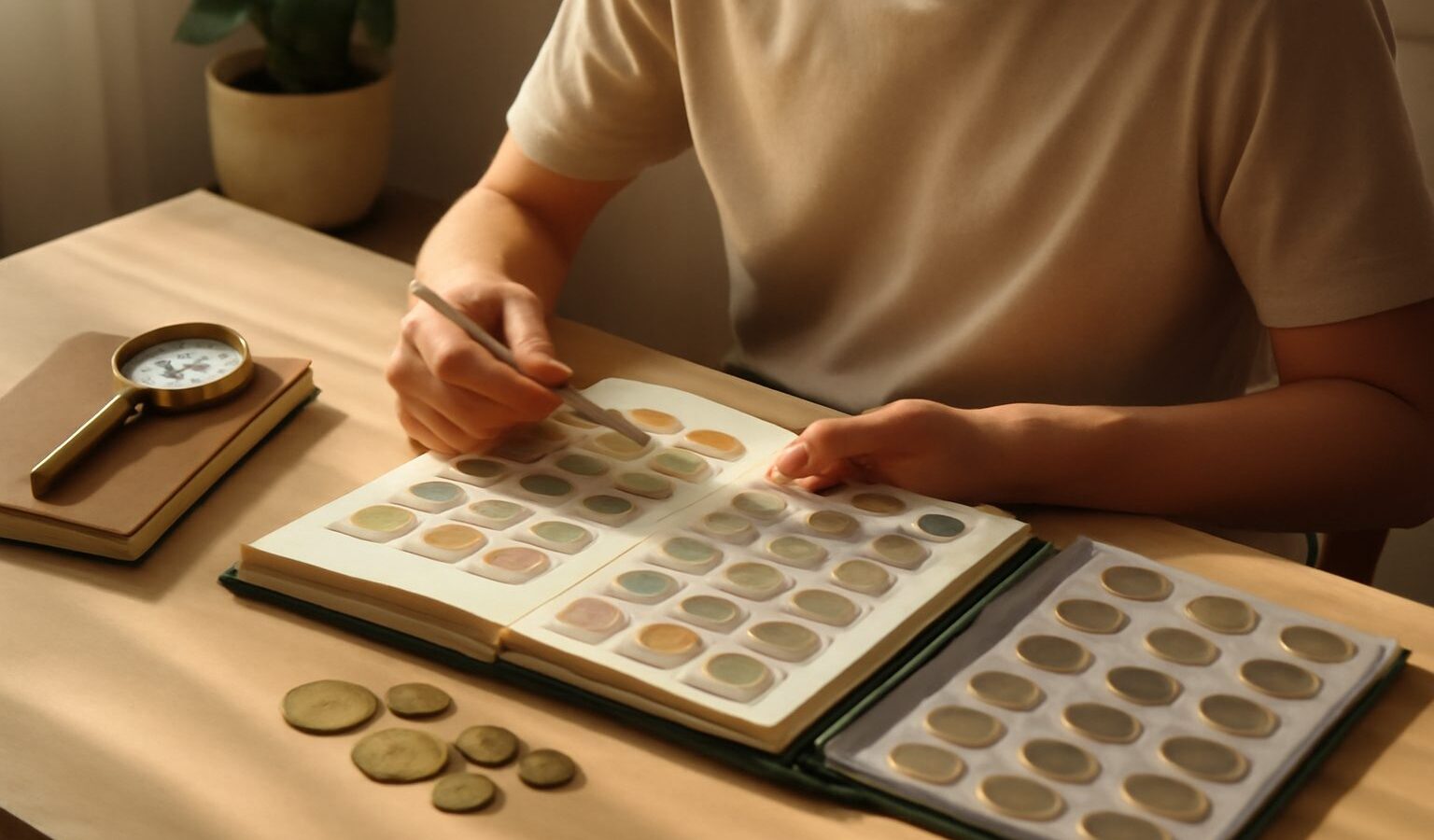
Stamp and coin collecting in Singapore is one of the most welcoming hobbies you can pick up, and one of the cheapest to start. Every household already has spare coins in a drawer and old envelopes with stamps still attached, so your first pieces cost you nothing. Known formally as philately for stamps and numismatics for coins, these hobbies reward patience and curiosity rather than deep pockets. This guide shows a total beginner how to begin this weekend, where to find pieces locally, and how to protect a growing collection from our tropical humidity.
Why Stamps and Coins Are a Great First Collection
Few hobbies pack so much history into such small objects. A single stamp can carry a slice of a country’s story, its art, its language and its politics. A worn coin has passed through countless hands and can be centuries old. Collecting them is a quiet, absorbing pleasure that suits any age and any budget, and it needs almost no space, which makes it ideal for an HDB flat.
The hobby is also flexible. You can be a casual accumulator who keeps whatever catches your eye, or a focused specialist who chases one theme in depth. There is no pressure to spend big. Many lifelong collectors treasure common pieces bought for very little simply because they find them beautiful or meaningful. That freedom is a big part of the appeal.
Choosing a Focus for Your Collection
Collecting everything quickly becomes overwhelming, so most people pick a theme early. A focus turns a random pile into a collection with a story, and it makes the hunt far more satisfying. You can always change direction later as your interests grow.
- By country or region, such as Singapore, Malaysia or the wider region
- By era, for example pre-independence pieces or a particular decade
- By theme, such as flowers, birds, ships, festivals or famous people
- By type, like commemorative coins, first-day covers or definitive stamp series
- By condition, for those who enjoy hunting the best-preserved examples
Starting local is a natural choice here. Singapore and regional stamps and coins are easier to find, easier to research, and connect directly to our shared history, which makes each piece feel more personal.
What You Need to Start
You can begin with almost nothing, then add proper storage as your collection grows. The key is to protect pieces from fingerprints, bending and damp right from the start.
- A stockbook or album with acid-free pages for stamps
- Stamp tongs (soft tweezers) so you never touch stamps with bare fingers
- Coin flips, capsules or an album made for coins, avoiding PVC materials that damage over time
- Soft cotton gloves for handling coins by their edges
- A magnifier for reading fine detail and checking condition
- Moisture-absorbing packs or a small dry box for storage
It is completely fine to start with a cheap album and upgrade later. What matters most is handling pieces gently and keeping them dry. Never clean or polish old coins, as cleaning almost always lowers their value and strips away natural character that collectors prize.
Where to Find Stamps and Coins in Singapore
You have more sources than you might expect, and some cost nothing at all. Beginners often build a surprising collection before spending a cent.
| Source | Best for | Good to know |
|---|---|---|
| Family and friends | Free starter pieces, old letters, spare change | Ask relatives before old items are thrown out |
| SingPost and philatelic releases | New commemorative stamps and covers | Check current availability and issue dates |
| Coin and stamp dealers | Specific pieces, expert advice, authentication | Compare a few dealers before buying |
| Collector clubs and fairs | Trading, learning, meeting fellow hobbyists | Great for beginners to ask questions |
| Online marketplaces | Wide choice, hard-to-find items | Verify sellers and study photos closely |
Bras Basah has long been associated with hobby and stationery shops, and dealers, collector societies and occasional fairs are good places to learn in person. Online marketplaces widen your reach enormously, though you should study listings carefully and buy from sellers with a solid track record. Prices vary hugely with rarity and condition, so treat any figure as a rough guide and compare several sources before you commit.
Handling and Storing Your Collection in a Humid Climate
Humidity is the biggest threat to stamps and coins in Singapore. Damp makes stamps stick together or grow foxing spots, and it speeds up tarnish and corrosion on coins. A little care goes a long way and costs very little.
Keep your collection in a cool, dry, shaded spot away from direct sunlight, which fades colours and yellows paper. Store stamps flat in albums with acid-free pages, and never use ordinary sticky tape or glue on them. Handle stamps only with tongs and hold coins by their edges, ideally with cotton gloves, because skin oils cause lasting marks. Use silica gel or moisture-absorbing packs in your storage boxes and replace them when they saturate. A small dry box or dehumidified cabinet is one of the best investments a local collector can make.
Check your collection every so often for early signs of damp or mould, and air out albums that have been shut away for a long time. Consistent, gentle care keeps pieces in good condition for decades and preserves both their beauty and their value.
Learning and Joining the Community
You do not have to collect alone. Reference catalogues, library books and online forums help you identify pieces and learn what makes them special. Local collector societies and hobby groups welcome newcomers and are often the fastest way to improve, since experienced members love sharing what they know. Trading duplicates with others is also a friendly, low-cost way to grow your collection while making friends who share the passion.
Above all, collect what you enjoy. The most rewarding collection is one that reflects your own curiosity, built patiently over time, one small treasure at a time.
Explore More
If small treasures with history appeal to you, there is plenty more to explore. Start with how to start a collection as a hobby for the basics, then see how the same collecting instinct plays out in collecting trading cards or collecting vinyl records.