
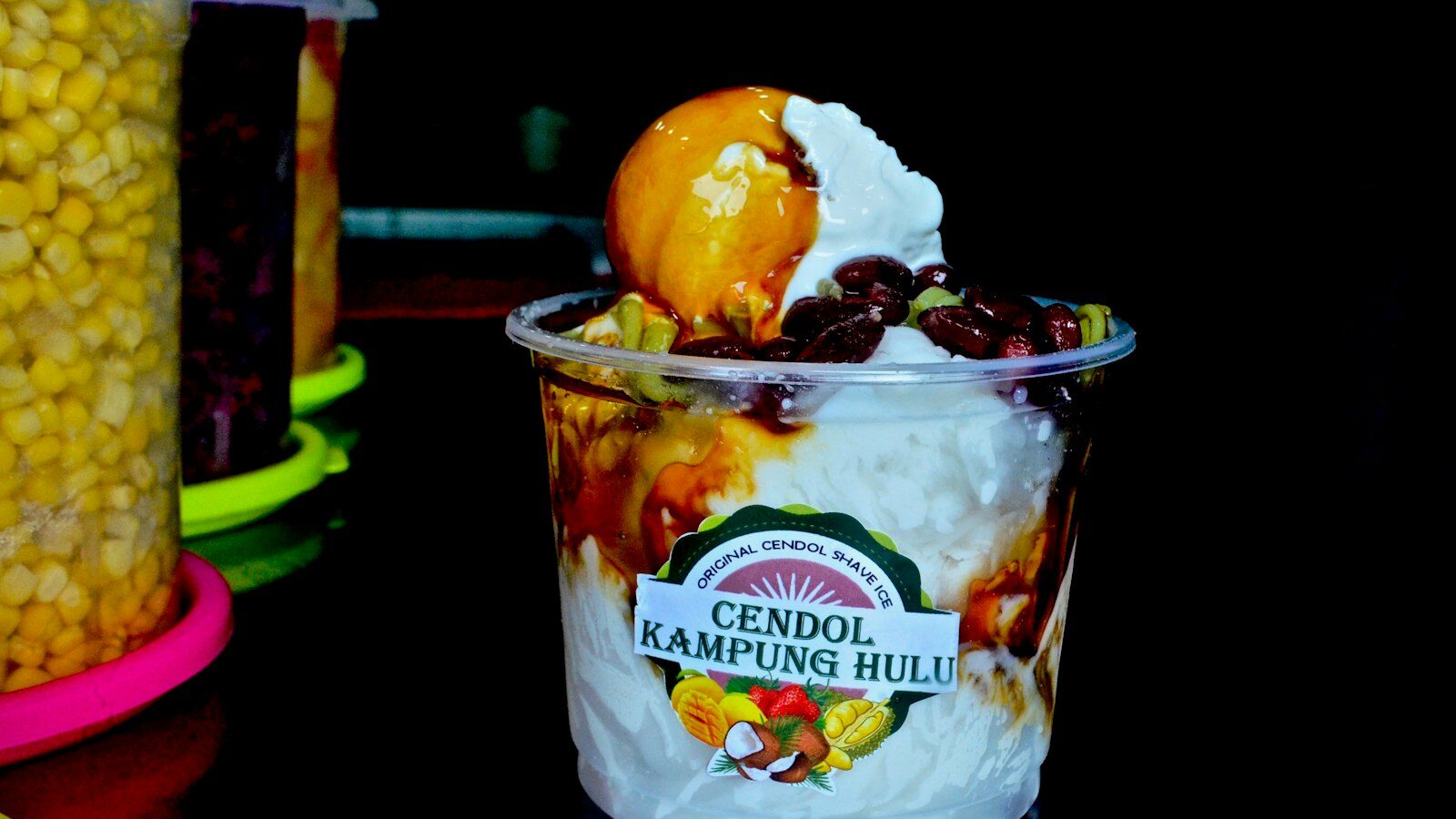
There is no better answer to a hot afternoon than a bowl of icy dessert, and chendol in Singapore is the reigning favourite. Ask around and you will hear passionate opinions about the perfect ratio of coconut milk to shaved ice, the depth of the gula melaka, and whether the green jelly strands should be firm or soft. Its close cousin, ice kacang, takes a different route to the same cooling relief, piling a mountain of shaved ice over a hidden treasure of beans, jelly, and syrup. Together they form the backbone of the local cold dessert scene.
This guide explains what chendol and ice kacang each are, how they differ, the common variations, and how to enjoy both like someone who grew up eating them.
What Chendol Is
Chendol, sometimes spelled cendol, is a coconut milk based dessert built on a few essential parts. At its heart are soft green jelly strands made from rice flour and flavoured with pandan, which gives them their colour and gentle fragrance. These sit in a pool of coconut milk over a bed of finely shaved ice, all crowned with a generous drizzle of gula melaka, the dark, smoky palm sugar syrup that defines the dish.
A classic bowl usually includes:
- Green pandan jelly strands, soft and slippery.
- Shaved ice, fine and fluffy rather than crunchy.
- Fresh coconut milk, rich and slightly savoury.
- Gula melaka syrup, deep and caramel-like.
- Red beans, adzuki beans cooked until soft and lightly sweet.
The magic of chendol is balance. The coconut milk brings creaminess, the gula melaka brings a rounded, almost toffee sweetness, and the ice keeps everything cold and light. When it is made well, no single element shouts over the others. It is sweet, but not cloying, and deeply refreshing.
What Ice Kacang Is
Ice kacang, also written ais kacang, literally points to “bean ice”, a nod to the beans buried at the bottom. Where chendol is understated and coconut led, ice kacang is a colourful, generous pile. A tall dome of shaved ice is heaped over an assortment of ingredients, then doused with brightly coloured syrups and often finished with evaporated or condensed milk.
Dig into a bowl and you might find:
- Red beans and other sweet beans.
- Chewy attap chee, the translucent palm fruit seed.
- Grass jelly and colourful jelly cubes.
- Sweet corn kernels.
- Sometimes a scoop of ice cream on top in modern versions.
The experience of ice kacang is about discovery. The top looks simple, but the pleasure is in mixing and finding the mound of treats hidden beneath. It tends to be sweeter and more playful than chendol, which is part of its enduring appeal with younger eaters.
Chendol Versus Ice Kacang and Their Cousins
Because both are shaved ice desserts sold at the same stalls, it helps to see how they line up against each other and against a couple of relatives you will meet.
| Dessert | Base and defining flavour | Typical toppings | Character |
|---|---|---|---|
| Chendol | Coconut milk and gula melaka | Pandan jelly strands, red beans | Creamy, smoky-sweet, understated |
| Ice kacang | Shaved ice with coloured syrups | Beans, attap chee, jelly, corn, milk | Colourful, sweet, playful |
| Bubur cha cha | Warm coconut milk | Sweet potato, yam, tapioca pearls | Rich, comforting, often served warm |
| Ang tao snow | Shaved ice or snow ice | Red beans, syrup | Simple, bean forward |
Both chendol and ice kacang shine in the heat, so pick chendol when you want something creamy and rounded, and ice kacang when you want colour, crunch, and a bit of a treasure hunt.
Common Variations You Will Meet
Neither dessert is fixed, and stalls take pride in their own touches. Regional and family styles vary, so treat these as common patterns rather than strict rules.
For chendol, you may come across:
- Durian chendol, with a dollop of durian pulp folded in for a fragrant, custard-like richness.
- Extra gula melaka on request for those who like it darker and sweeter.
- Sea coconut or attap chee added for extra chew.
- Versions that lean heavier on coconut milk for a creamier bowl.
For ice kacang, common twists include:
- Durian ice kacang, again using the fruit as a luxurious topping.
- Chocolate or coloured syrups layered for a more indulgent look.
- A scoop of ice cream, a modern addition that leans dessert-parlour.
- Snow ice versions where the ice is shaved so fine it melts almost instantly.
Half the fun is trying a stall’s signature version, so if you spot something unusual on the menu, it is often worth ordering.
Where to Find Them and How to Enjoy Them
Chendol and ice kacang are hawker centre and food court staples, most often found at dedicated dessert stalls that also sell warm desserts and drinks. You will commonly find them at:
- Hawker centres, usually at a stall marked simply as a cold or local dessert stall.
- Food courts in malls, where air conditioning makes for an easy afternoon stop.
- Older coffee shops and markets, where long-running dessert sellers still work.
- Peranakan and Malay leaning eateries, which often take particular care with the gula melaka and coconut milk.
Stalls, prices, and recipes change often, so check current details rather than relying on any single name. To enjoy either like a local, a few habits help:
- Mix before you eat. Ice kacang especially needs a good stir so the syrup and hidden ingredients reach every spoonful.
- Eat quickly. Shaved ice melts fast in the heat, and a diluted bowl loses its charm.
- Taste the gula melaka. Good chendol lives and dies by its palm sugar, so notice whether it is deep and smoky or thin and flat.
- Share and compare. Ordering one of each lets you taste the contrast between creamy chendol and playful ice kacang.
- Try a durian version once. If you enjoy the fruit, it turns either dessert into something special.
Whether you favour the quiet creaminess of chendol or the colourful abundance of ice kacang, both offer the same simple gift, a cold, sweet, restorative pause on a warm island day.
Explore more
Cool down further with our broader local desserts guide, or read about the warm and drinkable side of the tradition in our tau huay and soya desserts guide. For the full picture of where to eat, see our must-try hawker food roundup and the hawker centres guide.