
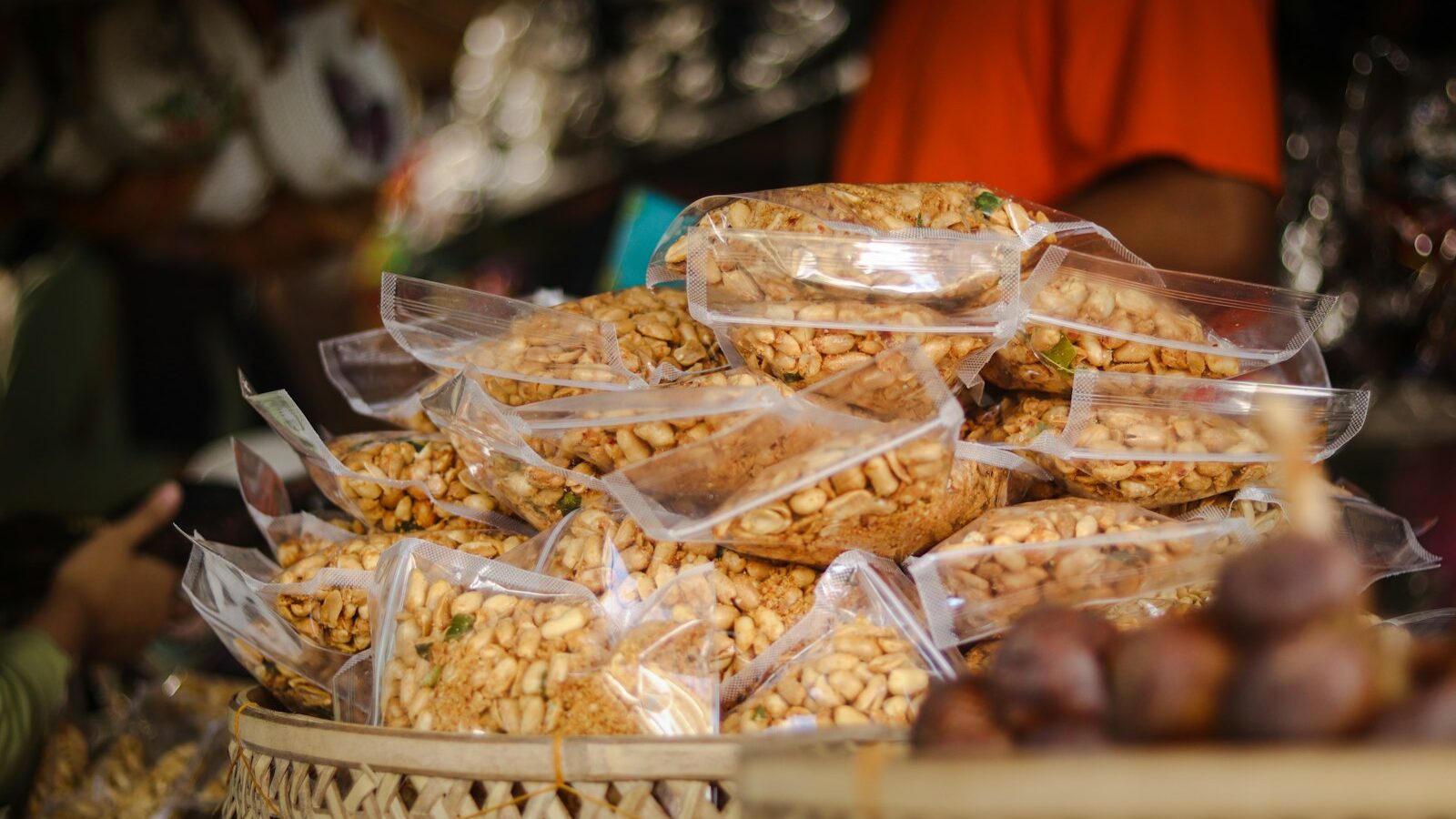
Before packaged crisps filled every shelf, the snack of choice outside cinemas and along five foot ways was kacang puteh, an assortment of roasted, steamed, and fried nuts and beans sold from tiered displays and scooped into rolled paper cones. For many, the kacang puteh singapore grew up on is pure nostalgia, the crackle of a paper cone and the mix of textures inside. This guide explains what it is, the classic varieties, how it was sold, and where you can still find it.
What Kacang Puteh Is
Kacang puteh translates from Malay as white nut, a name that originally referred to boiled or steamed chickpeas, one of the oldest items in the range. Over time the term came to cover a whole family of nut and bean snacks sold together. The trade is closely tied to the Indian community in Singapore, and for decades kacang puteh sellers were a familiar sight, especially near cinemas, markets, and busy streets.
The appeal lies in variety. A typical seller offered a spread of different nuts and beans, each with its own texture and seasoning, so customers could pick a single favourite or a mix. It was affordable, portable, and endlessly snackable, the kind of treat you nibbled slowly through an afternoon or a film.
As a piece of living food heritage, kacang puteh sits alongside other traditional nibbles in our wider street snacks guide for Singapore, which explores the small bites that shaped local snacking.
The Classic Varieties
Part of the charm is the range on offer. Common items across a kacang puteh spread include:
- Steamed or boiled chickpeas, the original white nut, soft and mild.
- Roasted or fried groundnuts, sometimes plain, sometimes coated in a thin flour crust.
- Sugar coated peanuts, sweet and crunchy.
- Fried broad beans, crisp and savoury.
- Green peas, roasted until crunchy and often lightly spiced.
- Muruku and other fried flour snacks, crisp and sometimes seasoned with spice.
- Roasted chickpeas and lentils, nutty and firm.
Some sellers also offered items such as cashews or a mix labelled simply as assorted nuts. Seasonings ranged from plain and lightly salted to sweet or gently spiced, giving each variety its own character.
Allergens to Note
This is essential to flag. Kacang puteh is built around peanuts, tree nuts, and legumes, so it is naturally high risk for anyone with a nut allergy. Many items are fried in shared oil or scooped with shared implements, so cross contact between varieties is common even for items that seem nut free. Some fried snacks also contain wheat, and certain mixes may include other allergens depending on the seller. If you have a nut or legume allergy, treat kacang puteh with real caution and ask about ingredients before buying.
How It Was Sold and Served
The traditional kacang puteh seller is a memorable image. Snacks were displayed in a set of tins or containers, often arranged in a tiered or fan shaped stand, each holding a different variety. Customers pointed at what they wanted, and the seller scooped it out and rolled it into a cone made from a sheet of paper, sometimes a page from an old exercise book or newspaper in the older days. The cone kept the snack contained and easy to carry while walking.
You paid by the scoop, and you could ask for a single type or a combination. This made kacang puteh flexible and cheap, a small indulgence that suited every budget. The ritual of choosing, watching the scoop, and taking the warm cone was part of the pleasure.
How to Eat and Order It
Eating kacang puteh is casual by design. You tip the cone gently and let a few nuts fall into your hand, or eat straight from the paper. Because the range mixes soft, crunchy, sweet, and savoury, part of the fun is alternating between varieties. A cone lasts a good while, making it ideal for slow snacking.
When ordering, simply point at the varieties you want and say how much, or ask for a mix if you cannot decide. Sellers are usually happy to combine several types into one cone. Pair it with a cold drink and you have a simple, old fashioned treat.
Where to Find It Today
Kacang puteh is far less common than it once was, as packaged snacks and changing habits pushed many traditional sellers out. Even so, the tradition survives. You can still find kacang puteh at some hawker centres, in a handful of long running stalls, at heritage markets, and occasionally at cultural events and festivals where traditional foods are celebrated. A few dedicated sellers have kept the trade alive across generations.
Because these stalls are increasingly rare and their locations and hours change, it is worth checking current listings and recent reviews before setting out to find one. When you do come across a proper kacang puteh spread, it is worth stopping, both for the taste and for the small piece of history in every paper cone. For more nostalgic bites, our guide to must try hawker food in Singapore and our wider hawker centres guide for Singapore point you towards other classics worth seeking out.