

Most Singaporeans heading into Malaysia for a beach break point the car at Desaru, Mersing or the islands off Johor. Keep driving north, though, and the coast gets quieter, the beaches get longer and the pace drops to something closer to a fishing village. Planning a trip to Cherating from Singapore is one of the better-kept road trip secrets in the region: a laid-back surf village on the Pahang coast, with the state capital, Kuantan, just south of it for food, supplies and a few more sights.
This guide covers the drive up, what to expect at the turtle sanctuary, when the surf actually turns on, and how to split your time between Cherating and Kuantan.
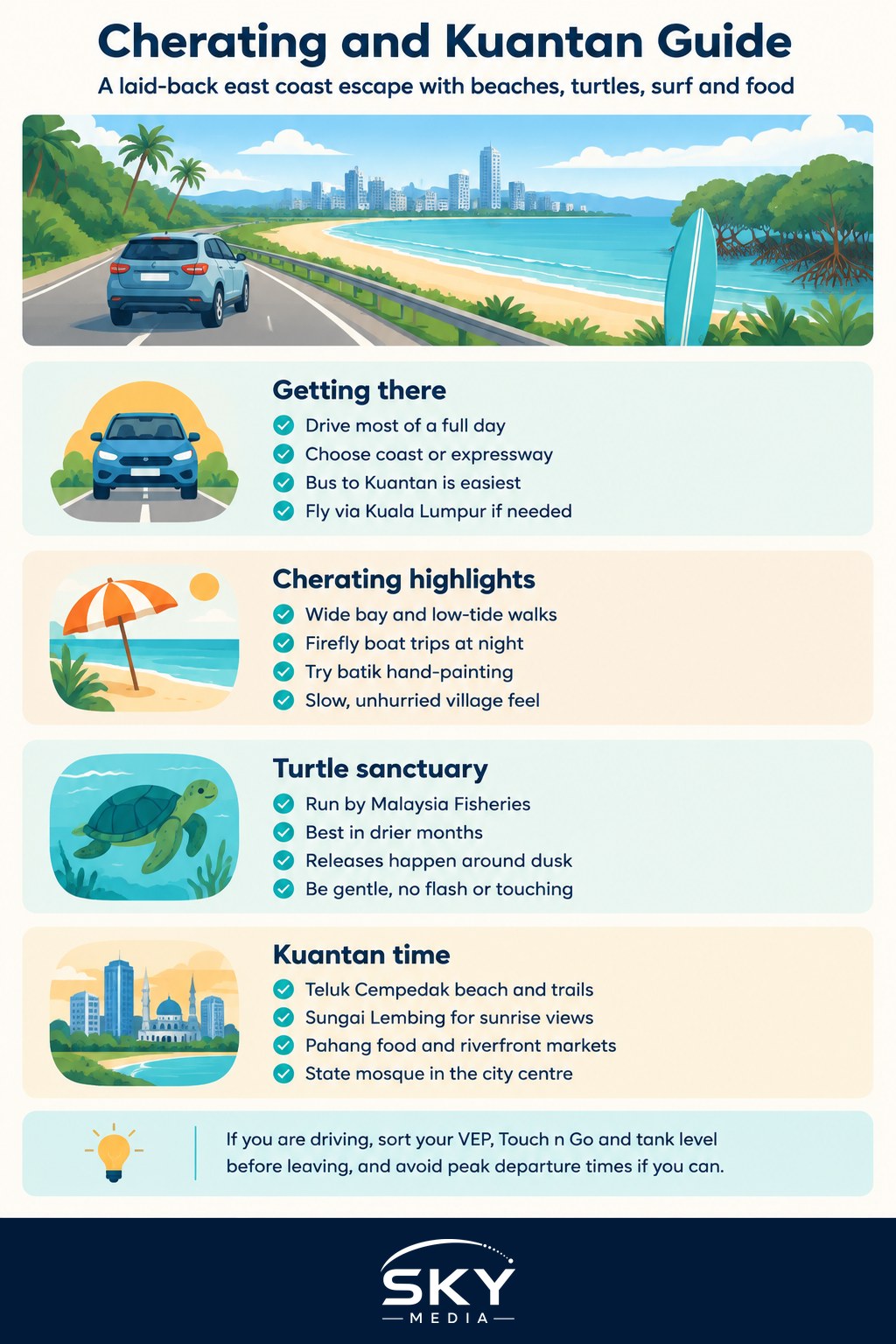
Getting There: Driving, Bus or Flying
Driving up the east coast
The drive is the classic way to do this trip, and it is a long one. Plan for most of a day on the road once you include the Causeway or Second Link crossing, a meal stop and traffic around Johor Bahru. There are two broad approaches:
- The coastal route north through Kota Tinggi, Mersing and Pekan follows Malaysia’s federal trunk road along the east coast. It is slower, with small towns, roadside fruit stalls and stretches through oil palm estates, but it is scenic and makes the journey part of the holiday.
- The expressway route uses Malaysia’s highway network inland and then the East Coast Expressway towards Kuantan. It is usually faster and more predictable, though you trade the scenery for tolls and rest stops.
Before you go, sort out the paperwork and the car:
- Singapore-registered cars need a valid Vehicle Entry Permit (VEP) to be driven in Malaysia. Check the current registration and RFID tag requirements on the Road Transport Department Malaysia (JPJ) website well before your trip.
- Malaysian expressway tolls are cashless, so make sure your Touch ‘n Go card or tag is set up and topped up.
- Singapore’s Three-Quarter Tank Rule requires your tank to be at least three-quarters full when you leave Singapore by car. Check LTA’s website for the current details.
- Avoid leaving on a Friday evening or the eve of a long weekend if you can. Causeway queues can add hours.
Split the drive if you have the time. An overnight stop in Mersing or Pekan breaks it up nicely, and Pekan, the royal town of Pahang, has a riverside and old palace buildings worth a short wander.
Bus and flying
Long-distance coaches run between Singapore and Kuantan, which is the easiest option if you do not want to drive. From Kuantan, Cherating is a short taxi or e-hailing ride north. Kuantan also has an airport, but direct flight availability from Singapore changes over time, so check current routes. Flying via Kuala Lumpur is the usual fallback.
Cherating Village: What It Is Actually Like
Cherating is small. Its centre is a short strip of guesthouses, surf schools, cafés and casual restaurants behind a wide, shallow bay. Accommodation ranges from simple chalets and backpacker hostels to larger beach resorts on the stretches either side of the village.
What makes it worth the trip:
- The bay. At low tide the beach is broad and flat, good for walking and for children to play in the shallows. Swim only where conditions are calm and look out for any posted warnings or red flags, especially in monsoon season.
- The firefly river trips. Small boats take visitors along the Cherating River after dark to see fireflies flickering in the mangrove trees. Go on a dark night and keep torches and phone screens down so you do not disturb them.
- Batik workshops. Some local operators let visitors try hand-painting batik, a good rainy-afternoon activity.
- A slow pace. There is not a lot to tick off, and that is the point. Many visitors spend their days reading, eating and watching the bay.
Visiting the Cherating Turtle Sanctuary
Just north of the village sits a turtle hatchery run by Malaysia’s Department of Fisheries. Green turtles and hawksbill turtles are the species most commonly associated with this stretch of coast, and the centre collects eggs from nests on nearby beaches, incubates them, and releases the hatchlings to the sea.
A few things to know before you go:
- Season matters. Nesting and hatching on the Malaysian east coast generally happens in the drier months of the year, roughly from spring through to early autumn. Outside that window you may see only the information displays and a few turtles in holding tanks.
- Releases are not on a timetable. Hatchling releases depend on when nests hatch, usually around dusk. Ask the staff on arrival rather than relying on a fixed schedule.
- Check opening details locally. Hours and visitor arrangements can change, so confirm with the centre or your accommodation before driving over.
- Respect the turtles. Do not touch hatchlings or adult turtles unless staff specifically guide you, keep your distance, and never use a camera flash. On any beach, avoid shining lights at the sand at night during nesting season, as light can disorient turtles.
Treat it as a conservation centre rather than an attraction. A donation or the purchase of a small souvenir helps the work continue.
When to Go: Turtle Months, Surf Season and the Monsoon
The single biggest decision for this trip is timing, because the east coast changes character completely with the northeast monsoon. Here is how the year roughly breaks down:
| Period | What to expect | Best for |
|---|---|---|
| Roughly March to May | Drier, calmer seas, hot afternoons | Beach days, swimming, quieter village |
| Roughly June to September | Generally settled weather, turtle nesting and hatching season | Turtle sanctuary visits, family trips, firefly tours |
| Roughly October to November | Weather starts to turn, more showers | Shoulder season deals, fewer crowds |
| Roughly November to March | Northeast monsoon, heavy rain, rough seas, possible flooding | Surfing (for those who know what they are doing) |
Why surfers come in the monsoon
Cherating is one of the best-known surf spots on the Malaysian peninsula precisely because the northeast monsoon pushes swell into the bay. The waves are generally friendly for learners and intermediate surfers compared with big-wave breaks elsewhere in Asia, and surf schools in the village rent boards and give lessons.
If you are going for surf:
- Watch weather forecasts and Malaysia’s meteorological department (MetMalaysia) for warnings. Monsoon storms can bring flooding to Pahang, and roads can be affected.
- Take a lesson if you are new. Instructors know where the currents run and when it is not safe to paddle out.
- Expect some days with no rideable waves and others where the sea is too rough. Build slack into your plans.
If you are going for swimming, turtles and family time, skip the monsoon months entirely.
Spending Time in Kuantan
Kuantan is a working city rather than a resort town, but it makes a useful base or a good half-day trip from Cherating.
- Teluk Cempedak is the city’s main beach, with a seafront promenade, boardwalk trails through the forest along the headland, and restaurants. Watch out for the monkeys and keep food out of sight.
- Sungai Lembing, inland from Kuantan, is an old tin-mining town. Early risers climb a nearby hill for a sunrise view over the mist, and the town has a mining museum and old wooden shophouses. Check current access and conditions before you go, and bring water and a torch for the pre-dawn climb.
- The food. Pahang is known for freshwater fish dishes, river prawns, keropok lekor (a chewy fish sausage snack) and east coast Malay cooking. The riverfront area and local markets are good places to start.
- The Sultan Ahmad Shah State Mosque in the city centre is an elegant landmark. Visitors should dress modestly and check visiting arrangements outside prayer times.
For more ideas closer to home, see our round-up of the best weekend getaways from Singapore. If you prefer an island with easier flights, our Langkawi from Singapore guide covers Malaysia’s west coast alternative, and back home, East Coast Park is the place for a beach fix without the drive.