
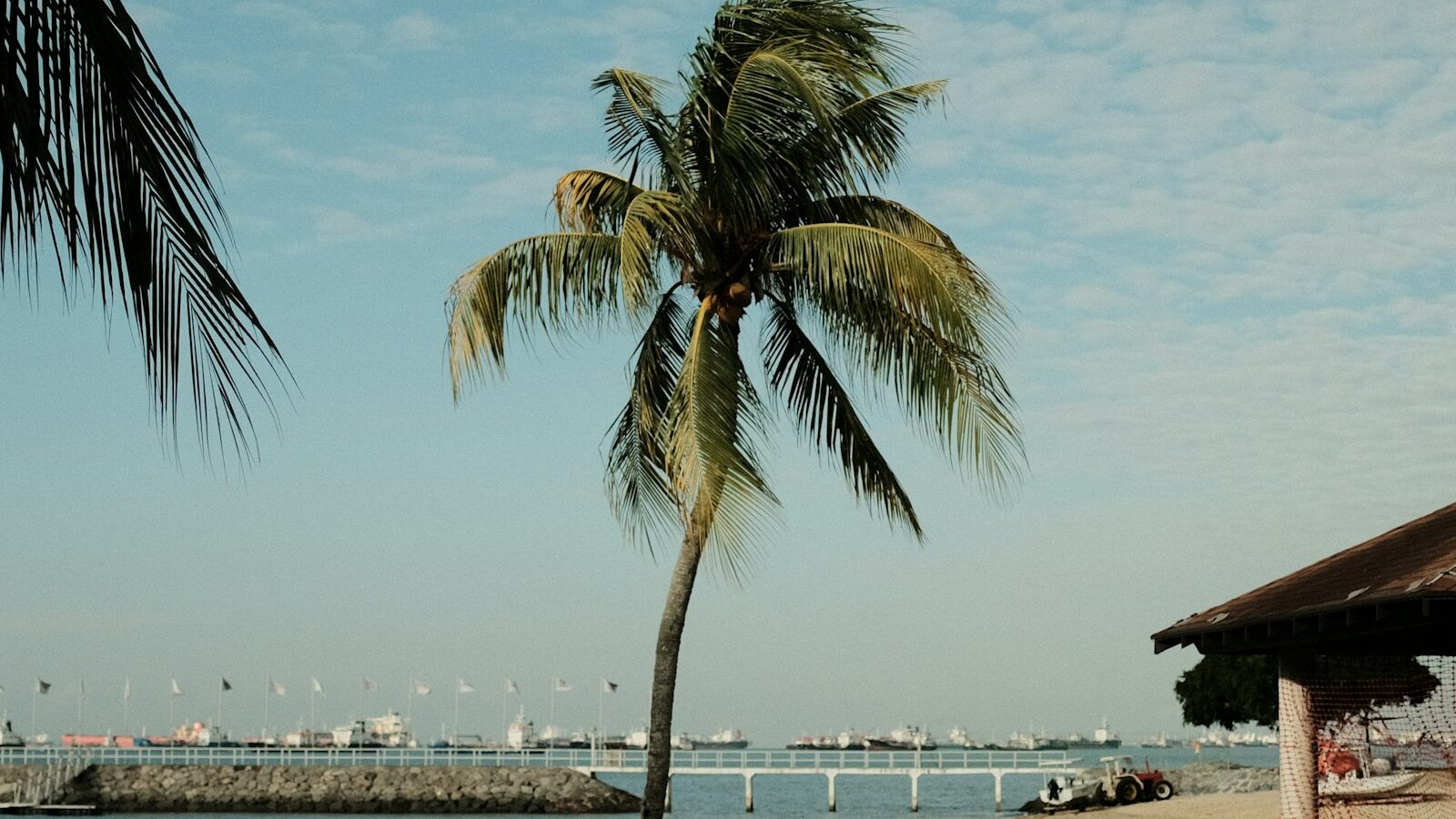
If you ask a Singaporean where to go for a lazy weekend by the water, chances are the answer is East Coast Park. Stretching along the southeastern shoreline, it is Singapore’s longest coastal park, a green ribbon of casuarina trees, sandy beach and cycling paths that runs for more than 13 kilometres and covers about 180 hectares. Locals grew up here on birthday BBQs and first bike rides, and newcomers quickly learn why. Whether you want a gentle cycle by the sea, a plate of chilli crab as the sun goes down, or simply a spot to lay out a picnic mat, ECP (as everyone shortens it) is one of the easiest, friendliest places to spend a day outdoors in the city.

What is East Coast Park?
East Coast Park was built on reclaimed land in the 1970s, which is why the whole thing sits neatly between the sea on one side and the East Coast Parkway expressway on the other. It is managed by the National Parks Board (NParks) and it is completely free to enter, open around the clock.
The park is unofficially divided into lettered areas, from Area A near the city end to Area H closer to the ferry terminal. You do not need to memorise them, but they are useful shorthand: when a friend says “meet at Area C,” they mean the stretch opposite Marine Parade around Marine Cove, while “Area E” is the lagoon with the food village and cable ski park. The park runs continuously, so you can walk or cycle from one end to the other without ever really leaving the greenery.
What makes it special is the sheer range of things packed into one long strip. It is a beach, a sports ground, a food destination and a campsite all at once, which is exactly why it stays popular year after year.
Which area for what
The letters can feel opaque at first, so here is a rough orientation to help you pick a meeting point. Exact facilities shift as the park is upgraded, so confirm current details on the NParks website before a special trip.
| Rough zone | Known for | Good for |
|---|---|---|
| City end (around Areas A to B) | Open lawns, quieter stretches, park connector links | Running, quiet cycling, picnics |
| Middle (around Areas C to D) | Marine Cove eateries and playground, Parkland Green, bike rentals | Families, first-time visitors, dog owners |
| Eastern end (around Areas E to H) | Lagoon Food Village, cable ski park, seafood centre, Xtreme Skatepark, camping in Areas D and G | Group dinners, camping, watersports |
Cycling and skating along the coast
The single most popular thing to do here is get on wheels. The dedicated cycling and skating track hugs the coastline for the length of the park, mostly flat and beginner friendly, with the sea breeze keeping you cool. Cycling east coast style means a relaxed roll past the beach rather than a serious workout, though fitter riders can link up to the wider Park Connector Network and reach places like Changi or Gardens by the Bay. If you want to plan a longer ride beyond the park itself, our guide to park connector cycling routes maps out how the loops join up.
A few things worth knowing before you set off:
- The path is shared between cyclists, skaters and pedestrians, so keep left and pass on the right.
- Weekends and public holidays get busy, especially late afternoon. Early morning is far quieter.
- There is a separate footpath closer to the sand for walkers and joggers, so you are not forced to dodge bikes the whole way.
If you have your own bike, inline skates or a skateboard, just bring them along. If not, renting is easy.
Renting bikes and skates
Several bicycle rental kiosks operate inside the park, clustered near the busier areas. They stock everything from standard single bikes to tandems, family bikes with canopies and children’s bikes with training wheels. As a rough guide, expect to pay a modest hourly rate for a basic bicycle, with fancier family models costing more. Bring a physical ID or be ready to leave a deposit, as many shops still ask for one. Prices and operators change over time, so treat any figure as a loose estimate rather than a fixed rate.
The beach, BBQ pits and picnics
The beach at East Coast is long and gently sloping, backed by shady trees that make it comfortable even at midday. It is not a wild, remote beach Singapore postcard, you will see ships anchored offshore, but it is clean, safe and wonderfully convenient. People swim in the designated areas, build sandcastles, fly kites and simply nap under the casuarinas.
Barbecuing is practically a national pastime here. The park has numerous BBQ pits dotted along its length, and on weekends the smell of satay and grilled chicken wings drifts across the whole area. The pits are bookable in advance, typically through the NParks online booking system, and they are popular enough that weekend slots can go fast. A few pointers:
- Book your pit ahead of time rather than turning up and hoping one is free.
- Bring your own charcoal, lighter, food and cooking gear, or buy a ready pack from nearby shops.
- Clear up after yourselves and dispose of hot coals safely in the bins provided.
If a full barbecue sounds like too much effort, a simple picnic works just as well. Spread a mat under the trees, grab some food from one of the food centres and watch the world cycle past.
Camping by the sea
Yes, you can camp at East Coast Park. Designated camping grounds let you pitch a tent overnight, which is a genuinely lovely, low cost way to wake up to the sound of the sea in the middle of a city. You will need a free permit from NParks, applied for in advance with a Singapore address and ID number, and camping is only allowed in Area D (outside the Cyclist Park) and Area G, with tents at least 5 metres apart. There are toilets and shower facilities nearby, so it is comfortable rather than roughing it. It is a favourite for families introducing children to their first night under canvas.
Watersports and cable ski
The waters off East Coast are calm and protected, which makes them ideal for beginner watersports. Along the park you will find operators offering kayaking, stand up paddleboarding, windsurfing and sailing lessons, mostly clustered around the sea sports centres.
The standout attraction is the cable ski park, where a fixed overhead cable tows you across a purpose built lagoon on a wakeboard or water ski. It is a brilliant introduction to wakeboarding because there is no boat and no need to know how to get up behind one, the cable does the pulling. Beginners and experienced riders both use it, and you can book by the hour or buy a day pass. It is one of the more memorable ways to spend an afternoon here.
Playgrounds, skatepark and family spots
Families searching for East Coast Park usually want to know where the children can burn off energy. As of late 2026, these are the spots NParks and recent guides point to:
- Coastal PlayGrove: a large playground with a nature playgarden and a water play area, popular on weekend mornings.
- Marine Cove playground (Area C): a big playground with rope bridges, a climbing wall and a lighthouse-shaped play tower, with cafes and casual restaurants next to it.
- Parkland Green and the dog run (Area C1): open lawns for picnics and kite flying, plus a fenced run for dogs.
- Xtreme Skatepark (Area F): ramps and bowls for skateboarding, inline skating and BMX.
- KPMG Wellness Garden: a quieter multigenerational garden with different zones for older visitors and young children.
Parts of the park are being upgraded in phases, so some lawns, footpaths and play areas close for a few weeks at a time. Check the closure notices on the NParks East Coast Park page before you plan a party around one spot.
The seafood centre and hawker food
No visit is complete without eating, and East Coast delivers. The famous East Coast seafood centre is a cluster of large seafood restaurants right by the water, and it is one of the classic places in Singapore to tackle a proper chilli crab or black pepper crab with a group of friends. Come hungry, order to share, and do not be shy with the mantou buns for mopping up the sauce. If you want to know your crab styles from your cereal prawns before you go, our guide to seafood in Singapore breaks down the classic dishes.
For something more everyday, the park also has well loved hawker and food centres serving local favourites: satay, BBQ stingray, chai tow kway (fried carrot cake), laksa, oyster omelette and freshly cracked coconuts. Prices are hawker friendly, and eating with the sea breeze coming in is hard to beat. This is casual, unpretentious food that captures what locals actually love about the park.
Best times to visit
East Coast is enjoyable year round, but timing shapes the experience:
- Early morning is peaceful and cool, perfect for a run or a quiet cycle.
- Late afternoon into sunset is the golden hour, gorgeous light, cooler air and a lively but happy crowd.
- Weekdays are much calmer than weekends if you can manage them.
- Singapore’s tropical weather means passing showers are common, so glance at the forecast and pack a light poncho just in case.
A local tip: for the best of both worlds, arrive in the late afternoon, cycle while it is cooling down, then settle in for seafood as the sun sets over the water.
Facilities and how to get there
Practical bits matter, and ECP is well set up. Along its length you will find public toilets, shower blocks, drink kiosks, bicycle rental shops, sheltered rest areas and plenty of car parks. It is generally family and wheelchair friendly on the main paths.
Getting there used to be the one catch, but the Thomson-East Coast Line stations along Marine Parade Road, opened in June 2024, have made the park much easier to reach by train. Your options are:
- Bus and a short walk. Several bus routes stop along Marine Parade Road or the service road, from where an underpass or bridge takes you into the park.
- MRT plus a walk. Take the Thomson-East Coast Line to Marine Parade, Marine Terrace, Siglap or Bayshore, then walk south and cross under the expressway into the park. From the East West Line, Bedok is the usual station, followed by a bus towards the lagoon area.
- Taxi or ride hailing. The simplest option, especially with a group, coolers and BBQ gear. Ask to be dropped at your target area letter.
- Drive. There are multiple car parks inside the park, though they fill up on busy weekends.
Quick tips checklist
- Book BBQ pits and camping permits with NParks in advance.
- Bring sun protection, water and a hat, shade is generous but the sun is strong.
- Keep left on the shared path and watch for cyclists.
- Cash and a physical ID are handy for bike rentals.
- Head to the seafood centre hungry and ready to share.
Park rules and safety tips
A few rules catch first-time visitors out, so it is worth knowing them before you pack the car.
- No open fires outside the pits. Camping stoves and portable grills are not allowed in the camping areas, so cook only at a booked BBQ pit.
- BBQ pit bookings. Pits are booked through the NParks module on AXS, one booking per NRIC at a time, and a booked pit can be used from 12pm to 10.30pm on the day. As of late 2026, AXS lists fees of roughly S$12 to S$20 a day depending on location.
- Camping permits are personal. Apply in advance and keep the permit handy, since park officers do check.
- Respect the shore. Do not collect or trample marine life in the intertidal area, and cover exposed skin if you go into the water, as NParks advises box jellyfish precautions.
- Watch the tide and weather. Stay out of low-lying areas that can flood at high tide or in heavy rain.
Frequently asked questions
Is East Coast Park free, and what are the opening hours?
The park is free to enter and open around the clock. Individual operators such as bike rentals, watersports and the cable ski park set their own hours and charges, so check those before you go.
Can I swim at the beach?
People do swim in the designated areas, but it is a working, urban coastline with ships offshore rather than a pristine island beach. Watch children closely, stay within marked zones, and mind your belongings on a busy day.
Do I need to book a BBQ pit or camping spot in advance?
Yes for both. BBQ pits are booked through the NParks system and weekend slots go quickly, while overnight camping needs a free NParks permit for a designated area. Turning up on spec on a weekend often ends in disappointment.
How does East Coast compare with other coastal parks?
East Coast is the longest and most facility-packed. For a quieter western equivalent see our West Coast Park guide, and for a family-friendly eastern option with a beach and mangroves, our Pasir Ris Park guide is a good comparison.
Which MRT station is nearest to East Coast Park?
Since the Thomson-East Coast Line extended along Marine Parade Road in June 2024, the closest stations are Marine Parade, Marine Terrace, Siglap and Bayshore, each a short walk from the park. Pick the one nearest your target area: Marine Parade suits Area C and Marine Cove, while Bayshore is handy for the eastern stretch towards the lagoon. Bedok on the East West Line is still useful if you prefer a bus straight to the lagoon and food village.
Is East Coast Park safe at night? It is generally safe and well used in the evenings by joggers, cyclists, diners and campers, and many paths are lit. Some stretches are darker and quieter, so stay on main paths, use bike lights, keep valuables close and avoid swimming after dark.
Can you bring a dog to East Coast Park? Dogs are welcome on a leash in the park, and there is a fenced dog run at Parkland Green in Area C1 where they can play. Bring water and waste bags, keep the leash on outside the run, and check NParks guidelines for any beach or area restrictions.
What should you bring for a day out at East Coast Park? Pack sunscreen, a hat, plenty of water, insect repellent and a picnic mat, plus a light poncho for passing showers. Bring ID or a deposit if you plan to rent bikes, and swimwear and a towel if you want to use the beach or the shower blocks.
Is East Coast Park good for a birthday party or company event? Yes, it is a classic spot for group gatherings, with BBQ pits, open lawns, playgrounds and food centres close together. For larger events with tents, sound systems or many guests, check NParks rules on event permits first, and pick a weekday or arrive early to secure space.
How long does it take to cycle the whole of East Coast Park? A relaxed ride along the full length, which runs more than 13 kilometres, usually takes about an hour one way at an easy pace, longer with stops or on a crowded weekend. Faster riders cover it more quickly, and many people simply ride part of it and turn back.
An easy day by the sea
East Coast Park endures because it asks so little and gives so much: a free, breezy stretch of coast where you can cycle, swim, grill, paddle and feast, all in an afternoon. Whether you have lived here for years or landed last week, it is one of the easiest ways to feel like you are by the sea without ever leaving Singapore. When you are ready to branch out, our roundup of the best parks in Singapore and the best beaches in Singapore point you to the next outing.
Further reading: Taitung From Singapore: Hot Air Balloons and Taiwan’s Quiet East Coast · Coastal PlayGrove at East Coast Park: A Family Guide · Walking the Coast-to-Coast Trail in Singapore Step by Step