

Balancing a career with caring for your family is one of the biggest juggling acts many of us face. Understanding childcare leave Singapore working parents can tap on, along with support for looking after ageing parents, helps you plan ahead instead of scrambling when a child falls ill or an elderly parent needs you. This is general information to help you ask the right questions. It is not legal or human resources advice, and the exact rules are set by the Ministry of Manpower (MOM) under the Employment Act and Tripartite guidelines, which do change over time.
What Childcare Leave Covers
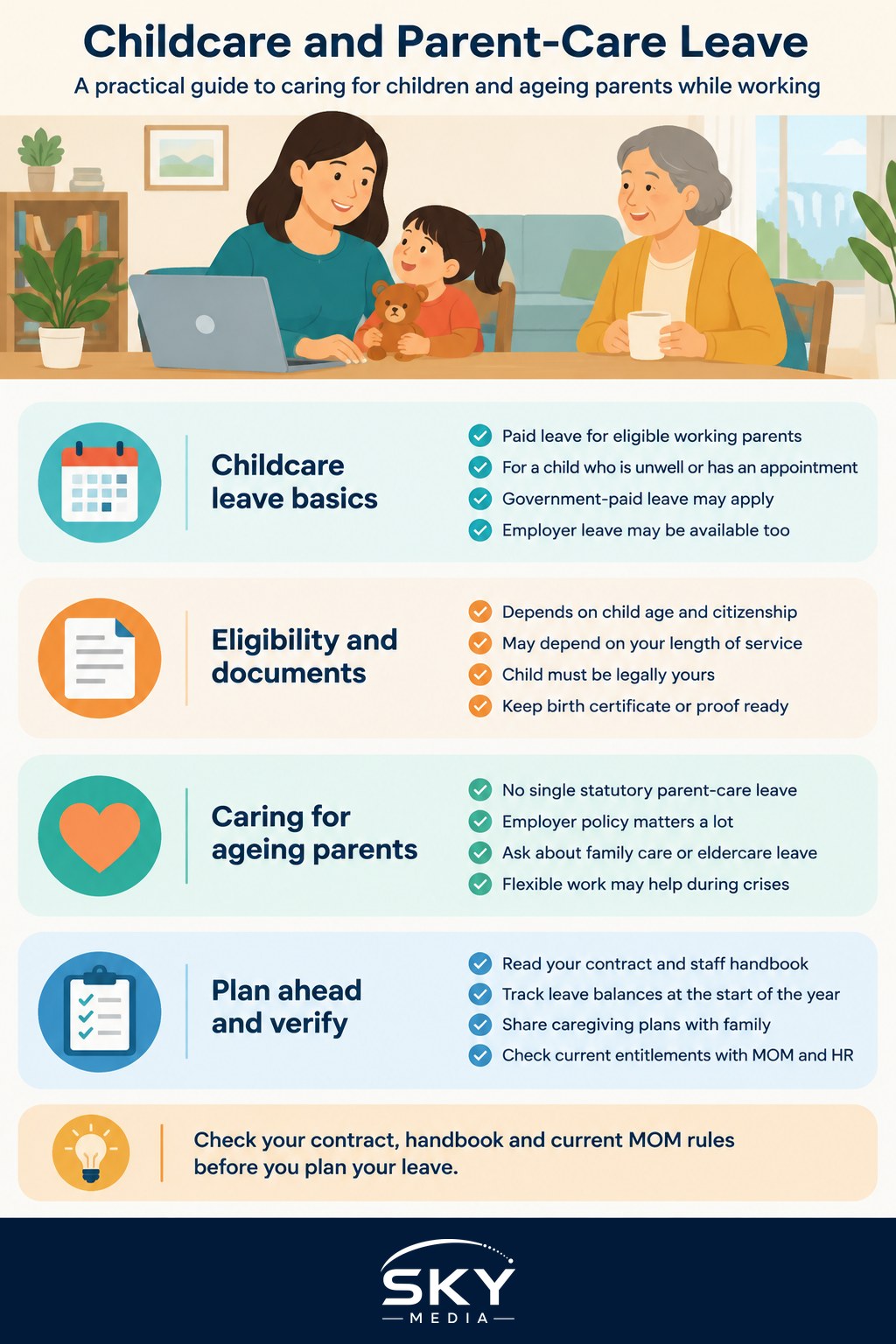
Childcare leave is a form of paid leave for eligible working parents with young children. The idea is simple. When your child is unwell, needs to attend a medical appointment, or you simply need a day to care for them, you should not have to burn through your annual leave or lose pay every single time.
In Singapore, this leave typically comes in two forms. There is government-paid childcare leave, which is co-funded to support parents, and there may be additional employer-provided leave depending on your company. Some parents of very young children may also be eligible for extended childcare leave. Eligibility usually depends on factors such as the age and citizenship of your child, how long you have worked for your employer, and whether the child is legally yours. Because the number of days, the age cut-offs and the citizenship conditions are set by MOM and can be revised, always verify the current entitlement rather than relying on what a colleague tells you.
A few practical points worth remembering:
- Childcare leave is meant to be used for caring for your child, not as extra holiday.
- Your entitlement is usually shared across a calendar year, so plan around school terms and known appointments where you can.
- If both parents work, each may have their own entitlement, so coordinate who takes which days.
- Unused days often do not carry over, so check your company policy near year end.
Keep your child’s documents, such as the birth certificate, easy to find. Human resources may ask for proof when you first apply, especially for government-paid leave.
Caring for Ageing Parents
Singapore does not currently have a single, universal statutory “parent-care leave” in the same way it has childcare leave, so this is an area where company policy matters a great deal. A growing number of employers offer their own family care or eldercare leave, and some allow flexible or compassionate arrangements when a parent is hospitalised or needs ongoing care. Under the Tripartite guidelines on flexible work arrangements, you can also request options such as staggered hours or remote work, which can make caring for a parent far more manageable.
If caring for an older family member is on your horizon, it is worth raising early and constructively with your manager. Frame it around how you will keep your work covered, not just what you need. Ask specifically about:
- Any company eldercare or family care leave, and how many days apply.
- Whether you can use annual leave, unpaid leave or flexible hours during a crisis.
- What documentation, if any, is required.
Comparing the Types of Leave
The table below is a simplified, hypothetical illustration to show how these leave types can differ in purpose and source. The round numbers are examples only and are not official entitlements. Always confirm real figures with MOM and your employer.
| Leave type | Who it helps | Typical source | Example days shown |
|---|---|---|---|
| Government-paid childcare leave | Parents of young children | Co-funded, set by MOM | 6 |
| Extended childcare leave | Parents of very young children | Co-funded, set by MOM | 2 |
| Company family or eldercare leave | Those caring for parents | Employer policy | 3 |
| Unpaid or flexible arrangements | Any caregiver in a crisis | Employer and Tripartite guidelines | Varies |
Treat every number above as a placeholder. The point is to see the shape of your options, then check the live rules.
How to Plan Ahead
The families who cope best are usually the ones who plan before the emergency arrives. A little preparation goes a long way.
First, read your employment contract and staff handbook. Your payslip and human resources portal often show your leave balances, so check them at the start of each year. Second, have an honest conversation with your partner or siblings about who is the primary caregiver for which family member, and how leave will be shared. Third, build a small buffer. Keeping a portion of your annual leave in reserve gives you breathing room when childcare or parent-care needs collide with work deadlines.
It also helps to know your rights so you can raise them calmly. If you feel your entitlements are not being honoured, MOM and the Tripartite Alliance for Fair and Progressive Employment Practices are the right places to seek guidance. Approaching your employer with facts, rather than frustration, usually leads to a better outcome for everyone.
A Responsible Word on the Numbers
It is tempting to want one neat figure for how many days you get. Resist that temptation. Leave entitlements in Singapore are reviewed periodically as family policy evolves, and eligibility hinges on details specific to your situation. What is accurate this year may shift next year. So use this article to understand the categories and the questions, then get your actual entitlement from the authoritative sources: MOM for statutory and government-paid leave, your employer for company benefits, and your own contract for the fine print.
Caring for the people who depend on you should not come at the cost of your livelihood or your peace of mind. With a clear understanding of what childcare and parent-care support exists, and a habit of checking the current rules, you can be there for your family and stay on solid financial footing at the same time.
Explore more
Annual Leave and Sick Leave Explained
Know Your Employment Rights
Understanding Your Employment Contract
Understanding Your Payslip
Frequently Asked Questions
Can I use childcare leave to look after a sick elderly parent? Childcare leave is meant for caring for your child, so it is generally not for a parent. For an ageing parent, ask your employer about eldercare or family care leave, flexible hours, or using annual leave. MOM can clarify how the rules apply.
Do unused childcare leave days carry over to next year? Often they do not, as the article notes entitlement is usually counted by calendar year and unused days may lapse. Company policy can differ, so check your staff handbook or ask HR near year end. MOM sets the statutory rules.
What documents might HR ask for when I apply for childcare leave? HR may ask for proof such as your child’s birth certificate, particularly when you first apply for government-paid leave. Keep the documents handy, and check with your employer what they need. Requirements can differ between companies.
Who do I contact if my employer will not honour my leave entitlements? Start by raising it calmly with HR and referring to your contract and the facts. If it is not resolved, MOM and the Tripartite Alliance for Fair and Progressive Employment Practices can give guidance. Keep records of your requests and replies.
Can I ask for flexible hours to care for a family member? You can request one. Under the Tripartite guidelines on flexible work arrangements, options such as staggered hours or remote work may be available, though approval is up to your employer. Explain how you will keep your work covered, and put the request in writing.
Official sources: Ministry of Manpower (MOM)
Further reading: Which Parental Leave Foreign Parents Get in Singapore