
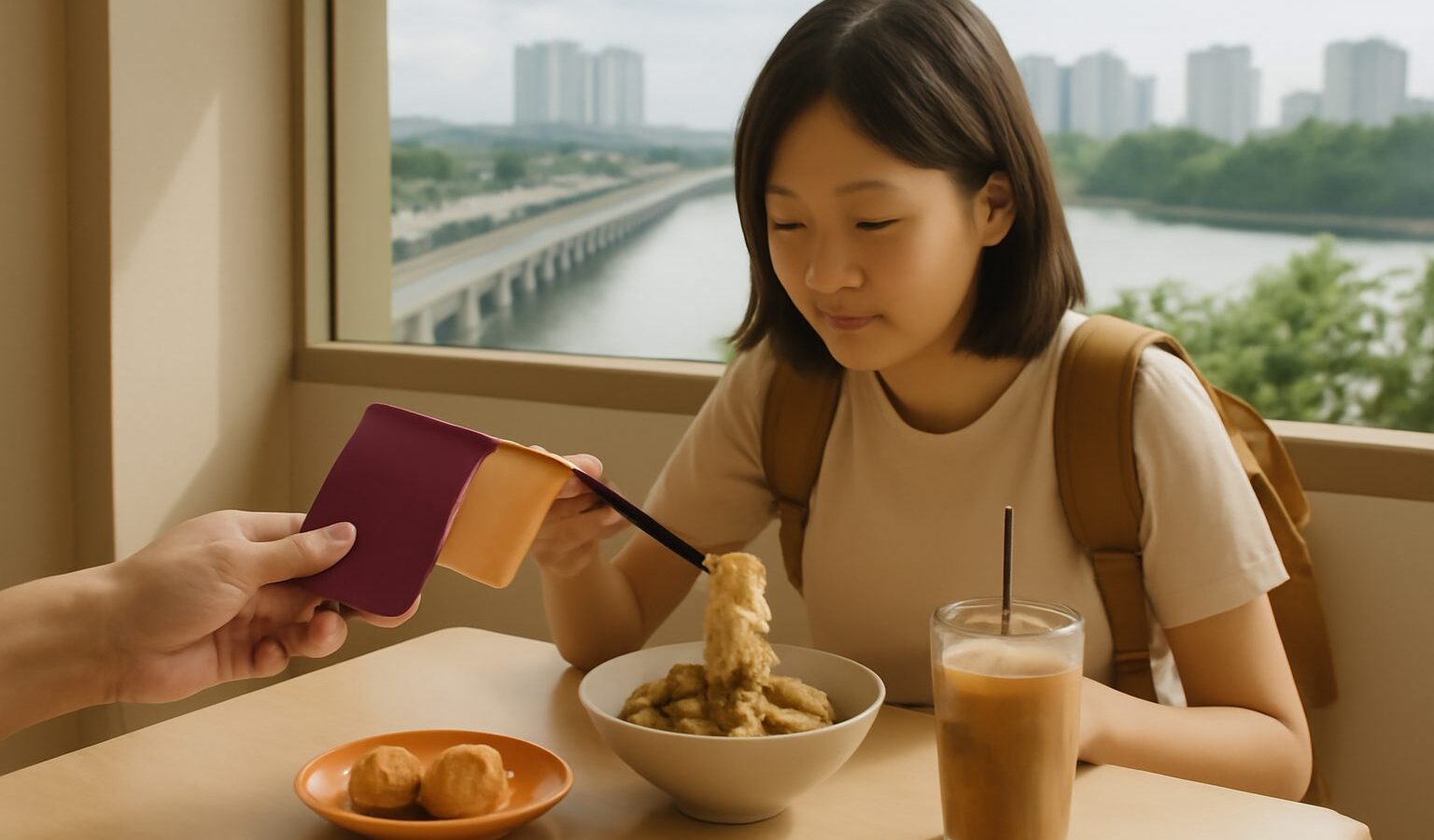
Johor Bahru, usually called JB, sits just across a short strait from Singapore’s northern edge. For many people who have recently moved from mainland China, a JB day trip is the first time they leave Singapore since arriving, and that brings questions that locals rarely think about. Will my Chinese passport be accepted? What happens to my Singapore pass when I come back? Is it like crossing from Shenzhen to Hong Kong? This guide to a JB day trip for China newcomers focuses on those border questions first, then on making the day itself relaxed and enjoyable.
If you want a broader list of things to see and do across the border, our guide to day trips to Johor Bahru for newcomers covers the sights. Here, the aim is to get you across and back again without stress.
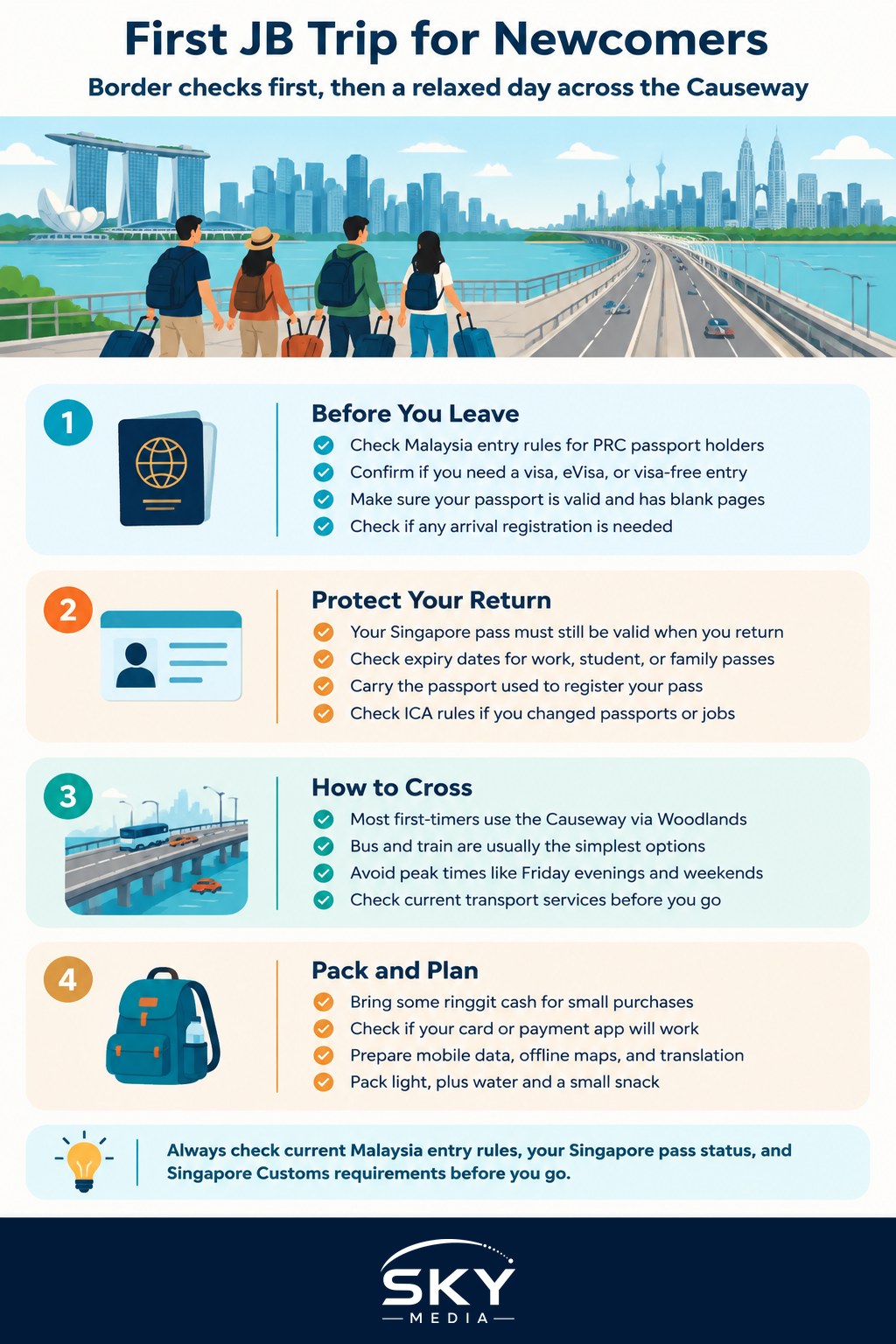
Check Your Passport and Malaysia Entry Rules First
The single most important step happens before you leave home. Malaysia sets its own entry rules for each nationality, and those rules have changed several times in recent years. Do not rely on what a friend did last year or what a social media post says.
Before your trip:
- Confirm the current entry requirement for PRC passport holders. Check the official website of the Malaysian Immigration Department (Jabatan Imigresen Malaysia) or the Malaysian High Commission in Singapore. Find out whether you need a visa, an eVisa, or can enter visa-free, and for how long.
- Check your passport validity. Many countries expect a passport to be valid for at least six months beyond your travel date. Confirm Malaysia’s current rule, and if your passport is close to expiring, look at renewal through the PRC Embassy in Singapore before you travel.
- Look for any arrival registration. Malaysia has used an online arrival card for many foreign visitors. Check whether you need to submit one before reaching the checkpoint, and keep a screenshot on your phone.
- Make sure your passport has blank pages for stamps, in case stamping applies.
A useful comparison: think of it like going from Shenzhen into Hong Kong, where you pass two sets of controls, one to leave and one to enter. The difference is that here you are leaving Singapore, a place where you hold a pass, and entering a separate country with its own visa system.
Protect Your Singapore Pass for the Return
Coming back matters as much as going. As a pass holder, your right to re-enter Singapore depends on your pass being valid on the day you return.
- Check your pass expiry date. Whether you hold an Employment Pass, S Pass, Dependant’s Pass, Student’s Pass or Long-Term Visit Pass, make sure it does not expire before you come home. If renewal is in progress, check with the issuing authority (MOM for work and dependant passes, ICA for student and long-term visit passes) before you travel.
- Carry the physical passport you used to register your pass. If you have renewed your Chinese passport since getting your pass, check with ICA (the Immigration and Checkpoints Authority) whether your records need updating.
- Understand automated lanes. Many residents use automated clearance at Singapore checkpoints. Eligibility depends on your pass type and registration, so check the current rules on the ICA website rather than assuming you can use them.
- Keep your pass card or digital pass handy. You may not need to show it at every step, but having it ready avoids delays.
If anything about your pass is uncertain, such as a pending renewal or a recent job change, it is wiser to postpone the trip than to risk problems on the way back.
Choosing How to Cross the Causeway
There are two land links between Singapore and Malaysia. The Causeway links Woodlands to central JB, and the Second Link joins Tuas to western Johor. For a first visit to JB city, most newcomers use the Causeway via Woodlands Checkpoint. Transport options change over time, including new rail links, so check current services with the operator before you go.
| Option | How it works | Good for | Things to watch |
|---|---|---|---|
| Cross-border bus | Board in Singapore, get off at each checkpoint to clear immigration, reboard to continue | Budget travellers, first-timers who want a fixed route | Queues at peak times; keep your ticket for reboarding |
| Train or shuttle rail service | Short rail hop across the strait with immigration at stations | Avoiding road traffic | Limited seats; book ahead and check current schedules |
| Licensed taxi or ride-hailing | Cross-border car service picks you up and drops you in JB | Families, elderly parents, heavy shopping | Higher cost; confirm the operator is licensed for cross-border trips |
| Driving your own car | Drive through both checkpoints | Residents with a car and local experience | Requires vehicle permits and Malaysian tolls; check rules first |
For a first trip, a bus or train is usually the simplest. You follow the crowd, the signs are in English and Malay, and you do not need to arrange vehicle paperwork. Avoid Friday evenings, Saturday mornings, public holiday eves and school holiday starts, when queues can be very long.
What to Pack and Prepare on Your Phone
A small amount of preparation makes the day much smoother.
- Ringgit cash. JB uses Malaysian ringgit (RM). Change a modest amount in Singapore at a licensed money changer, as some small stalls only take cash.
- Payment apps and cards. Many shops in JB accept card payments and some accept QR payments. Check with your bank whether your card works overseas and what fees apply. Do not assume that a mainland Chinese payment app will work at every shop.
- Mobile data. Your Singapore SIM may have a roaming add-on for Malaysia. Check with your telco before leaving, or buy a local SIM or eSIM in JB.
- Maps and translation. Download offline maps of JB. Signs are mostly in Malay and English, with Chinese seen in many shops and eateries.
- A light bag. You may need to put bags through scanners and carry them through two checkpoints, so pack light.
- Water and a small snack for queues, especially in the afternoon heat.
Making the Most of a First JB Day
Once you are through, JB can feel familiar in some ways. Many residents speak Mandarin or Chinese dialects such as Cantonese, Hokkien and Teochew, and you will find Chinese temples, kopitiam style coffee shops and malls with Chinese signage. That said, Malaysia is a multicultural country with its own customs, and being respectful of Malay and Indian communities, mosques and dress norms matters.
For a relaxed first visit, try this rhythm:
- Arrive mid-morning after the early rush.
- Walk the old town area near the city centre for heritage shophouses and local breakfast.
- Have lunch at a busy local eatery, which is a good sign of fresh food.
- Visit a mall in the afternoon to escape the heat.
- Head back before the evening peak, especially on weekends.
Keep track of your belongings in crowds, use licensed transport, and agree on a meeting point if travelling in a group. If you buy items to bring back, check Singapore Customs rules on duty-free allowances and restricted goods, especially tobacco, alcohol and certain foods. Rules and allowances change, so confirm them on the Singapore Customs website before you shop.
Coming Back Into Singapore Smoothly
The return journey is where many first-timers get caught out, mainly by queues.
- Clear Malaysian departure first, then reboard your bus or train to cross to Woodlands.
- At Singapore immigration, follow signs for the correct lane for residents or visitors as directed by officers and the ICA rules for your pass.
- Declare anything required at the customs area. If you are unsure, ask an officer rather than guessing.
- Plan a buffer. If you have work or childcare commitments that evening, leave JB earlier than you think you need to.
After one smooth trip, JB becomes an easy weekend option. You can then start planning longer journeys, including planning your trip back to China from Singapore or exploring other day trips and nature escapes for newcomers.
This article is general information, not immigration or legal advice. Entry rules, visa policies and checkpoint procedures change, so always confirm current requirements with the Malaysian Immigration Department, ICA, MOM and Singapore Customs before travelling.
Frequently Asked Questions
Do PRC passport holders need a visa to enter Malaysia? The requirement has changed several times, so check the current rule with the Malaysian Immigration Department or the Malaysian High Commission in Singapore before you go. Do not rely on a friend’s experience from last year.
Can I go to JB if my Singapore pass is about to expire? It is risky, because your right to re-enter Singapore depends on your pass being valid on the day you return. If renewal is in progress, check with MOM or ICA first, and postpone the trip if anything is uncertain.
What is the best time of day to cross the Causeway to avoid queues? Mid-morning on a weekday is usually calmer. Friday evenings, Saturday mornings, public holiday eves and the start of school holidays can see very long queues. On the return, leave earlier than you think you need to.
Should I bring Singapore dollars or ringgit to JB? Bring some ringgit, changed at a licensed money changer in Singapore, as small stalls often take only cash. Many shops accept cards and QR payments, but check with your bank about overseas use and fees.
How much can I bring back from JB without declaring? Allowances and restricted goods, especially tobacco, alcohol and some foods, are set by Singapore Customs and change over time. Check the Singapore Customs website before shopping, and ask an officer if you are unsure.
Further reading: Kluang Day Trip From Singapore: Coffee and a Slow Day Out · How China Newcomers Can Plan Holiday Travel From Singapore