
Chinese New Year in Singapore is the biggest celebration on the Chinese community’s calendar, and it shapes the mood of the whole island for weeks. Shops fill with red decorations, malls play festive songs, and families plan their reunion meals well in advance. If you are new to Singapore, or simply want to understand what is going on and how to join in respectfully, this guide covers what the festival marks, how it is observed here, and the small courtesies that make you a welcome guest.
Chinese New Year, also called the Lunar New Year or Spring Festival, follows the lunar calendar, so the date is not fixed. It usually falls in late January or February. Because it shifts every year, always check the current year’s dates on the Ministry of Manpower (MOM) public holidays list rather than assuming a set date.
What Chinese New Year Marks
Chinese New Year marks the start of a new year on the traditional Chinese lunar calendar. It is a time to farewell the old year, welcome the new one, and gather with family. Each year is associated with one of the twelve zodiac animals, which rotate in a fixed cycle, so people often talk about the “year of” a particular animal.
At its heart, the festival is about family reunion, renewal, and wishing one another good fortune, health, and prosperity for the year ahead. In Singapore it is celebrated primarily by the Chinese community, which is the largest ethnic group here, but the festivities are visible everywhere and people of all backgrounds often exchange greetings and join in. The common greetings are “Gong Xi Fa Cai” in Mandarin, wishing prosperity, and “Xin Nian Kuai Le”, meaning happy new year.
How It Is Celebrated in Singapore
Celebrations build up over the final days of the old year and continue through the first days of the new one. Some of the customs you will see include:
- Reunion dinner: On the eve of the new year, families gather for a large reunion meal. This is often the most important gathering of the year, and many people travel back to be with parents and grandparents.
- Visiting (bai nian): In the first days, people visit relatives and close friends to exchange greetings and good wishes. Younger family members greet their elders first.
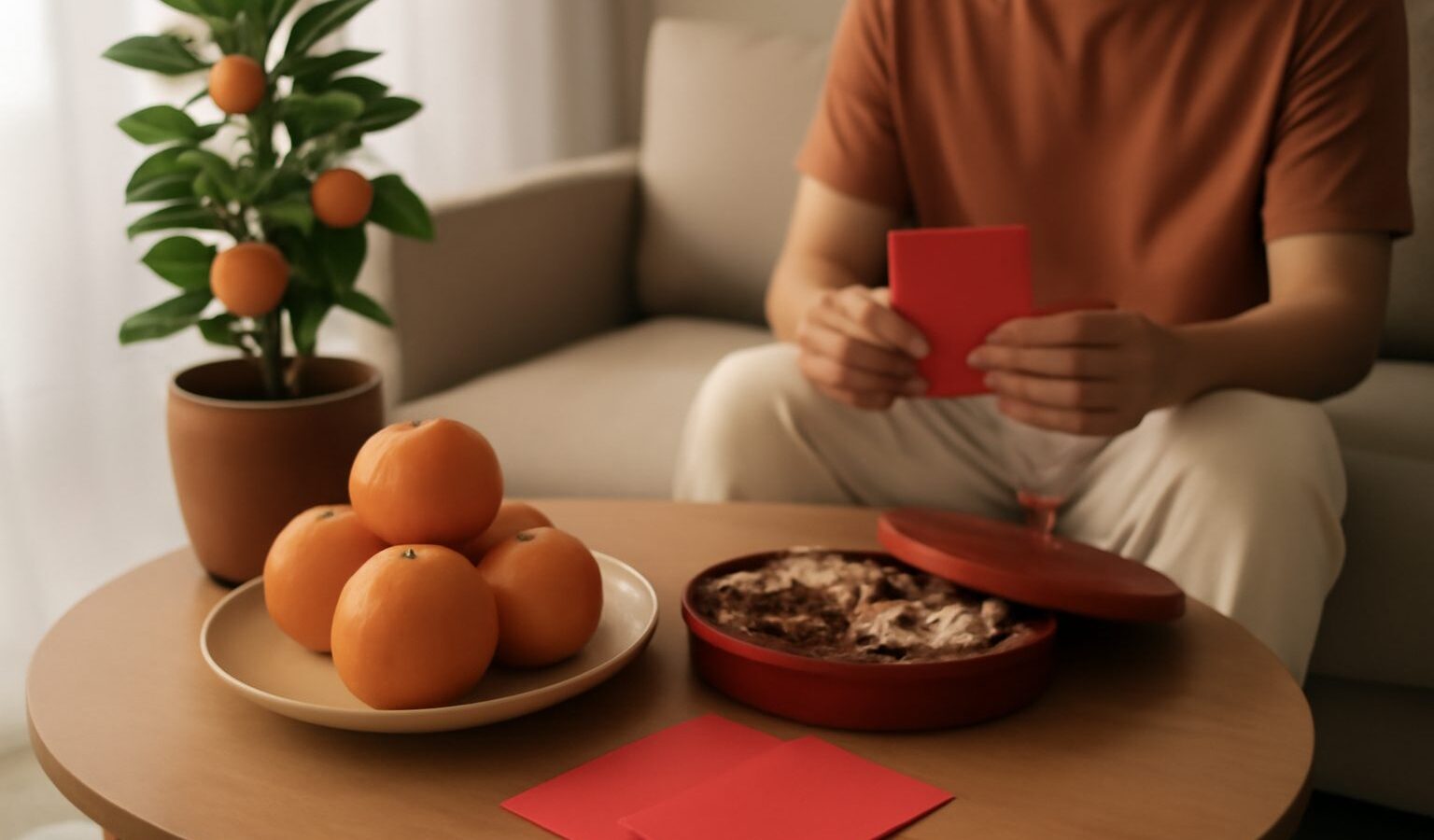
- Hongbao (red packets): Married couples and elders give red packets containing money to children and unmarried younger people. The red colour symbolises good luck. The amount matters less than the gesture, and even numbers are preferred, though the number four is usually avoided because it sounds like the word for death.
- Lion and dragon dances: Troupes perform energetic lion dances at businesses, malls, and homes, accompanied by loud drums and cymbals meant to chase away bad luck and bring good fortune.
- Chinatown: The Chinatown district lights up with a street bazaar, festive lights, and stalls selling snacks, decorations, and flowers. It is one of the best places to soak up the atmosphere.
- Mandarin oranges: Guests often bring a pair of mandarin oranges when visiting, presented with both hands, as a symbol of good fortune and gold.
- Festive food: Households stock up on goodies such as bak kwa (sweet barbecued meat), pineapple tarts, love letters, and other snacks. Yusheng, a raw fish and vegetable salad, is tossed together at the table while everyone calls out auspicious wishes, a Singapore and Malaysia favourite.
Homes are cleaned before the new year, then decorated with red banners, auspicious phrases, and flowers such as pussy willow and blossoms. Many people also buy new clothes to wear, often in red or bright colours.
The Public Holidays and What Is Open
Chinese New Year is marked by two public holidays in Singapore, covering the first and second days of the new year. If a public holiday falls on a Sunday, the following Monday is generally observed as a holiday in its place. Because the exact dates move each year, confirm them on the MOM public holidays list for the current year.
During the holiday, especially on the first day, many smaller shops, family businesses, and eateries close so that owners can spend time with family. Some stay shut for several days. Larger malls, supermarkets, attractions, and chain outlets usually stay open, though they may run shorter hours. Public transport runs, but schedules can change on the holidays. It is worth checking ahead if you plan to eat out or run errands in the first few days, and buying essentials before the holiday if you can.
Taboos, Etiquette, and Being a Good Guest
A few customs and superstitions shape behaviour during the season, and understanding them helps you take part with respect. These are cultural conventions rather than strict rules, and not everyone observes all of them.
| Do | Avoid | Why it matters |
|---|---|---|
| Give and receive hongbao and oranges with both hands | Opening a red packet in front of the giver | Using both hands shows respect; opening later avoids appearing to focus on the money |
| Wear red or bright, cheerful colours | Wearing all black or all white | Red signals luck and joy; black and white are linked with mourning |
| Offer warm greetings like Gong Xi Fa Cai | Talking about death, illness, or bad luck | The season is about positivity and good wishes |
| Bring a small gift, such as a pair of oranges, when visiting | Giving gifts in fours, or sharp items like knives | The number four sounds like death; sharp objects suggest cutting ties |
| Keep things tidy and cheerful | Sweeping or throwing out rubbish on the first day | Sweeping is thought to sweep away good luck |
If you are invited to a reunion dinner or a home visit, it is a genuine honour. Arrive with a small gift, greet the elders first, and accept food and drink graciously. You do not need to be Chinese to give or receive good wishes. A sincere greeting is always welcome. If you receive a hongbao, thank the giver with both hands and set it aside politely rather than opening it on the spot.
Why the Festival Matters Here
Chinese New Year is more than a holiday. It is a moment when families reconnect, elders are honoured, and communities pause together. In multicultural Singapore, it also reflects the country’s approach of letting each community celebrate its traditions openly while others look on, visit, and share in the festivities. Colleagues exchange greetings, neighbours drop by, and the shared goodwill is part of what keeps the wider society close.
For newcomers, the best way to understand Chinese New Year is simply to experience it: wander through Chinatown, watch a lion dance, try the festive snacks, and return a friendly greeting. A little curiosity and courtesy go a long way.
Explore more
For how the holidays fit into the wider calendar, see our Singapore public holidays guide. To understand how different communities celebrate side by side, read racial and religious harmony in Singapore. Together they give useful context for anyone getting to know life in Singapore.