
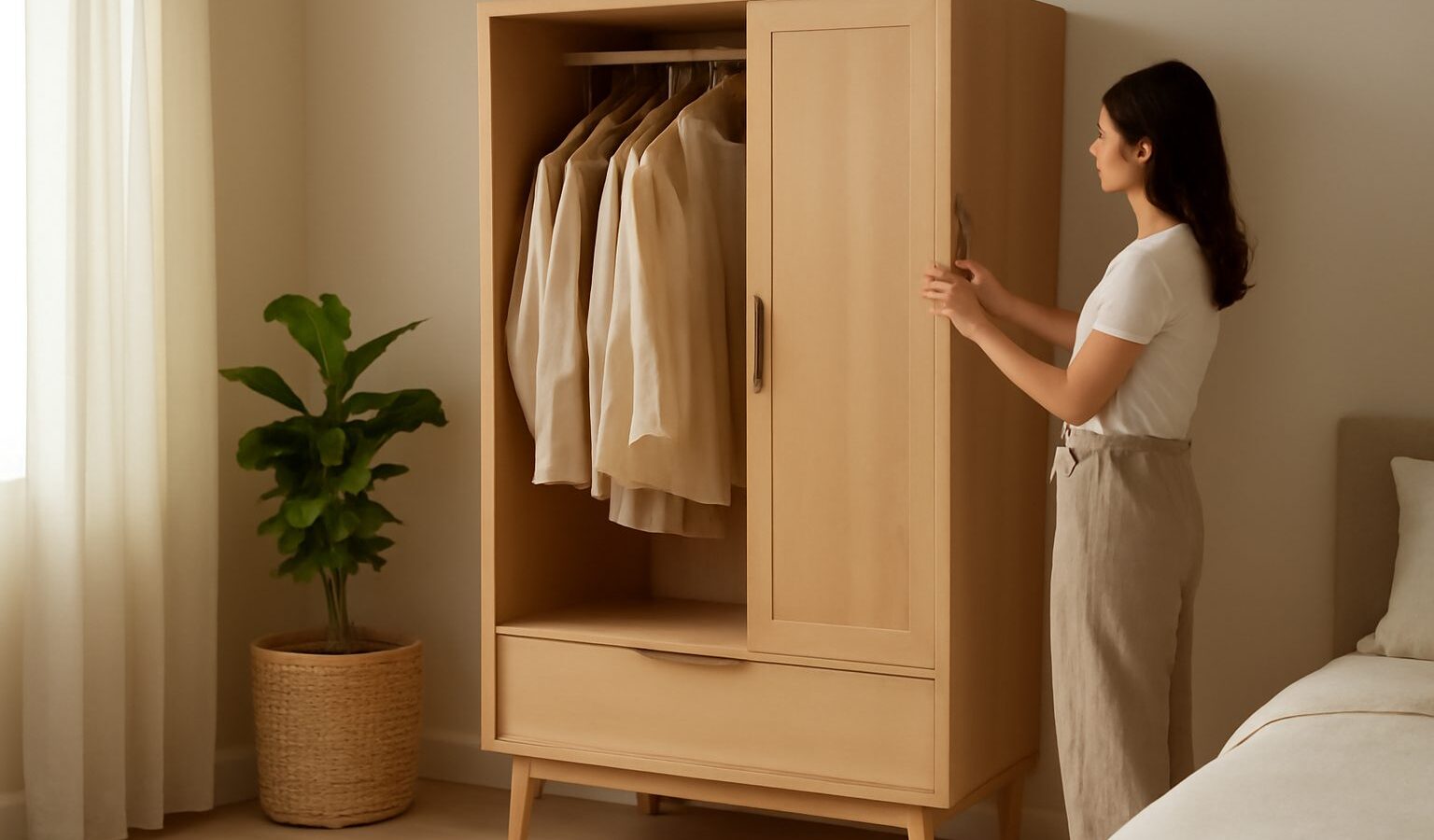
A freestanding wardrobe is one of the most useful pieces of furniture you can buy for a Singapore home. Unlike a built-in unit, it does not require carpentry, it can move with you when you shift flats, and it suits rooms where you would rather not commit to a permanent structure. For renters, for bedrooms that already have odd corners, and for homes where the layout may change, a good freestanding wardrobe singapore buyers can rely on offers real flexibility. The challenge is choosing one that fits the space, holds up to our climate, and actually stores what you own.
This guide walks through the practical decisions, from measuring your room to picking materials that survive year-round humidity.
Sizing and fitting the wardrobe to your room
Start with a tape measure, not a catalogue. Note the width, height and depth of the space you have in mind, then subtract a little for skirting, air-conditioner trunking and any ceiling cornice. A wardrobe that looks fine on paper can be impossible to stand upright if the room height is tight, because these units are usually assembled lying down and then tilted up. Leave clearance for that swing.
Depth matters more than people expect. A wardrobe needs roughly 55 to 60cm of internal depth to hang clothes on a standard rail without the shoulders of your garments pressing against the door. Anything shallower and you will be hanging things sideways or using hooks, which wastes space. In a compact HDB bedroom, a shallower wardrobe with sliding doors can be the better call, because sliding doors do not need clearance to swing outward into the room.
Think about the door type early. Hinged doors give you full access to the interior and are cheaper, but they need floor and walking space in front. Sliding doors save that space and suit narrow rooms, though you can only ever see half the wardrobe at once. If your bed sits close to the wardrobe, sliding doors are usually worth the small premium.
Finally, plan the interior before you buy. Count how many hanging items you own versus folded items. If you have many dresses, long coats or work shirts, you need tall hanging sections. If you fold most things, prioritise shelves and drawers. Many people buy a wardrobe that is mostly hanging space and then find half of it empty while their folded clothes overflow. For a deeper look at zoning your storage, see our guide to wardrobe organisation and built-in wardrobe ideas.
Materials that survive Singapore humidity
Our climate is the real test for any wardrobe. Constant humidity, the occasional water splash, and poor airflow inside a closed cabinet all encourage mould, warping and that musty smell that clings to clothes. The material you choose decides how well the piece copes.
Engineered wood is the most common option. Particleboard is affordable and light but the most vulnerable to moisture, especially at cut edges and screw holes, so look for units where the edges are properly sealed with laminate banding. Medium density fibreboard, or MDF, is denser and holds a smoother finish, though it too swells if water gets into an unsealed edge. Plywood sits above both for moisture resistance and strength, and is a sensible upgrade if your budget allows. Solid wood looks beautiful but expands and contracts with humidity, and it needs ongoing care, which our article on caring for wood furniture in a humid climate covers in detail.
Whatever the core material, the finish and the back panel matter. A melamine or laminate surface wipes clean and resists surface moisture far better than raw or painted board. Check that the back panel is a proper sealed sheet rather than thin card, because the back sits against an external wall where condensation is most likely.
Airflow inside the wardrobe is your best defence against mould. Do not pack clothes so tightly that air cannot move between them. Leave a small gap behind the wardrobe so the wall can breathe, rather than pushing it flush against a cool external wall where damp collects. A few silica gel packs or a small moisture absorber tub on a shelf will pull down the internal humidity, and you should let the wardrobe air out with the doors open for an hour now and then. If damp is a recurring problem in your bedroom, our guide on preventing mould and mildew at home has more prevention tips.
Making it work in a small home
In a compact flat, a wardrobe is furniture and storage at once, so make every centimetre count. Choose a unit that runs closer to ceiling height, since the top zone is ideal for luggage and off-season bedding that you rarely reach. Add internal drawers or a pull-out basket for smaller items rather than piling them on shelves. If floor space is genuinely scarce, look at pieces that combine functions, an idea we explore in our guide to space-saving and multifunctional furniture.
Colour and finish also change how a room feels. Lighter, matte surfaces reflect light and make a small bedroom feel more open, while a mirrored sliding door doubles as a full-length mirror and visually enlarges the space. Keep handles slim and flush so the wardrobe does not snag as you pass in a tight walkway.
A freestanding wardrobe is a long-term purchase, so weigh sizing, door type, material and humidity resistance together rather than buying on looks alone. Measure carefully, pick a moisture-resistant build, plan the interior around what you actually own, and give the piece room to breathe. Get those basics right and the wardrobe will serve you well through many years of Singapore weather.