

Certifications can be a smart way to grow your career, but they can also be an expensive distraction if you pick the wrong one. With so many options advertised online and in your inbox, choosing a professional certification singapore workers actually value takes a bit of thought. This guide walks you through how to decide whether a certification is worth it, and how to pick one that moves your career forward rather than just filling your shelf.
Be Clear on Why You Want It
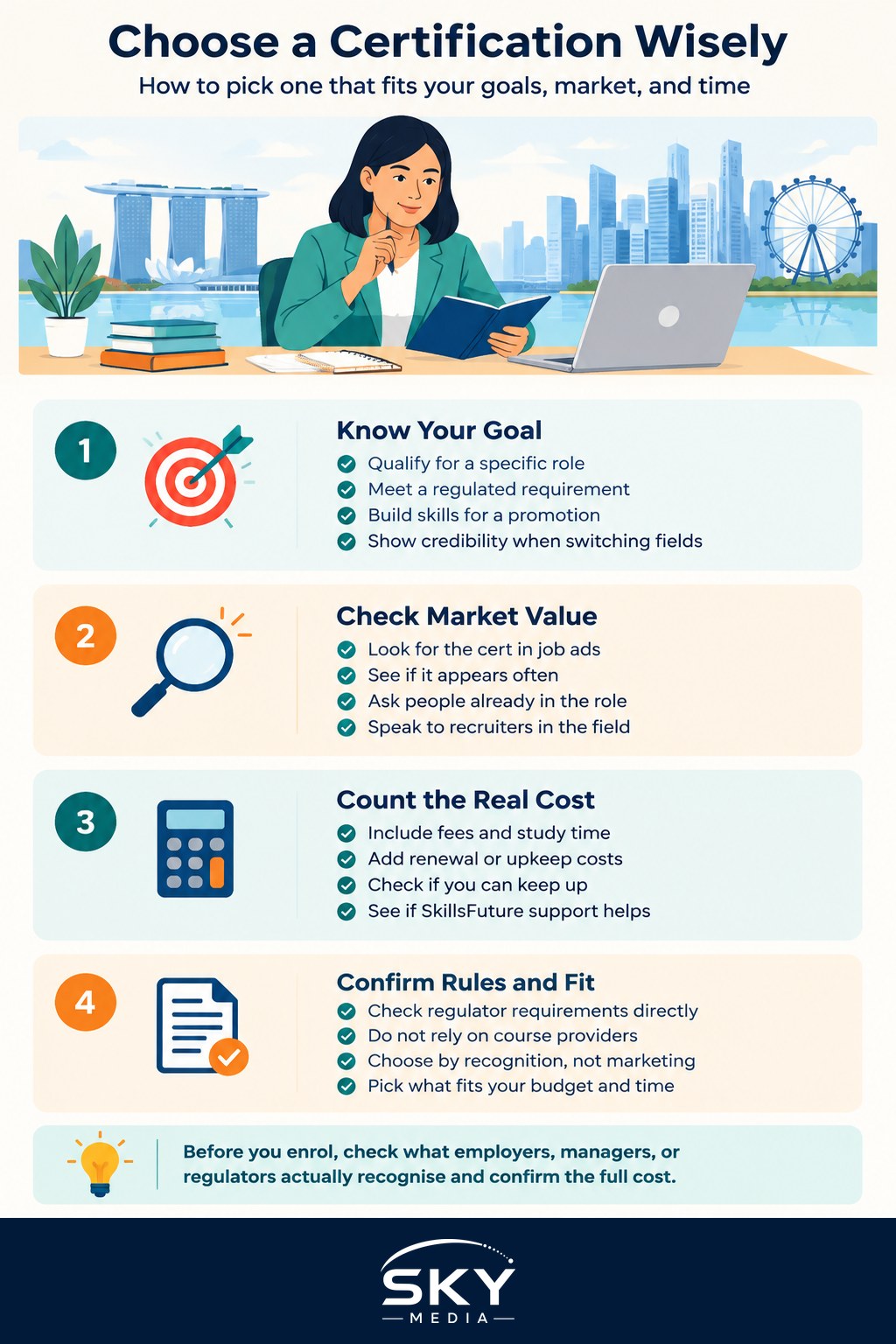
Before comparing courses, get honest about your goal. A certification is a tool, not a destination, and the right one depends on what you are trying to achieve. Common reasons include qualifying for a specific role, meeting a requirement in a regulated field, deepening skills for a promotion, or signalling seriousness when you are switching industries.
Each of these points to a different choice. If your field requires a particular qualification to practise, that decision is made for you, and your job is to meet the current requirements set by the relevant body. If you are chasing a promotion, the better question is what your manager and the roles above you actually recognise. And if you are switching in, a well-known certification can help you look credible, but it works best alongside real projects and a clear story about your move, so it is worth also reading up on transitioning to a new industry.
Check That the Market Actually Values It
The single biggest mistake is assuming every certificate carries weight. Some are widely recognised by employers in a given field, while others are barely known. A useful test is to look at real job listings for the roles you want and see which certifications, if any, keep appearing. If a qualification shows up again and again in postings you care about, that is a strong signal. If it never appears, be cautious.
You can also learn a lot by talking to people already in the role. A short conversation often reveals which certifications open doors and which are seen as filler. If you have not done this before, our guide on how informational interviews work makes the ask feel far less awkward. Recruiters who specialise in your field are another honest source, since they see which credentials sway hiring decisions.
Weigh the Real Cost, Not Just the Fee
Certifications cost more than money. They cost evenings, weekends, and energy you could spend elsewhere. Before committing, add up the full picture: the fee, the study hours, any renewal or continuing education needed to keep it valid, and the exam pressure. Then weigh that against the realistic benefit.
A few practical questions help:
- How long will this take, and can I sustain it alongside work?
- Does it need renewing, and what does staying certified involve over time?
- Is there funding or training support I can tap to lower the cost?
On that last point, many working adults in Singapore can offset training costs through national support schemes. The exact amounts and which courses qualify change over time, so check the Skills and Workforce Development Agency (SWDA, formed in 2026 from Workforce Singapore and SkillsFuture Singapore) for the current details rather than assume. If you have unused support, our guide on how to use your skillsfuture credits is a good starting point.
Mind Regulated and Licensed Fields
Some professions are regulated, and in those fields a certification is not just a nice-to-have but a requirement to practise. Areas such as healthcare, accounting and audit, law, and various allied health roles have registration or licensing tied to specific qualifications and bodies. If you are aiming at a regulated field, the responsible move is to confirm the current requirements directly with the relevant professional body or regulator, since these rules are updated and vary by profession. Do not rely on a course provider alone to tell you what you legally need.
For non-regulated fields, you have more freedom, but the same discipline applies: choose based on real recognition, not marketing.
Make the Decision and Commit
Once you have narrowed it down, sanity check your shortlist against a simple standard. A good certification for you should connect clearly to your goal, be recognised by the people who make hiring or promotion decisions in your field, and fit your budget of money and time. If a course ticks those boxes, you can commit with confidence.
Remember that a certificate on its own rarely changes a career. What changes things is the skill you build, the work you apply it to, and how well you talk about it. Pairing a certification with a habit of building a continuous learning habit and real projects makes it far more powerful than the paper alone.
The Honest Bottom Line
A professional certification singapore employers respect can genuinely help you stand out, qualify for roles, and grow your confidence. But no certificate guarantees a job, a promotion, or a salary jump, and the market stays competitive. Choose deliberately: know why you want it, confirm the market values it, count the true cost, check any regulatory requirements with the proper body, and then give it your full effort. Done that way, a certification becomes a real step forward rather than an expensive detour.
Frequently Asked Questions
How can I tell if a certification is just marketing? Look at real job listings for the roles you want and see whether the certification keeps appearing. If it never does, be cautious. Talking to people in the role or to recruiters in your field also reveals which credentials sway hiring and which are seen as filler.
Are certifications worth it for career switchers? A well-known certification can help you look credible, but it works best alongside real projects and a clear story about why you are moving. On its own, a certificate rarely changes a career, so pair it with practical work you can talk about.
What costs should I count besides the course fee? Add up study hours, exam pressure, and any renewal or continuing education needed to keep the certification valid. Then weigh that total against the realistic benefit. Evenings and weekends spent studying are a real cost too.
Which professions need certification to practise? Regulated areas such as healthcare, accounting and audit, law and various allied health roles tie registration or licensing to specific qualifications. Confirm the current requirements with the relevant professional body or regulator rather than relying only on a course provider.
Should I ask my manager before picking a certification for a promotion? It is a good idea. If you are chasing a promotion, find out what your manager and the roles above you actually recognise, since that matters more than how well known a certificate is elsewhere. It also shows initiative and may open the door to training support.
Further reading: How to Become a Certified Personal Trainer in Singapore · Professional Certifications: ACCA, CFA, PMP