
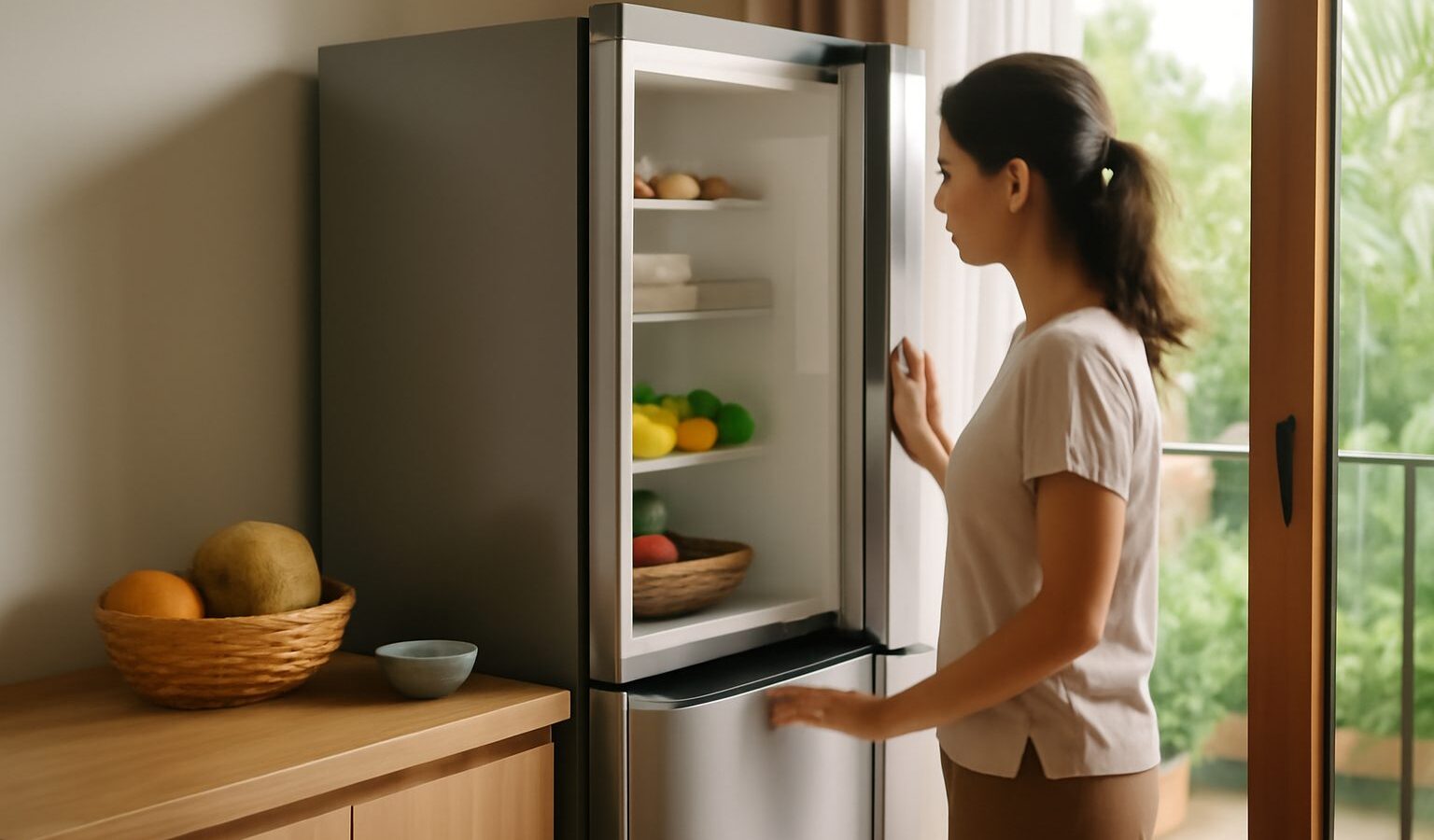
Choosing a refrigerator in Singapore means balancing three things that often pull against each other: how much food you actually store, how little space an HDB kitchen gives you, and how much electricity the fridge will draw while running every hour of every day for the next decade. It is one of the biggest appliances in the home and one you rarely replace, so a careful choice pays off for years. The glossy showroom model with the touchscreen door might not fit your galley kitchen, and the biggest fridge is not automatically the best one. This guide walks through the fridge types, sizing for your household and your kitchen, the energy label, the features worth paying for, and how to measure your space so nothing gets stuck in the corridor on delivery day.
The Main Types of Refrigerator
Fridges are grouped mostly by where the freezer sits and how the doors open. The right layout depends on how you cook, how much you freeze, and the width you have to spare.
- Top-freezer. The classic layout with the freezer above and the fridge below. Compact, affordable, and reliable, it suits smaller kitchens and households that do not freeze much. You do bend down to reach the fridge section.
- Bottom-freezer. Flips the layout so the fridge, which you use most, sits at eye level and the freezer is a drawer below. Comfortable for daily use, slightly pricier than top-freezer.
- Side-by-side. A tall fridge and freezer split vertically, each with its own door. Generous freezer space and narrow door swing, though each compartment can feel narrow for wide items like a large tray.
- Multi-door (French door and similar). Two fridge doors on top with one or two freezer drawers below. Roomy, flexible shelving, and a wide fridge section, but these need the most width and cost the most.
- Bar fridge. A small under-counter unit for drinks, a study corner, or a second fridge. Not a main-kitchen appliance, but handy for tight spaces or supplementing a full-size fridge.
For most flats the real contest is between top-freezer, bottom-freezer, and side-by-side, with multi-door reserved for larger kitchens that can spare the width.
Comparing Fridge Types for Singapore Kitchens
The table below sets the common layouts against the kind of home and kitchen they suit, so you can shortlist before you shop.
| Fridge type | Best for | Space needed | Notes |
|---|---|---|---|
| Top-freezer | Small households, tight kitchens | Compact | Most affordable, bend to reach fridge |
| Bottom-freezer | Daily cooks who want fridge at eye level | Compact to medium | Freezer as a lower drawer |
| Side-by-side | Families who freeze a lot | Wider | Narrow shelves, small door swing |
| Multi-door | Larger kitchens, big households | Widest | Roomy and flexible, priciest |
| Bar fridge | Drinks, second fridge, study nook | Very small | Not a main-kitchen unit |
Space needed here is relative, and prices swing widely with brand, capacity, and promotions, so use this to narrow the field rather than as a final answer. Always check the exact dimensions of the model you like against your kitchen.
Sizing for Your Household and Kitchen
Capacity is measured in litres, and the right number depends on how many people you feed and how you shop. A couple who eats out often needs far less than a family of five that cooks daily and buys groceries in bulk. As a rough guide, a small household manages with a modest fridge, while a larger family that batch-cooks and freezes leftovers wants noticeably more litres and freezer room.
But litres are only half the story, because the fridge still has to physically fit an HDB kitchen. Our kitchens are often narrow galley layouts with a fixed run of cabinets, and the fridge usually slots into one gap between the counter and a wall. A fridge that holds more but blocks a drawer or juts into the walkway is the wrong fridge. Balance the capacity you want against the footprint your kitchen can actually spare, and if space is very tight, a taller but narrower unit often stores more without eating floor width.
Reading the Energy Label
Because a fridge runs continuously, its efficiency matters more than almost any other appliance in the home. Every refrigerator sold here carries a mandatory energy label with a tick rating, and more ticks means better efficiency and less electricity used for the same cooling. Across ten or more years of round-the-clock running, the gap between a low and a high rating adds up to a real sum on your bills.
A sensible approach is to shortlist fridges that fit your kitchen and hold enough, then compare their energy labels directly and weigh a more efficient model against its price. The label also carries estimated running-cost figures to help you compare like with like. A larger fridge naturally uses more energy than a small one, so buy the capacity you need rather than the biggest you can fit. For the wider view on rating appliances across the home, our sibling guide on energy-efficient appliances is a useful companion.
Features Worth Paying For
Modern fridges come loaded with features, and some genuinely help while others mostly add cost. Judge each against how you actually live.
- Humidity-controlled crispers. Useful in our climate for keeping vegetables fresh longer.
- Frost-free operation. Saves the chore of manual defrosting and is standard on most current models.
- Flexible or adjustable shelving. Lets you fit tall bottles, a whole steamboat pot, or festive bakes without a fight.
- A good freezer layout. Drawers and dividers beat one deep bin if you freeze often.
- Inverter compressor. Varies its speed to hold temperature efficiently and runs more quietly, which matters in open-plan flats where the kitchen adjoins the living area.
- Water and ice dispensers. Convenient, but a plumbed dispenser adds cost and a possible maintenance point, so weigh whether you will use it.
Skip features you will not touch, and put the money towards a better energy rating or a layout that suits your cooking instead.
Measuring Your Space Before You Buy
Nothing sours a new-fridge day like a unit that will not fit through the door or clears the cabinet by a millimetre. Measure carefully before you order.
- The alcove. Width, height, and depth of the gap where the fridge will stand, then subtract a little on each side and the top for ventilation, as fridges need airflow around them to run efficiently.
- Door clearance. Make sure the fridge door can swing open fully without hitting a wall or cabinet, which is where side-by-side and multi-door models earn their keep.
- The delivery path. The main door, the lift, the corridor, and any turn into the kitchen. A tall fridge that fits the alcove is no use if it cannot round the corner.
- Levelling and gaps. Leave room to slide it in and out for cleaning behind, where dust and the odd lizard collect in our climate.
Confirm the exact dimensions from the product listing rather than eyeballing the showroom model, and check the retailer’s delivery and old-fridge disposal terms. For where to shop and compare, our home appliance shopping guide points you to the stores and platforms worth checking.
Explore more
When you are ready to compare models and prices, our home appliance shopping guide for Singapore covers the stores, platforms, and delivery terms worth knowing before you buy. To weigh the energy label across your fridge, aircon, and washer together, see our sibling guide on energy-efficient appliances in Singapore so the whole kitchen runs leaner on your monthly bill.