
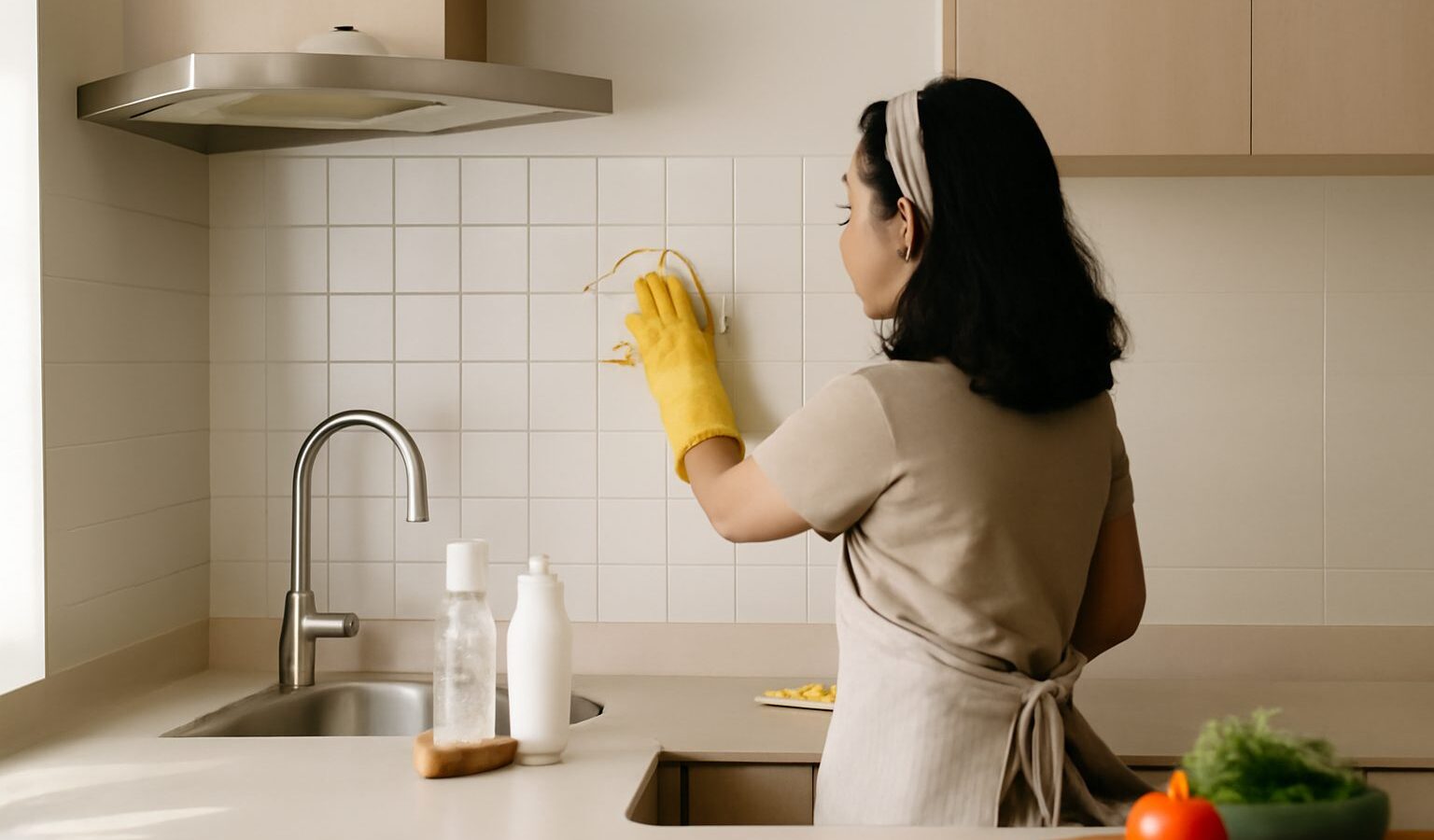
A wipe-down after dinner keeps daily life going, but every so often your kitchen needs more. If you want to deep clean your kitchen in Singapore properly, the trick is not scrubbing harder but working in the right order, using a few basic supplies, and letting time and warm water do most of the lifting. Our heat and humidity mean grease turns sticky fast and musty smells settle into corners, so a periodic reset keeps the space hygienic and pleasant. This is the kind of job many of us tackle before Chinese New Year, but you do not need to wait for spring cleaning to give the busiest room in an HDB flat or condo a proper going-over.

Gather Your Supplies and Work Top to Bottom
Before you start, clear the counters and set out what you need so you are not hunting mid-task. From most supermarkets and hardware shops you can put together a simple kit: a grease-cutting dish soap, a general surface cleaner, baking soda, white vinegar, a few microfibre cloths, a non-scratch sponge, an old toothbrush for grooves, rubber gloves, and a bin bag. That is enough for the vast majority of kitchen surfaces.
The golden rule is to work from top to bottom and from dry to wet. Dust and crumbs fall downward, so cleaning the range hood or high cabinets before the floor saves you redoing work. Open a window or switch on the exhaust fan for airflow, especially when you are using anything strong. Start by clearing expired food and rubbish, then move through the room in one direction so nothing gets missed.
One safety note worth repeating: never mix cleaning products. In particular, do not combine bleach with ammonia-based cleaners or with acids such as vinegar, as this can release toxic fumes. Use one product at a time, rinse surfaces between different cleaners, wear gloves, and keep everything out of reach of children and pets. If a surface is new to you, patch-test a small hidden spot first.
Tackle Grease on the Stovetop and Range Hood
Grease is the main enemy in a Singapore kitchen, and the range hood catches the worst of it. Remove any metal filters and soak them in hot water with a little dish soap; a splash of baking soda helps loosen baked-on grime. Leave them while you work elsewhere, then scrub gently and dry fully before refitting. Wipe the hood body with a cloth dampened in warm soapy water.
For the stovetop, lift off removable grates and burner caps and soak them the same way. Make a paste of baking soda and a little water, spread it over greasy patches, and give it several minutes to work before wiping away. This lifts most residue without harsh scrubbing that could scratch. For glass or ceramic hobs, use a non-scratch pad and a suitable surface cleaner rather than anything abrasive.
Clean the Fridge, Sink and Small Appliances
The fridge deserves attention on a deep clean. Empty it, discard anything past its best, and take out shelves and drawers to wash in warm soapy water. Wipe the interior with a mild solution, dry it, and let it breathe for a moment before restocking. A small open box of baking soda inside helps absorb odours between cleans. Wipe door seals with a damp cloth, as our humidity encourages mould to gather in the rubber folds.
The sink and drain often smell before they look dirty. Scrub the basin, then pour a spoon of baking soda followed by hot water down the drain to freshen it. Clean the tap and around its base with an old toothbrush. Give small appliances a wipe too: crumbs in the toaster tray, splatter inside the microwave (steam a bowl of water to loosen it first), and the kettle exterior. Descale the kettle occasionally with a vinegar-and-water solution, then boil fresh water once or twice to rinse.
Finish With Cabinets, Counters and Floors
Wipe cabinet doors and handles, which collect fingerprints and cooking film. Clear and wipe inside a shelf or two if you have time, checking for expired dry goods and any sign of pantry pests, which thrive in our warmth. Disinfect chopping boards and high-touch spots such as switches and drawer pulls, where hygiene matters most.
Counters come near the end. Clear everything off, wipe with a suitable cleaner, and dry so no streaks remain. Save the floor for last: sweep or vacuum, then mop with a well-wrung cloth so you are not leaving water pooling, which invites slips and musty smells in humid weather. Below is a simple guide to how often each zone typically needs attention.
| Kitchen zone | Deep-clean frequency | Handy method |
|---|---|---|
| Stovetop and range hood | Monthly | Soak filters, baking-soda paste on grease |
| Fridge interior | Every 1 to 2 months | Empty, wash shelves, wipe seals, dry well |
| Sink and drain | Weekly to fortnightly | Scrub basin, baking soda plus hot water |
| Cabinets and counters | Monthly | Warm soapy cloth, dry to avoid streaks |
| Floor and skirting | Weekly | Sweep first, mop with a well-wrung cloth |
Keeping It Fresh and When to Call a Professional
A deep clean is far easier to maintain than to repeat from scratch. Wipe the stovetop after cooking while it is still slightly warm, run the exhaust fan during and after frying, and deal with spills before they set. Take the bin out regularly and keep the area dry, since standing moisture is what breeds smells and mould in our climate. A five-minute reset each evening stretches the time between big cleans.
Some jobs sit outside DIY territory. If your range hood needs internal servicing, if there is a persistent drain blockage that home methods will not clear, or if you suspect a pest infestation in the cabinets, it is worth calling a licensed tradesperson or a professional cleaning or pest service. There is no shame in getting help for the heavy work, and a well-run kitchen is about consistency, not perfection.
Explore more
Keep the momentum going with the appliances that do the hardest work in your kitchen. Our guide on cleaning your fridge properly goes deeper on shelves, seals and odours, while cleaning your oven and stovetop covers baked-on grease in detail. Once the kitchen sparkles, carry the same order-of-work approach through the rest of the home, starting with cleaning and caring for your floors.