
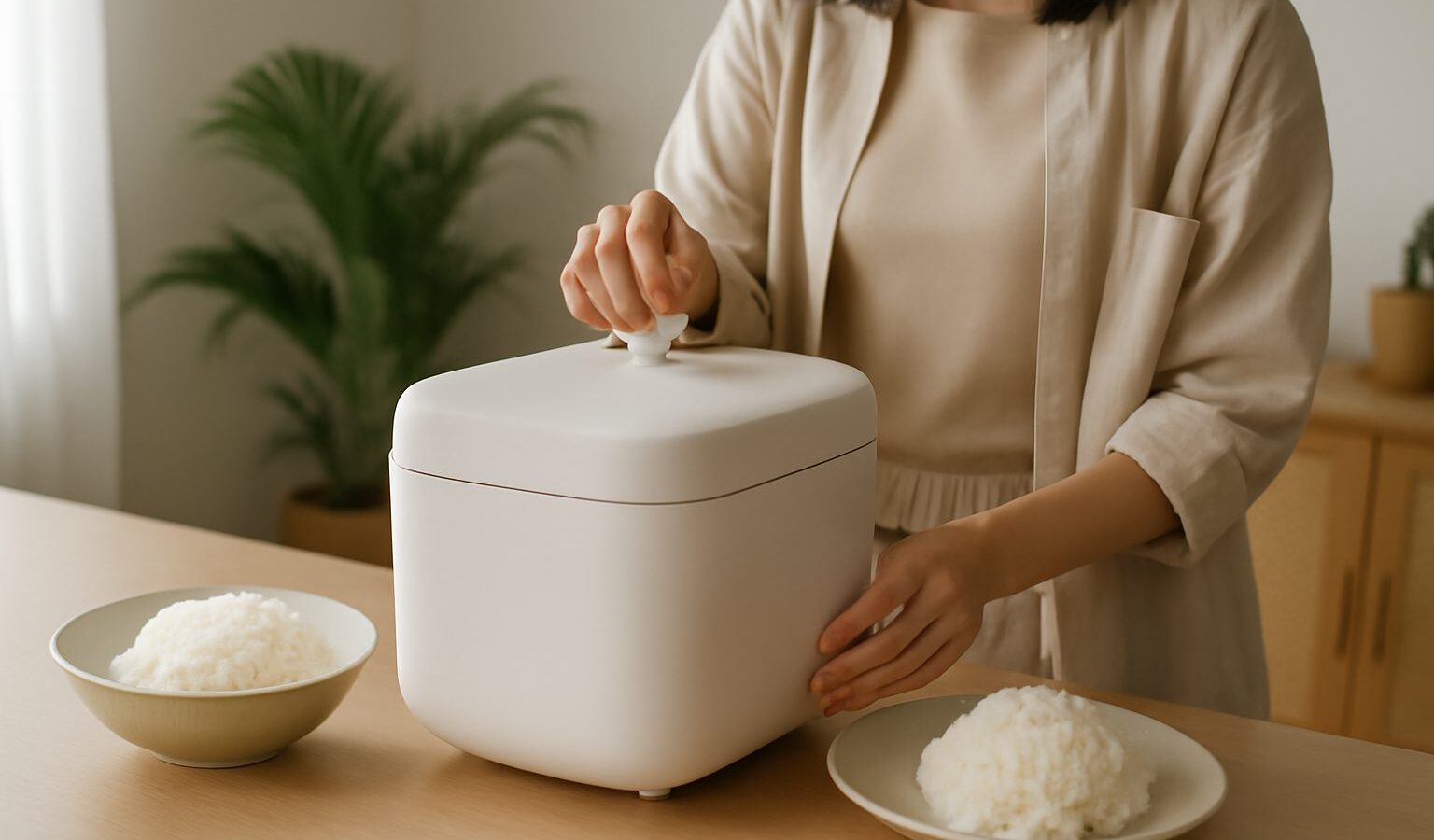
For most households here, the search for the right rice cooker singapore shoppers rely on comes down to matching the pot to how you actually cook. Rice is the backbone of daily meals, whether it is fragrant jasmine, short-grain for a Japanese dinner, or brown rice for a lighter week. A good cooker takes the guesswork out of the process, keeps rice warm for hours, and often doubles up for porridge, steaming and one-pot meals. This guide walks you through the main types, the capacity you need, the features worth paying for and how to think about budget, all in a brand-neutral way so you can shop with confidence.
Understanding the Main Types
Rice cookers sit broadly in three families, and knowing the differences helps you avoid overpaying or under-buying.
The simplest is the conventional cooker, sometimes called a mechanical or one-touch model. It has a single heating plate at the base, a spring-loaded switch, and a cook-then-warm cycle. It is affordable, easy to use and reliable for plain white rice. The trade-off is limited control: it cooks everything on one setting and cannot adjust for different grains.
Next is the micro-computerised (fuzzy logic) cooker. A small chip monitors temperature and timing, making fine adjustments so that rice cooks more evenly. These models usually offer preset menus for white rice, brown rice, porridge, mixed grains and quick cook, and they hold rice at serving temperature more gently, so it does not dry out or yellow as quickly.
At the top sits the induction heating (IH) cooker. Instead of heating only the base, IH generates heat across the whole inner pot using a magnetic field, which gives more precise and responsive control. The result is more consistent texture, better performance with tricky grains, and stronger results when cooking larger batches. IH cookers cost the most, so they suit households that eat rice daily and care about texture.
Beyond the heating method, look at the inner pot. Thicker pots with a good non-stick coating tend to heat more evenly and are easier to clean. Treat the coating gently, use the supplied paddle rather than metal spoons, and hand wash to make it last.
It also helps to think about the grains you cook most. If your household mostly eats plain white rice, a conventional or fuzzy logic model does the job well. If you rotate through brown rice, red rice, mixed grains or the occasional pot of congee, the extra control of a fuzzy logic or induction model pays off, because these grains behave very differently and benefit from adjusted soaking and cooking cycles. Buying for how you actually eat, rather than for a feature you might use once, keeps you from overspending.
Sizing It for Your Home
Capacity is measured in cups, but the cup here is the small measuring cup that comes with the cooker, not a standard mug. A useful rule is that one uncooked cup yields roughly two generous servings of cooked rice. Flats and smaller kitchens are common across the island, so it is tempting to buy small, but a cooker that is always full to the brim tends to cook less evenly. Aim for a size that leaves a little headroom for your usual batch.
| Household size | Suggested cooker capacity | Typical use |
|---|---|---|
| 1 to 2 people | 3 cup | Everyday meals for a couple or a single cook |
| 3 to 4 people | 5 to 5.5 cup | The most popular size for small families |
| 5 to 6 people | 8 to 10 cup | Larger families or frequent entertaining |
| Batch cooking | 10 cup and above | Meal prep, gatherings and reheating through the week |
Remember to factor in your counter. A larger cooker needs more surface space and clearance above for the steam to escape, so measure your worktop before you commit, especially in a compact HDB kitchen where the toaster, kettle and air fryer already compete for room.
Features Worth Paying For
Not every feature earns its keep, so focus on the ones that match your habits.
A keep-warm function is nearly universal, but the quality varies. Better cookers hold rice for longer without drying it out, which matters if your household eats at staggered times. A delay timer lets you load the pot in the morning and have hot rice ready when you get home, or wake up to fresh congee.
Preset menus are useful if you cook more than plain white rice. Brown rice and mixed grains benefit from longer soaking and cooking cycles, and a dedicated porridge or congee setting saves you from babysitting the pot. Some models add a steaming tray, letting you cook fish or vegetables above the rice, and a cake or slow-cook mode for the occasional one-pot dish.
Cleaning matters more than people expect. A detachable, washable inner lid and a clearly marked steam vent make daily upkeep far easier and stop odours from lingering. A removable steam cap is a small thing that saves a lot of wiping.
On the practical side, Singapore mains run at 230V and 50Hz, so buy a set sold for the local market with the correct three-pin plug rather than adapting an overseas unit. This avoids voltage mismatches and keeps the warranty valid. Check that the cord length reaches your socket comfortably without stretching across the hob.
Matching Budget to Needs
It helps to think in tiers rather than exact figures.
- Budget tier: conventional one-touch cookers. Perfect if you mainly cook plain white rice, want something simple, or need a spare unit. Reliable and fuss-free.
- Mid tier: fuzzy logic cookers with preset menus, a decent keep-warm and a delay timer. This is the sweet spot for most families who want good rice and a bit of versatility without overspending.
- Premium tier: induction heating models with advanced texture control, multiple grain settings and sturdier pots. Worth it for daily rice eaters, fans of specific grains, or anyone who notices and cares about texture.
Whichever tier you choose, buy the capacity you truly need, prioritise an easy-clean design, and pick features that fit your real routine rather than a spec sheet. A well-chosen cooker quietly earns its place on the counter for years.
Explore more
Choosing an Air Fryer
Energy-Efficient Appliances
Buying Kitchenware
How to Maintain Your Home Appliances