
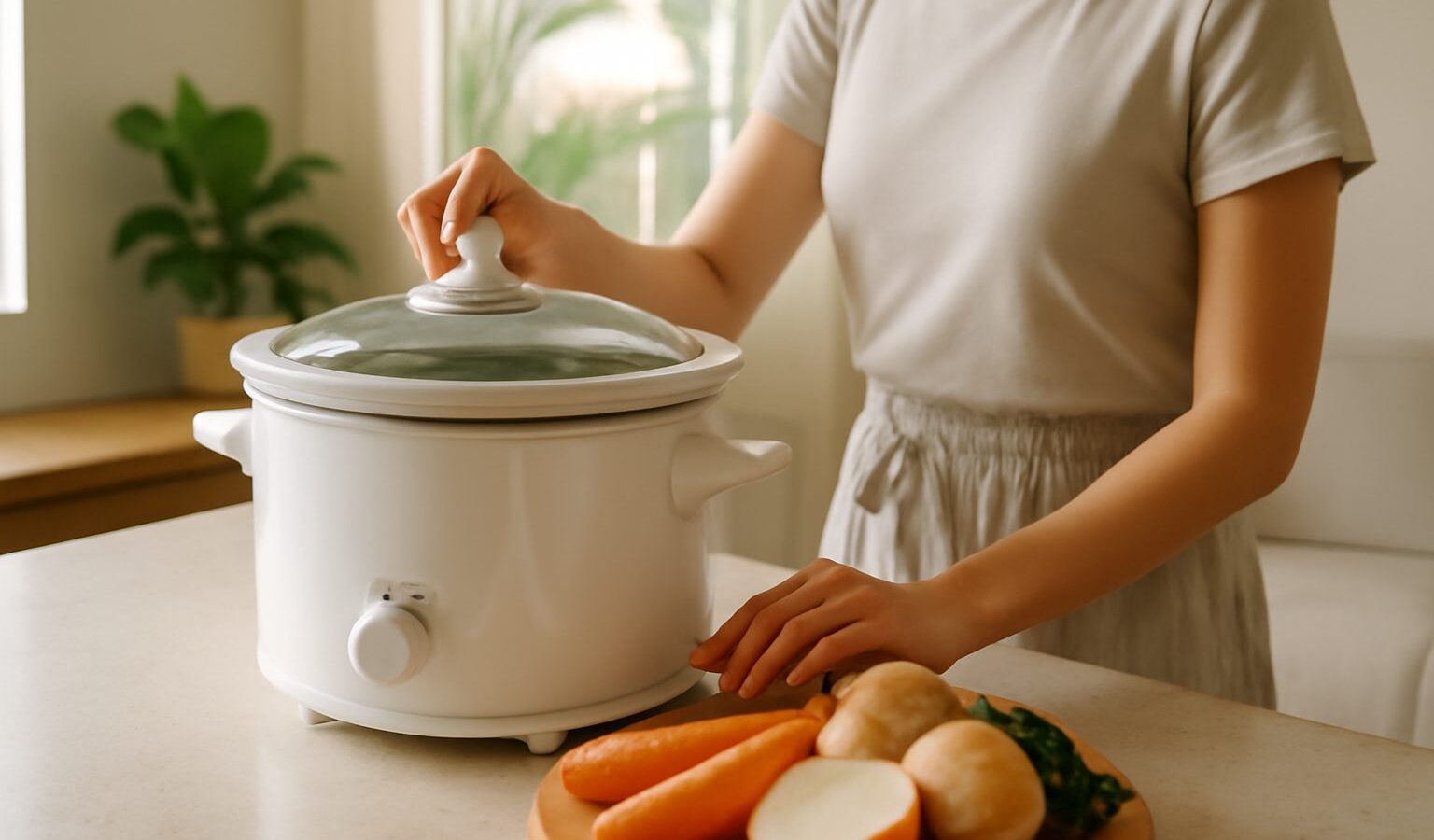
A slow cooker is one of the most forgiving kitchen appliances you can own, and shopping for a slow cooker singapore households will actually use comes down to a few sensible choices rather than clever marketing. The idea is simple: a gently heated pot cooks food over several hours at a low, steady temperature. You load it in the morning, get on with your day, and come home to a ready meal. For flat dwellers juggling work, family and the heat, that hands-off habit is the real appeal.
This guide walks through capacity, materials, controls, safety and running costs so you can match a model to your kitchen and your cooking style, without paying for features you will never touch.
How a Slow Cooker Works and Why It Suits Singapore
A slow cooker uses a heating element wrapped around a removable inner pot, usually ceramic or stoneware, topped with a lid that traps steam. Because it cooks low and slow, it is brilliant for tougher cuts of meat, curries, congee, soups, stews, braised dishes and even beans that need long, patient cooking. Cheaper cuts turn tender, and flavours have time to develop.
In a warm climate this appliance has a quiet advantage. Unlike an oven, it does not flood the kitchen with heat, so you avoid turning a small HDB kitchen into a sauna on an already sticky afternoon. It also draws relatively little power over its run time, and it lets you cook while you are out, which is handy when the schedule is tight.
All models sold here should run on Singapore mains of 230V and 50Hz and come fitted with the standard three-pin BS 1363 plug. If you are tempted by an overseas model, check the voltage rating carefully and never rely on a travel adaptor for a heating appliance, because a mismatched voltage can be a fire risk.
Sizing: Match Capacity to Your Household
Capacity is the first decision, and it is the one people most often get wrong by buying too big. A slow cooker works best when it is between half and three-quarters full, so an oversized pot used for small portions can dry out or cook unevenly.
As a rough guide, a compact pot suits one or two people or side dishes, a mid-size pot suits a small family, and a large pot suits bigger households or batch cooking for the week ahead. If you like to cook once and freeze portions, size up by one tier. If counter and cupboard space is tight, which it usually is in local flats, favour a smaller footprint and an oval shape, since an oval pot fits a whole piece of meat more neatly than a round one.
| Household size | Suggested capacity tier | Best for |
|---|---|---|
| 1 to 2 people | Compact | Sides, congee, small stews |
| 3 to 4 people | Mid-size | Everyday family meals |
| 5 or more | Large | Batch cooking and freezing |
| Any, cooking to freeze | One tier up | Meal prep for the week |
Materials and the Inner Pot
The removable inner pot does the real work, so look at it closely. Ceramic and stoneware pots hold heat well and are the traditional choice, though they are heavier and can crack if knocked or exposed to sudden temperature changes. Some models use a metal pot with a non-stick coating, which is lighter and lets you brown ingredients directly on the hob before slow cooking, saving you a pan. If you choose non-stick, treat the coating gently and avoid metal utensils so it lasts.
A well-fitting lid matters more than it looks. A heavy glass lid lets you check progress without lifting it and losing heat and moisture. Every time you open the lid, you add cooking time, so a clear one is genuinely useful. Check that the inner pot and lid are dishwasher safe if that matters to you, as this is a common difference between models.
Controls and Useful Features
Basic slow cookers offer low, high and keep-warm settings on a simple dial, which is all many cooks ever need. More advanced models add a timer that counts down and switches to keep-warm automatically, which is the feature worth paying a little extra for if you are often out longer than the cooking time. A delayed start can be handy, though for food safety it is better not to leave raw ingredients sitting at room temperature for hours before cooking begins.
Some multi-function models combine slow cooking with pressure cooking, steaming and sauteing in one unit. These are versatile and space-saving, but they are more complex to clean and operate, so buy one only if you will genuinely use the extra modes. A single-purpose slow cooker is simpler, cheaper and often more reliable.
Safety, Cleaning and Running Costs
Slow cookers are designed to run unattended, but a few habits keep things safe. Place the unit on a heat-resistant, stable surface away from the edge of the counter and away from curtains or anything flammable. Keep the cord clear of the cooking area and do not run it under a cabinet where trapped heat and steam could build up. Do not immerse the base with the heating element in water, and let ceramic pots cool before washing to avoid cracking.
Thaw frozen ingredients before adding them, since starting from frozen keeps food too long in the temperature range where bacteria multiply. Fill the pot to a sensible level, keep the lid on, and refrigerate leftovers promptly.
On running costs, a slow cooker uses modest power but runs for many hours, so its total energy use is comparable to a short burst from a hungrier appliance. Used sensibly it is an efficient way to cook, especially when it replaces the oven. Keep the seal and pot clean, check the cord occasionally for wear, and a good slow cooker will serve you for many years.
Explore more
Buying Kitchenware
Energy-Efficient Appliances
Home Appliance Shopping
How to Maintain Your Home Appliances