
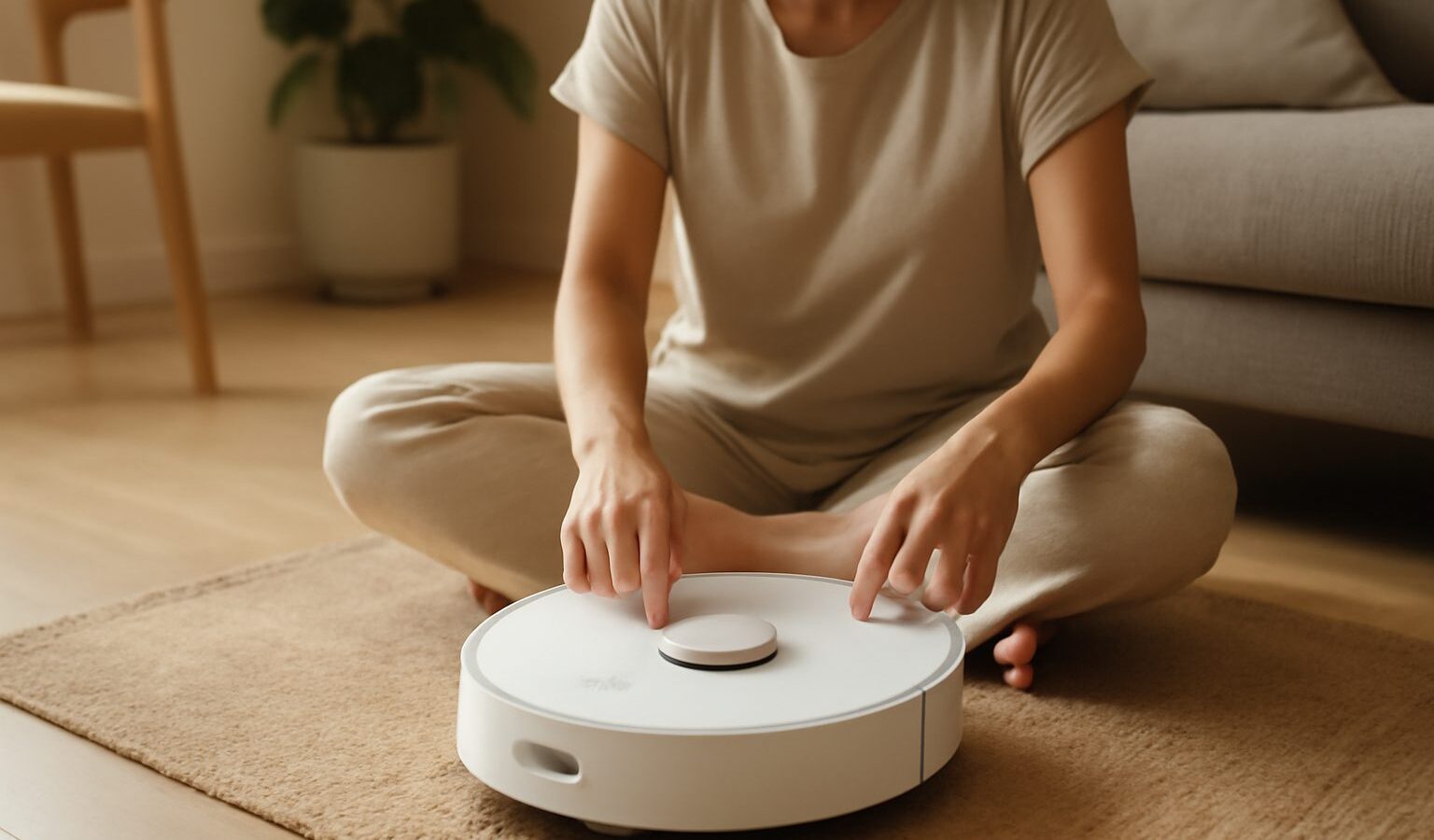
Choosing a robot mop can save you a tiring chore, but only if you pick one that matches your floors and your expectations. These machines have improved a lot, yet they are still helpers rather than miracle workers. This guide explains how they work, the difference between wet and dry cleaning, and the honest limits so you buy with your eyes open.
How a Robot Mop Works
At its simplest, a robot mop is a low, round or D shaped machine that carries a small water tank and a damp cloth or pad on its underside. As it moves across the floor, it releases a little water and drags the pad to wipe up dust, light stains and footprints. It navigates using sensors or a camera, mapping the room or bumping its way around.
Most models sold today are combination units that vacuum and mop in one pass. The vacuum picks up loose dust and hair, while the pad wipes the surface behind it. Pure mopping only robots exist too, but for a typical Singapore flat a combination unit usually makes more sense because our floors collect both dust and the sticky grime that a dry sweep leaves behind.
Wet Mopping vs Dry Cleaning
Understanding this difference is the heart of choosing a robot mop that will not disappoint you.
Dry cleaning, which is what a robot vacuum does, lifts loose debris like dust, crumbs and hair. Wet mopping adds moisture to loosen and wipe away marks that dry suction leaves behind. A good combination robot does both, but it is important to know that its mopping is gentle wiping, not scrubbing.
What the pad style tells you
- A flat, static pad simply drags a damp cloth over the floor. It freshens and picks up light dust, but does little against dried on stains.
- A vibrating or spinning pad presses and moves against the floor, which handles everyday marks better and gives a cleaner finish.
- A self cleaning dock rinses the pad during and after cleaning, so the robot is not just pushing dirty water around. This matters more than many buyers realise.
Wet vs Dry at a Glance
| Feature | Dry vacuuming | Wet mopping |
|---|---|---|
| Picks up dust and hair | Yes | Limited |
| Removes light stains | No | Yes |
| Scrubs stuck on grime | No | Only lightly |
| Suits carpets and rugs | Yes | No, keep pads off carpet |
| Water needed | No | Yes, refill the tank |
| Best used | Daily upkeep | A few times a week |
What a Robot Mop Does Well
A robot mop shines at maintenance. If you run it regularly, it keeps hard floors consistently free of dust and light marks, which is exactly the kind of grime that builds up fast in Singapore. It is brilliant for busy households, for people who dislike the daily sweep and mop, and for keeping tiled and vinyl floors looking fresh between deeper cleans.
It is also genuinely convenient. Many models let you schedule cleaning while you are out, so you come home to tidy floors with no effort. Paired with a self emptying or self washing dock, the hands on work drops to almost nothing.
The Real Limits You Should Expect
Being clear about the limits will save you frustration.
- It wipes, it does not scrub. Dried sauce, sticky spills or grout stains still need a hand with a cloth. Treat the robot as upkeep between manual cleans, not a replacement for them.
- It cannot handle thresholds and clutter well. Chair legs, cables, loose slippers and high door lips can trap or divert it. A tidy floor lets it work far better.
- It struggles with corners and edges. A round robot cannot reach fully into corners, so expect to touch those up.
- It is not for carpets. Wet pads and rugs do not mix, so choose a model that lifts or avoids carpet, or keep it to hard floors only.
- Tanks are small. You may need to refill water and empty dust on larger homes, though a good dock reduces this.
What to Check Before You Buy
Think about your own home rather than a spec sheet. Ask yourself how much bare hard floor you have, since that is where a robot mop earns its keep. Check whether your rooms are open and clutter free or full of furniture legs and thresholds. Consider whether you want to babysit refills or prefer a self washing dock that handles the messy parts for you.
Also match the machine to your maintenance appetite. Every robot mop needs its pads washed or replaced, its dust bin emptied, and its brushes cleared of hair. A self maintaining dock costs more but does most of this for you. If you would rather not fuss, pay for the convenience.
Battery, Mapping and App Control
A model that maps your home lets you send it to a single room or set no go zones around a rug or a pet bowl, which is far more useful than a robot that bumps around blindly. Longer battery life matters more in a larger flat, though most units will pause, recharge and resume. App scheduling turns the robot from a gadget into a habit that quietly keeps your floors clean.
Making the Right Choice
Choosing a robot mop is really about setting the right expectation. Buy one to keep already tidy hard floors fresh with minimal effort, and you will love it. Expect it to deep scrub a neglected floor or replace all manual cleaning, and you will be let down. Match the model to your floors, keep the clutter down, and let it do the routine work while you handle the occasional tough spot.
Explore more: Robot Vacuums and Cleaning Gadgets · Energy Efficient Appliances · Lowering Your Electricity Bill at Home