
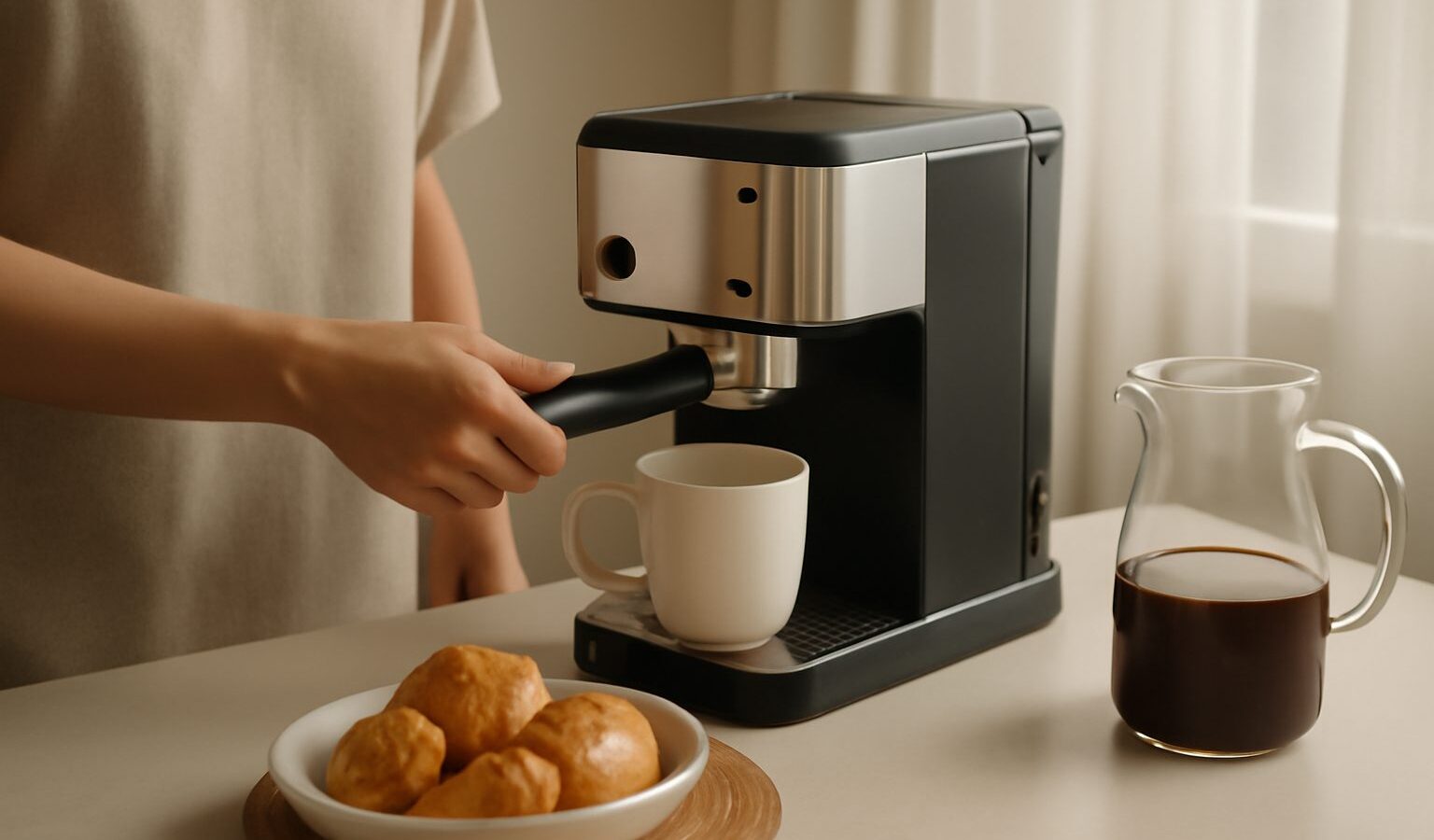
A home coffee machine can save you a small fortune over a year of cafe runs, but only if you pick one that suits how you actually drink coffee. Some people want a one button flat white before work; others enjoy the ritual of grinding and pulling a shot. This guide compares the main types by cost, effort, cup quality and cleaning so your kitchen counter earns its keep.
Start with your daily cup
Before comparing machines, be honest about your routine. How many cups a day, and for how many people? Do you drink black coffee, or milk based drinks such as lattes and cappuccinos? Are mornings rushed, or do you have a few minutes to enjoy the process? A single flat white drinker has very different needs from a household of four who each want something different. Think too about weekends versus weekdays, since a machine that feels effortless on a lazy Sunday can become a chore when you are rushing out the door. Your answers narrow the field faster than any feature list.
The main types explained
Each format trades convenience against control, cost per cup and the space it occupies.
- Capsule or pod machines: insert a sealed capsule, press a button, done. Consistent and tidy, with minimal skill required. The machine is cheap, but capsules cost more per cup and create packaging waste.
- Bean to cup: grinds fresh beans and brews automatically, often with a milk frother built in. Excellent convenience and fresh flavour, at a higher upfront price and with more parts to clean.
- Manual or semi automatic espresso: you grind, dose, tamp and steam milk yourself. The best cup quality and the most control, but a real learning curve and more effort each morning.
- Drip or filter machines: brew a jug of black coffee slowly. Great for households that drink several cups of long black, simple to use, but no espresso or milk froth.
- French press or moka pot: not electric, cheap and compact, good for one or two, though they need hands on attention.
Compare at a glance
| Type | Effort | Cup quality | Cost per cup | Best for |
|---|---|---|---|---|
| Capsule | Very low | Good and consistent | Higher | Busy singles and couples |
| Bean to cup | Low | Very good, fresh | Medium | Milk drinkers wanting ease |
| Manual espresso | High | Excellent with practice | Low once set up | Hobbyists and enthusiasts |
| Drip filter | Low | Good for black coffee | Low | Households drinking long black |
Milk matters
If you love lattes, kopi or cappuccinos, decide how you want your milk handled. Capsule and bean to cup machines may include an automatic frother that steams and pours with little effort. Manual espresso machines give you a steam wand for proper microfoam, which tastes better but takes practice. If you only drink black coffee, skip milk features entirely and put that budget towards a better grinder or brewer instead.
Grind, freshness and flavour
Fresh grinding makes a larger difference to taste than most buyers realise. Bean to cup and manual setups grind on demand, so the coffee is at its best. Capsule systems trade some freshness for convenience and consistency. If you choose a manual machine, a decent grinder is not optional; an uneven grind undoes the work of a good espresso machine. For drip brewing, medium ground coffee stored airtight keeps reasonably well for a week or two.
Fit for a Singapore kitchen
Counter space and ventilation are real constraints in an HDB flat. Measure the depth of your worktop and check clearance under any wall cabinets, since some machines need room to lift a lid or fill a top mounted tank. Consider the water tank size against how often you want to refill, and remember that our tap water is treated but still benefits from filtering to slow scale buildup. A compact capsule machine tucks away easily; a bean to cup unit with a bean hopper and drip tray needs a more permanent home.
Running cost and the energy label
Think beyond the sticker price. Capsules add up quickly if you drink several cups a day, while beans bought in bulk are cheaper per cup once the machine is paid off. Most home machines draw modest standby power, but an energy saving auto off feature is worth having so the unit is not heating water all day. Where an energy label is shown, use it as a tie breaker between similar models. Descaling salts or filters are a small recurring cost to budget for as well.
Cleaning and maintenance
A coffee machine rewards regular care and punishes neglect with sour, weak drinks.
- Rinse the group head or brew unit and empty the drip tray daily.
- Clean the milk frother immediately after each use so milk does not dry inside.
- Descale on the schedule the maker suggests, more often given local water hardness.
- For bean to cup models, remove and rinse the brew unit weekly where possible.
- Keep beans in an airtight container away from heat and sunlight.
Machines with removable, washable parts are far easier to live with. If a unit hides its brew path behind sealed panels, factor in professional servicing.
Making the call
Match the machine to your least patient morning, not your most relaxed weekend. If you want speed and tidiness, a capsule or bean to cup machine wins. If brewing is a hobby you look forward to, a manual espresso setup rewards the effort. Households that drink black coffee by the pot are well served by a simple drip machine. Buy with local warranty and easy access to consumables, and your home coffee machine will pay for itself long before the year is out.
Explore more: Home appliance shopping in Singapore · Buying kitchenware in Singapore · Energy efficient appliances