
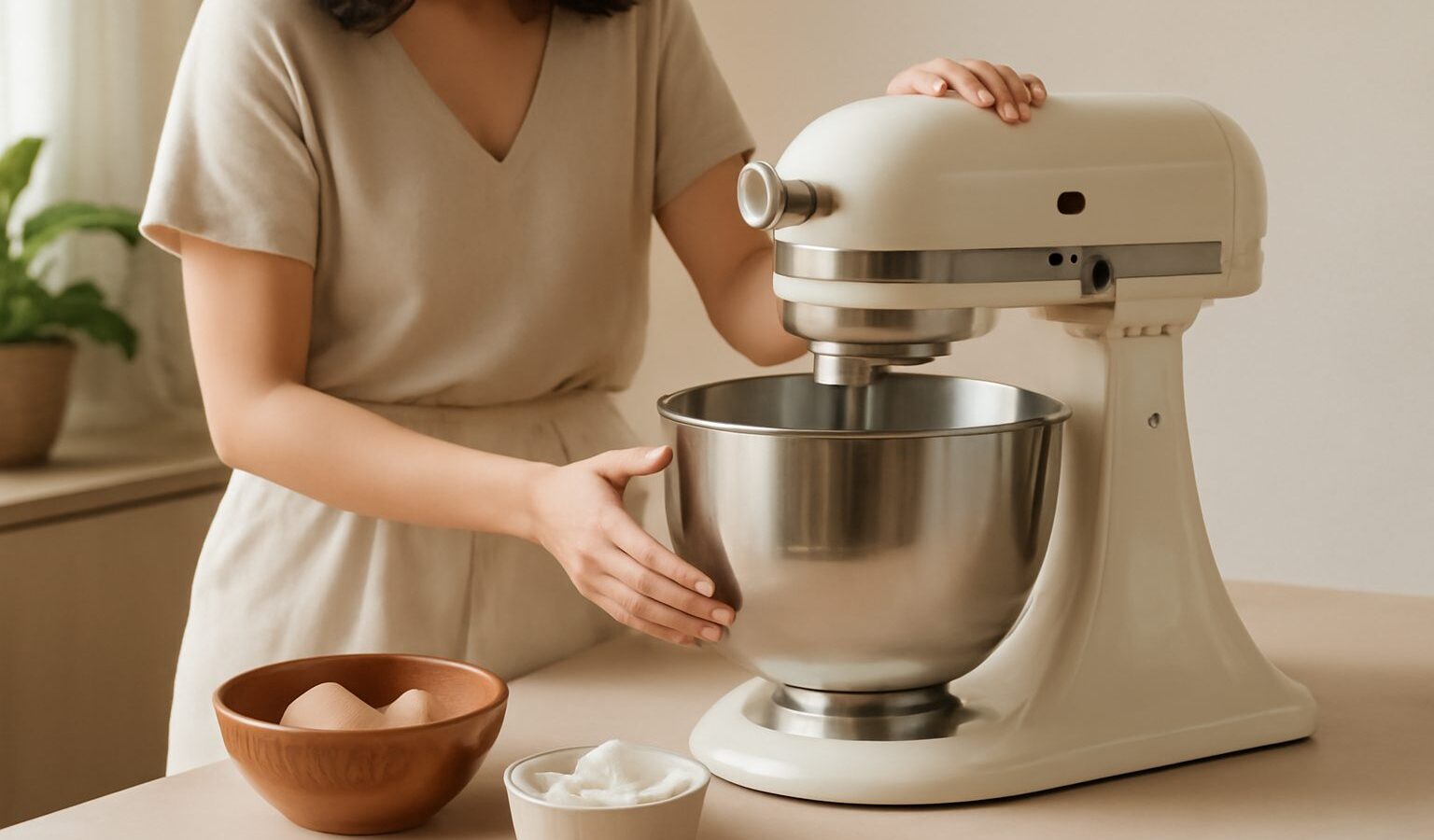
For anyone who bakes more than once in a while, a stand mixer singapore home cooks invest in can transform the kitchen. It creams butter and sugar, whips cream and egg whites to stiff peaks, and kneads bread dough hands-free while you get on with the rest. Unlike a handheld mixer, it does the hard work on its own, which makes bigger batches and heavier doughs far easier. This guide explains the main types, the attachments that matter, how to size a mixer for your space, and how to think about budget, all without recommending any single brand.
Types and How They Work
Most home stand mixers fall into two designs, and the difference affects how you use them.
The tilt-head mixer has a head that tilts back so you can lift the beater clear of the bowl to add ingredients or swap attachments. It is compact, easy to load and the most popular choice for home kitchens. Because the head tilts, these models tend to be a touch smaller and lighter, which suits limited counter space.
The bowl-lift mixer keeps the head fixed and raises the bowl up to the beater using a lever. This design is generally sturdier and handles larger, heavier batches of stiff dough with less strain. It is taller and needs more clearance, so it suits serious or frequent bakers with room to spare.
A common question is whether a stand mixer is worth it over a cheaper handheld mixer. The answer depends on volume and dough. A handheld is light, cheap and easy to store, and it whips cream or beats a single cake batter perfectly well. A stand mixer earns its place once you make bread, work in larger batches, or want to walk away while it kneads. If your baking is heavy or frequent, the hands-free convenience quickly justifies the extra counter space.
Whichever design you choose, the motor and the mixing action matter most. Look for planetary mixing, where the beater spins on its own axis while travelling around the bowl. This reaches the whole bowl and folds ingredients thoroughly, so you spend less time scraping down the sides. A range of speed settings, from a gentle stir to a fast whip, gives you control for everything from folding flour to whipping cream.
Attachments, Bowl Size and Features
A stand mixer is really a platform, and the attachments decide how much it can do.
Three come as standard on most machines. The flat beater handles general mixing, creaming and cake batter. The balloon whisk incorporates air for whipping cream, egg whites and light sponges. The dough hook kneads bread and pizza dough, saving your arms entirely. Between them, these three cover the vast majority of home baking.
Many mixers also accept optional attachments that turn the machine into a small kitchen system, such as pasta rollers, mincing plates, vegetable slicers and grinders that connect to a front power hub. If you think you might expand later, check that the model has such a hub and that attachments are available locally.
Bowl size is the next decision. It is usually given in litres, and bigger is not always better; a large bowl can leave small quantities out of reach of the beater, while a small bowl overflows with big batches.
| Bowl size | Best for | Who it suits |
|---|---|---|
| Around 3 to 3.5 litre | Small batches, everyday baking | Singles, couples, occasional bakers |
| Around 4 to 4.5 litre | The versatile middle ground | Most home bakers and small families |
| Around 5 to 6 litre | Large cakes, multiple loaves | Frequent bakers, entertainers |
| 6 litre and above | Heavy, repeated batches | Very keen bakers with the counter space |
Other features worth checking include the bowl material, with stainless steel being durable and easy to clean, and whether the bowl and beaters are dishwasher friendly. A splash guard or pouring shield keeps flour from dusting the counter and lets you add ingredients while mixing. Consider the weight too; a heavier machine is more stable during kneading but harder to move, so a permanent spot on the counter works best.
On practicality and safety, Singapore mains run at 230V and 50Hz, so buy a model sold locally with the correct three-pin plug rather than adapting an imported unit; this protects the appliance and keeps the warranty valid. A stand mixer is tall and needs headroom, especially the tilt-head design when the head is raised, so measure the height under your wall cabinets before buying. Always switch off and unplug before changing attachments, and keep fingers and utensils away from the moving beater.
Matching Budget to Needs
Thinking in tiers keeps the choice grounded.
- Budget tier: compact tilt-head mixers with the three standard attachments. Perfect for cakes, cookies, whipped cream and light doughs. They may struggle with very stiff or repeated bread batches, so give the motor a rest during heavy work.
- Mid tier: sturdier tilt-head or entry bowl-lift models with larger bowls, more speeds and an attachment hub. This is the sweet spot for regular bakers who want to handle bread dough and expand with accessories later.
- Premium tier: robust bowl-lift machines built for frequent, heavy use, with powerful motors and generous bowls. Worth it if you bake bread often, cook in large batches, or plan to use many attachments.
A useful reality check before you buy: be honest about how often you bake. If it is a few times a year, a handheld mixer or a budget stand mixer may serve you well without dominating the counter. If baking is a genuine hobby, investing in a sturdier machine with a good bowl size and an attachment hub pays off in comfort and durability. Match the bowl to your usual batch, confirm it fits your space, and choose the attachments you will really use. A well-matched stand mixer can become the most reliable helper in your kitchen for many years.
Explore more
Buying Kitchenware
Home Appliance Shopping
How to Maintain Your Home Appliances
Kitchen Organisation and Storage