
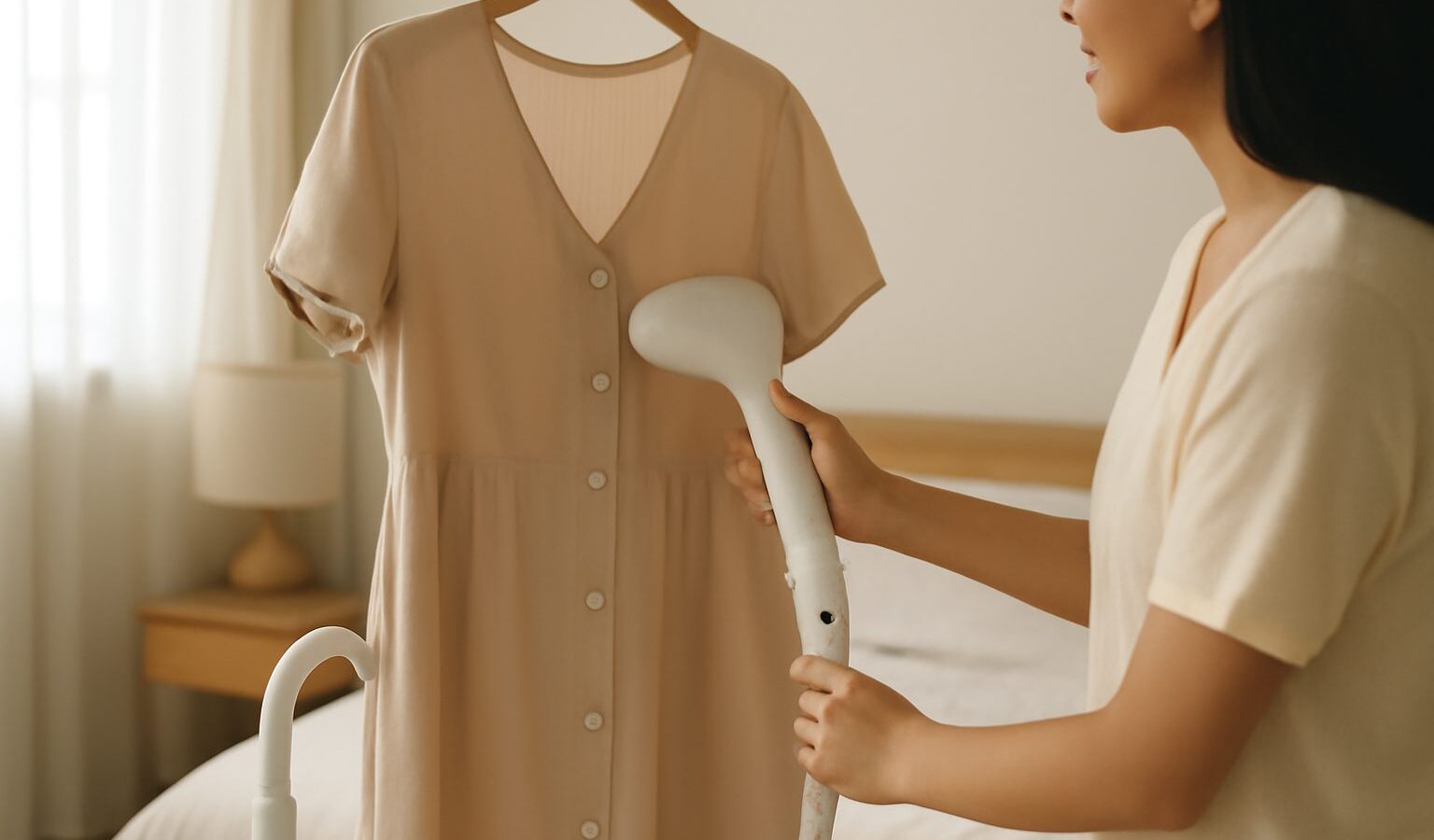
Choosing a garment steamer is really about matching the machine to your wardrobe and your patience. A steamer relaxes creases with hot vapour while the garment hangs, which is gentler and often quicker than dragging an iron across a board. In our humid climate, where clothes crease easily and delicate fabrics abound, a good steamer earns its place. This guide covers the types, the specifications that matter and how to keep one working.
Steamer or iron: which do you need
A steamer and an iron solve overlapping but different problems. An iron presses fabric flat against a board with heat and pressure, giving sharp creases on shirts and trousers. A steamer refreshes hanging clothes, removes light to moderate wrinkles and handles delicate materials that an iron might scorch. Many households keep both, but if your wardrobe is mostly casual wear, blouses, dresses and knits, a steamer alone may cover you. If you need crisp collars and pressed pleats for work, an iron still has a role.
Handheld or standing
The first real decision is format, and it comes down to how much you steam and where.
- Handheld steamers are compact, light and quick to heat. They are ideal for touch ups, travel and small flats with little storage. The trade-off is a smaller water tank and shorter continuous run time.
- Standing steamers have a larger tank, a pole and hanger, and stronger, longer lasting steam. They suit larger wardrobes, families and anyone steaming several items at once. They take up more space and take a little longer to set up.
For most HDB homes doing occasional touch ups, a handheld is enough. If you steam a full wardrobe weekly or dress formally for work, a standing unit saves time and refills.
Key specifications to weigh
Look past the marketing and focus on the numbers that shape daily use.
| Feature | Handheld | Standing |
|---|---|---|
| Tank capacity | Small, frequent refills | Large, fewer refills |
| Heat up time | Very quick | Slightly longer |
| Continuous steam | Shorter bursts | Long, steady output |
| Storage space | Minimal | Needs a corner |
| Best for | Touch ups and travel | Whole wardrobes |
- Tank capacity decides how long you steam before refilling. A small tank is fine for a couple of shirts; a larger one saves interruptions.
- Heat up time matters if you steam in a rush before leaving home. Handhelds are usually ready in well under a minute.
- Wattage and steam output loosely track power. Higher output tackles thicker fabrics and stubborn creases, but a modest unit handles everyday cottons and synthetics.
- Continuous versus trigger steam: some units steam constantly, others release vapour when you press a button, which saves water.
Features that genuinely help
A few extras are worth seeking out, while others are just noise.
- A range of fabric settings or an adjustable steam level protects delicate items and gives more power for linen and denim.
- Attachments such as a fabric brush, a crease clip or a lint pad extend what one machine can do.
- Anti drip design keeps hot water from spitting onto your clothes.
- Automatic shut off is a sensible safety feature, especially with a standing unit left on between garments.
- A removable, refillable tank makes topping up far less fiddly.
You do not need every attachment. Choose the ones that match the fabrics you actually own.
Using it well in a humid climate
Technique matters as much as the machine. Hang the garment so it drapes freely, then move the steam head downward with light contact or just above the fabric. Steam works with gravity, so a taller hanging point gives better results, which is one reason standing units perform so well. For collars and cuffs, stretch the fabric gently with your free hand as you pass the head over it. Because Singapore air is humid, let steamed clothes dry and cool on the hanger for a few minutes before wearing so they hold their smooth finish rather than re creasing.
Water, scale and daily care
Local tap water is treated but still leaves mineral deposits over time, and scale is the main thing that shortens a steamer’s life.
- Empty the tank after each session so water does not sit and breed scale or odour.
- Descale periodically following the maker’s guidance; some units have a specific rinse cycle.
- Use filtered or the recommended water type if the manual advises it, and avoid additives or perfumes that clog the vents.
- Wipe the steam plate when cool to keep the holes clear.
- Store a handheld somewhere dry, and coil cords loosely to avoid strain.
Neglect scale and you will notice weaker steam, spitting and eventually a blocked head. A few minutes of care keeps output strong.
Power and running cost
Steamers heat water quickly and are used in short bursts, so their impact on the electricity bill is modest for most homes. Where an energy label or rated consumption is shown, use it to compare similar models. A higher wattage standing unit uses more power while running but also finishes larger loads faster, so the practical difference is small. Plug directly into a wall socket rather than a shared strip, since heating appliances draw a meaningful current.
Making your choice
Decide first how much you steam and where. For touch ups, travel and tight storage, a handheld is the easy, affordable pick. For a full wardrobe, formal dressing or a busy household, a standing steamer pays back the space it takes. Match the tank size to your habits, choose the attachments your fabrics need, and commit to regular descaling. Do that, and choosing a garment steamer becomes a small decision with a daily payoff: neat clothes with far less effort than an ironing board demands.
Explore more: How to iron and steam clothes at home · Home appliance shopping in Singapore · Energy efficient appliances