

For many Chinese families, choosing the right day for a big life event is a cherished tradition. When you are planning a wedding, moving into a new home or beginning renovations, you may hear relatives talk about picking an auspicious date. Understanding the customs around auspicious dates singapore can help you honour family wishes, connect with your heritage and navigate these conversations with warmth. This guide presents the practice as a cultural belief and tradition, not as a guarantee of good fortune, and certainly not as financial, medical or legal advice.
If you have recently arrived from the mainland, you may already be familiar with these ideas, or they may be part of your parents’ world more than your own. Either way, it helps to understand where the customs come from, so you can decide how much they mean to you. Remember that beliefs vary from family to family, and there is no single correct approach.
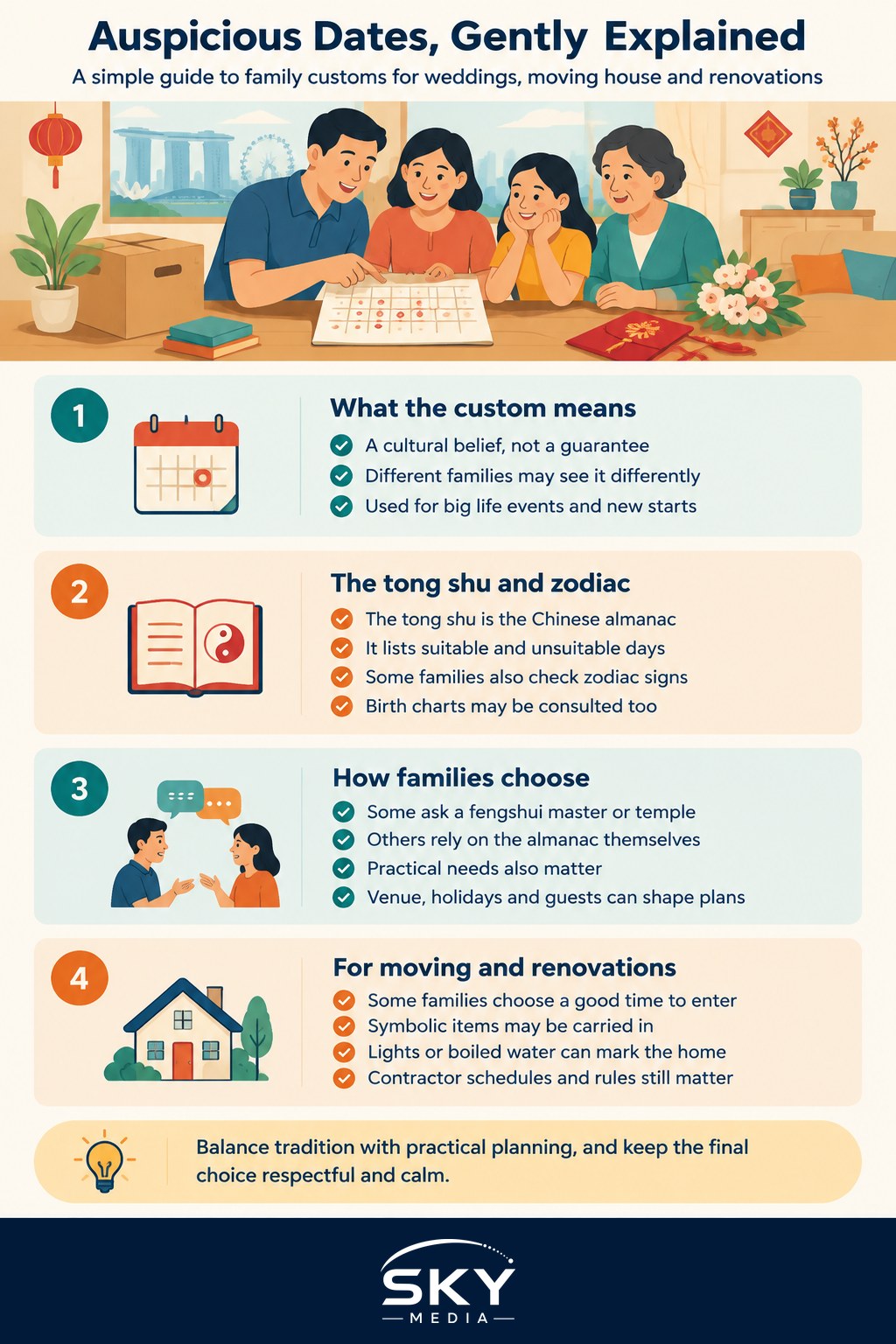
The Tong Shu and the Chinese Almanac
At the heart of date selection sits the tong shu, the Chinese almanac. This traditional book, updated each year, lists days considered favourable or unfavourable for particular activities, from marriage and moving house to opening a business or starting renovations. Alongside each date you might find notes on what is suitable and what is best avoided.
The almanac draws on the lunar calendar, the twenty four solar terms and a system of heavenly stems and earthly branches. To an outsider it can look complex, and that is partly why some families consult an expert rather than reading it alone. Today, many people simply use an online version or a mobile app, though older relatives may prefer the printed book they have trusted for years.
Treat the almanac as a window into a long cultural history rather than a set of fixed rules. It reflects generations of accumulated custom, and reading it can be a lovely way to feel connected to that lineage, regardless of how literally you take its advice.
Zodiac Compatibility and Personal Charts
Another common belief involves the Chinese zodiac. Some families check that a wedding date suits the animal signs of the couple, and that it does not clash with the signs of close family members. The idea of a day clashing with a particular zodiac sign is a traditional one, meant to encourage harmony rather than to predict misfortune.
For weddings, some couples go further and consult their birth details, sometimes called the eight characters or bazi. A master may look at the couple’s charts to suggest dates thought to bring harmony. Again, this is a matter of belief and tradition. It is not a promise of a happy marriage, which grows from love, communication and effort rather than any single day on a calendar.
If different relatives hold different views, gentle conversation usually helps. You might honour a parent’s wish for a favourable date while also keeping your own preferences in mind. The aim is family harmony, which is itself the spirit behind the whole custom.
Consulting a Master or Deciding for Yourself
Some families engage a fengshui master or a temple to help select a date, especially for weddings and house moves. In Singapore you will find practitioners of varying styles and backgrounds. If your family wishes to consult one, ask relatives for a recommendation, and treat any fees as you would any service, with clear expectations agreed in advance.
Many modern couples take a lighter approach. They may glance at the almanac, avoid a date that a parent strongly dislikes, and otherwise choose based on practical matters such as venue availability, public holidays and guests’ schedules. Both approaches are valid. What matters is that you and your family feel comfortable and at peace with the choice.
A Quick Reference Table
| Occasion | What families often consider | Gentle reminder |
|---|---|---|
| Wedding | Tong shu, zodiac signs, couple’s charts | A good marriage grows from effort, not a date |
| Moving house | Favourable day and time to enter the new home | Coordinate with lease and handover dates |
| Renovation start | Suitable day to begin works | Follow safety rules and contractor timelines |
| Opening a business | Auspicious opening day | Legal and financial matters need proper advice |
| Family disagreement | Balance relatives’ wishes with your own | Harmony is the true goal |
Moving House and Renovations
For moving house, tradition may suggest not only a favourable day but also a good time to first step into the new home, sometimes carrying symbolic items such as rice, oil or a lucky ornament. Some families like to boil water or turn on the lights as a sign of warmth and life entering the home. These small rituals are gentle and joyful, and you can join in as much or as little as you like.
Renovations follow a similar pattern. A family might choose an auspicious day to begin hacking or to install the main door. In practice, contractor availability and building management rules in Singapore often shape the timeline just as much as the almanac, so a flexible attitude helps.
Throughout, keep the practical and the traditional in balance. The almanac cannot arrange your movers, secure your keys or pass your renovation inspection. Treat the customs as a meaningful layer of culture that sits alongside, not instead of, sensible planning.
Making It Your Own
There is no obligation to follow any of these traditions, and no shame in embracing them warmly. Some newcomers find comfort in the rituals, a way to carry a piece of home into a new chapter in Singapore. Others prefer to keep things simple. Many land somewhere in between, honouring an elder’s wish while making their own choices too.
Whatever you decide, approach the subject with respect and a light heart. Ask your parents what a date meant to them, share a cup of tea while flipping through the almanac, and let the tradition be a source of connection rather than pressure. That gentle spirit is the real gift behind the custom of choosing auspicious dates singapore.
Explore more
Chinese Tea Culture in Singapore
Mid-Autumn Festival in Singapore
Chinese Calligraphy and Cultural Hobby Groups
Frequently Asked Questions
Can I pick a wedding date that suits both the almanac and the venue? Often yes. Many couples glance at the almanac, avoid a date a parent strongly dislikes, then choose by venue availability, public holidays and guests’ schedules. Book the venue early if you have a short list of favoured dates.
What if my parents and I disagree on the date? Talk it through gently. You might honour a parent’s wish for a favourable date while keeping your own practical needs in mind. The aim of the custom is family harmony, so a compromise that everyone is at peace with usually works.
How much does it cost to consult a fengshui master for a date? Fees vary between practitioners, so there is no standard price. Ask relatives for a recommendation, and agree on what the consultation covers and its cost in advance, as you would for any service.
Do auspicious dates matter when signing a tenancy or getting the keys? They matter to some families, but the practical dates are set by the lease, handover and legal requirements. Coordinate with the landlord or developer first, and treat any auspicious timing as an optional layer on top.
Where can I check the almanac or find a good day without a printed tong shu? Many people use an online version or a mobile app, though older relatives may prefer the printed book. Whatever you use, treat it as a cultural guide, not a guarantee, and rely on proper advice for legal or financial matters.
Further reading: What to Do When You Move House: A Checklist