
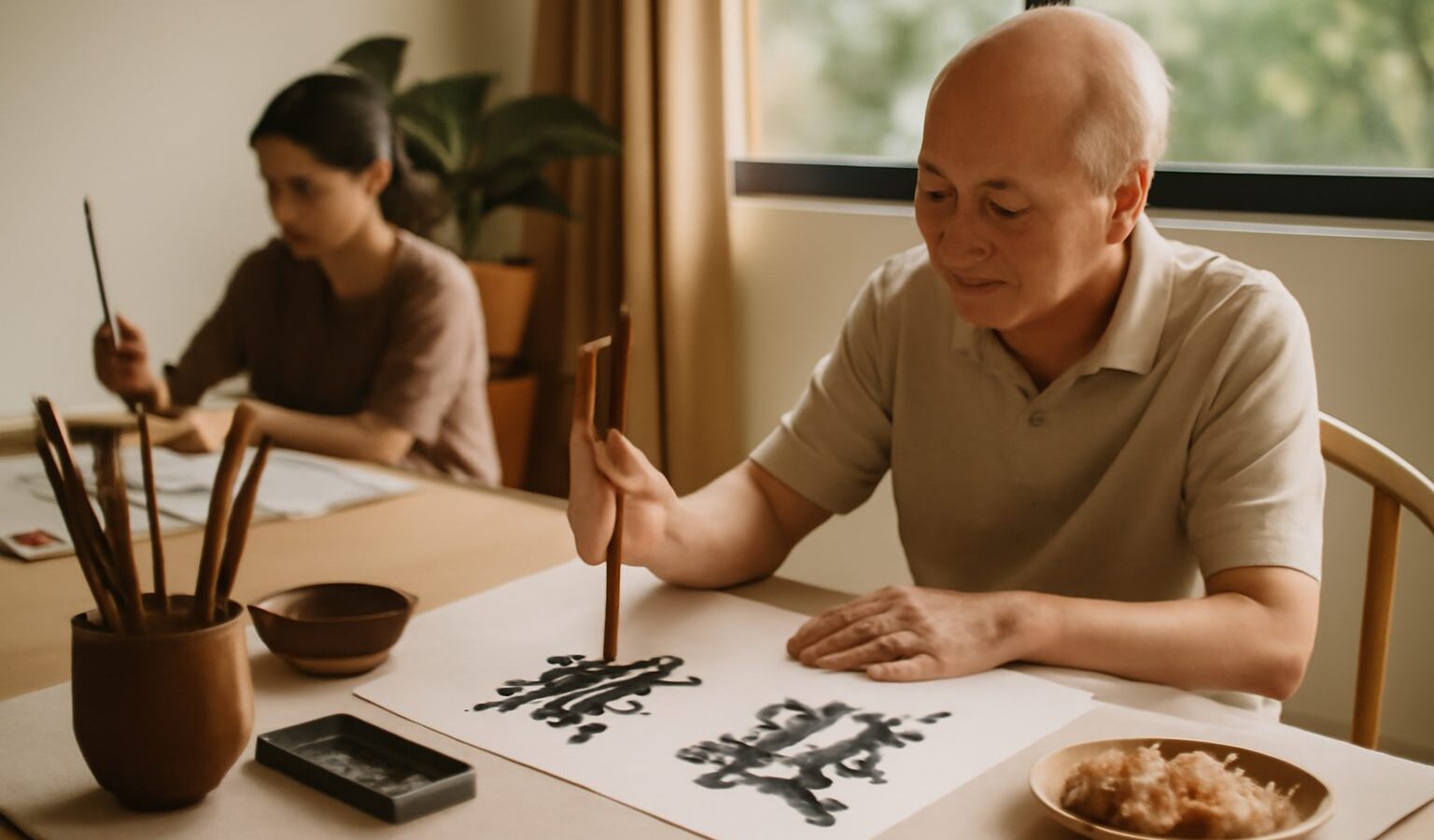
There is something deeply calming about the slow sweep of a brush across paper, the soft scent of ink, and the quiet focus of forming a single character with care. If you have moved to Singapore from the mainland, taking up Chinese calligraphy singapore can be a warm way to stay connected to your roots, meet like-minded friends and slow down after a busy week. This guide offers a practical starting point, from the tools you need to the community and cultural groups where you can learn and belong.
Calligraphy, or shufa, is far more than neat handwriting. It is a living art form with a history of thousands of years, valued for its beauty, discipline and expression. The good news is that you do not need to be an artist to begin. With a little guidance and regular practice, anyone can enjoy it.
The Tools You Will Need
Traditional calligraphy uses the four treasures of the study: the brush, the ink, the paper and the inkstone. You do not need expensive versions to start.
A soft brush, often called a maobi, is the main tool. Beginners usually choose a medium sized brush that holds ink well and forms clear strokes. For ink, many learners begin with bottled liquid ink, which is convenient, before trying an ink stick and inkstone later. Practice paper is often thin and absorbent, and some beginners use special water writing cloths that let you practise with plain water, saving both paper and money.
A felt mat under your paper stops ink from bleeding onto the table, and a paperweight keeps the sheet steady. You will also want a small dish for ink and a cloth for cleaning your brush. In Singapore you can find these supplies at art shops, stationery stores and shops in areas with a strong Chinese community. Starter sets are widely available and make a gentle first purchase.
A Quick Starter Table
| Item | What it does | Beginner tip |
|---|---|---|
| Brush (maobi) | Forms the strokes | Start with one medium soft brush |
| Ink | Colours the strokes | Bottled ink is easiest at first |
| Paper | The writing surface | Water cloths save paper while practising |
| Inkstone or dish | Holds the ink | A small dish works for beginners |
| Felt mat | Absorbs excess ink | Protects your table |
| Paperweight | Steadies the paper | A smooth stone will do |
How to Begin as a Beginner
Start with your posture and your grip. Sit upright with both feet flat, and hold the brush loosely but securely, keeping your wrist relaxed. Many teachers suggest beginning with basic strokes before moving to full characters, since every character is built from a handful of core movements such as the horizontal line, the vertical line, the dot and the sweeping stroke.
Practising simple characters helps you feel the rhythm of the brush. Aim for short, regular sessions rather than long, tiring ones. Even fifteen minutes a few times a week builds steady progress. Keep your early pieces so you can see how far you have come, and try not to judge yourself harshly. Calligraphy rewards patience and gentle persistence.
Copying a model, known as tie, is a time honoured way to learn. You place a master’s work beside you and imitate the strokes, absorbing the balance and flow. Over time you develop your own hand. Many beginners find that learning alongside others keeps them motivated, which is where community groups come in.
Finding Community and Cultural Groups
Learning with others makes the journey far richer. Singapore has a lively network of cultural associations, community clubs and interest groups where calligraphy is taught and shared.
Community clubs and centres run by the People’s Association across the island often offer calligraphy classes, and these tend to be affordable and welcoming to beginners. Clan associations and Chinese cultural societies, many with long histories in Singapore, sometimes hold calligraphy activities, exhibitions and gatherings, especially around Chinese New Year and other festivals. These groups can be a wonderful way for newcomers to meet people who share their language and heritage.
Public libraries and arts organisations occasionally host workshops and demonstrations, and some private studios and teachers offer structured courses. Universities and student bodies may run calligraphy interest groups too. To find current classes, it helps to check community centre notices, ask at local Chinese bookstores, or look for cultural association events near you.
When choosing a group or class, consider the teacher’s approach, the class size and whether the sessions suit your level. A patient teacher who explains the basics clearly is worth more to a beginner than a famous name. Do not be shy about attending a trial session to see whether the atmosphere feels right.
Making It a Lasting Hobby
Once you have the basics, a few small habits keep the hobby alive. Set up a simple, tidy corner at home where your brushes and paper are ready, so practice feels easy to start. Clean your brush properly after each session by rinsing out the ink and reshaping the tip, then hang or lay it to dry, and it will last far longer.
Give yourself gentle goals, such as writing a couplet for the new year or copying a short poem you love. Displaying a finished piece at home, or gifting one to a friend, brings a quiet sense of accomplishment. Many people find that calligraphy also deepens their appreciation of Chinese poetry and history, opening doors to related interests such as seal carving, ink painting and tea culture.
For newcomers, the social side can be just as valuable as the art. A calligraphy group offers a friendly circle, a reason to leave the house, and a shared language of tradition. Over months and years, these gatherings often turn into lasting friendships.
Whether you practise alone at your desk or join a bustling community class, Chinese calligraphy singapore can become a source of calm, creativity and connection in your new home. Begin with a single brush, a sheet of paper and an open mind, and let the art unfold at its own gentle pace.
Explore more
Chinese Tea Culture in Singapore
Chinese Bookstores and Libraries in Singapore
Joining a Chinese Music Group: Erhu and Guqin