
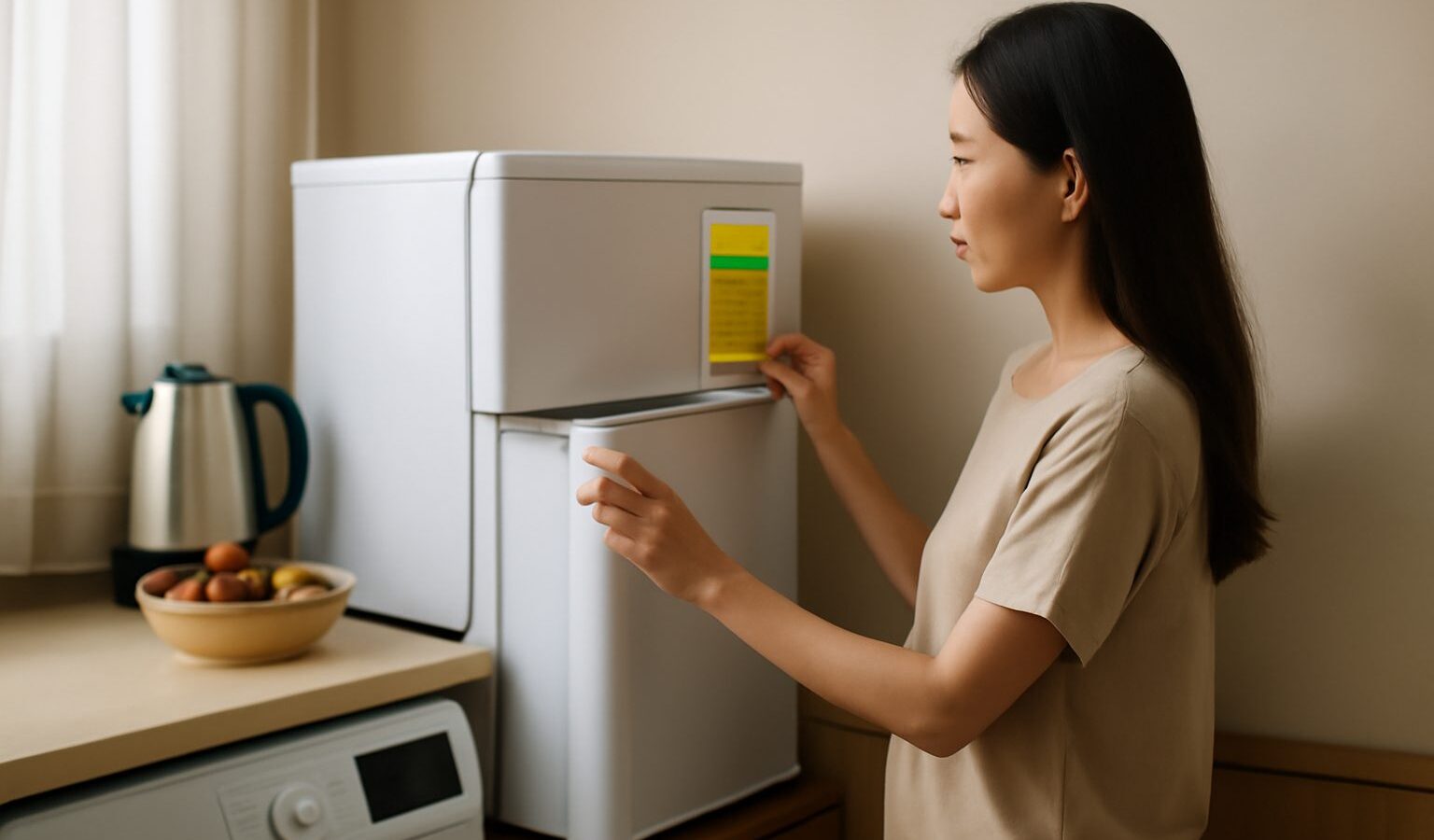
The appliances humming away in a typical HDB flat, the air-conditioner, the fridge, the clothes dryer, quietly make up a big share of the monthly electricity bill. Choosing energy efficient appliances in Singapore is one of the most painless ways to cut both your bill and your carbon footprint, because the saving happens automatically every day you use the machine, with no extra effort on your part. The trick is knowing what to look for at the point of purchase, when the decision is easiest to make. This guide walks through the energy label, the tick ratings, right-sizing, and the difference between the sticker price and the true lifetime cost.
The Mandatory Energy Labelling Scheme
In Singapore, many common household appliances must carry an energy label before they can be sold. This is the Mandatory Energy Labelling Scheme, run by the National Environment Agency (NEA). The scheme covers categories that tend to use a lot of energy over their lifetime, so the shopper can compare models at a glance rather than trying to decode technical specifications.
The categories the scheme covers have grown over the years, and typically include:
- Air-conditioners, which are usually the single biggest electricity user in a Singapore home.
- Refrigerators, which run continuously, twenty-four hours a day, every day.
- Clothes dryers, which draw a lot of power in a humid climate where line-drying is not always practical.
- Televisions and some other electrical goods.
Because NEA updates the list of covered appliances and the rating thresholds from time to time, treat the categories above as a general picture and check NEA’s website for the current, complete list and the exact rules when you shop.
Reading the Energy Label and the Tick Rating
The energy label is designed to be read quickly. Its headline feature is a row of ticks: the more ticks a model earns, the more efficient it is relative to others in the same category. A model at the top of the scale sips far less electricity than one at the bottom to do the same job.
Below the ticks, the label usually shows an estimated annual energy cost or annual energy consumption. This figure is the one to compare, because it translates efficiency into everyday terms you can feel in your wallet. Two fridges may sit side by side at similar prices, yet one quietly costs noticeably more to run each year than the other. When you compare, make sure you are looking at models of a similar size and type, since a larger appliance naturally uses more energy in absolute terms even when it is efficient for its class.
The exact look of the label, the number of tick levels, and how the estimated cost is calculated are all set by NEA and can be revised, so read the label in front of you rather than relying on a remembered rule of thumb.
What to Check on the Label, by Appliance
Different appliances reward attention to different details. Here is a quick guide to where the savings hide.
| Appliance | What to check on the label and beyond |
|---|---|
| Air-conditioner | Tick rating, whether it is an inverter model, and that the cooling capacity suits the room size |
| Refrigerator | Tick rating and estimated annual energy cost, matched to a capacity your household actually needs |
| Clothes dryer | Tick rating and dryer type, since heat-pump models generally use less energy than vented ones |
| Television | Tick rating and screen size, as a bigger or brighter panel tends to draw more power |
| Washing machine | Efficiency information plus water usage, since both add to the running cost |
Use the label to shortlist, then confirm the finer points, like inverter technology or dryer type, in the product specifications or with the retailer.
Right-Sizing and Inverter Technology
An efficient appliance that is far bigger than you need can still waste energy, so right-sizing matters. A fridge with more capacity than your household fills, or an air-conditioner rated for a much larger room than your bedroom, will use more power than a well-matched model. Think about how many people you cook for, or the actual size of the room you are cooling, and choose accordingly.
For air-conditioners, look closely at inverter models. A non-inverter unit switches its compressor fully on and off to hold a temperature, while an inverter continuously adjusts the compressor speed, easing off once the room is cool. In practice this usually means smoother comfort and lower running costs, which is why inverter aircon is a popular choice for the long hours of use common in Singapore’s climate. Pair the right size with an efficient, inverter design and the daily saving adds up quietly all year.
Sticker Price Versus Lifetime Cost
The cheapest appliance on the shelf is rarely the cheapest one to own. Every appliance really has two prices: the sticker price you pay once, and the running cost you pay in electricity for as long as you keep it, often ten years or more. A model that costs a little more upfront but earns extra ticks can more than repay the difference over its life, especially for something like a fridge that never switches off or an aircon used most nights.
When you weigh two options, glance at the estimated annual cost on each label, picture that difference repeated year after year, and add it to the purchase price. This lifecycle view often flips the decision toward the slightly pricier but more efficient machine. It is the same money either way, just paid in a different rhythm.
When to Replace an Old, Inefficient Unit
If an appliance still works well, keeping it going is usually the greener choice, since making a new one carries its own environmental cost. But there is a tipping point. A very old air-conditioner or fridge, especially one from before efficiency standards tightened, can be so power-hungry that a new efficient model pays back the purchase through lower bills within a few years. Warning signs include an aircon that struggles to cool, a fridge that runs constantly or feels warm, or rising bills with no change in habits.
When you do replace an old unit, do not send it down the chute or leave it at the void deck. Large appliances are regulated e-waste, and there are proper channels to hand them over so their materials are recovered safely, including retailer take-back when you buy a replacement. Check NEA’s current e-waste guidance for collection points and details.
Explore More
Efficient appliances are one piece of a lower-energy home. For simple habits that stretch the savings further, read our guide to saving electricity at home in Singapore. And when it is finally time to let an old machine go, see how to do it responsibly in e-waste recycling in Singapore.
Related across Sky Media: Energy-Efficient Appliances in Singapore