
Electricity is one of those quiet household costs that adds up month after month, and in Singapore’s warm, humid climate a big slice of it goes to keeping cool. The good news is that saving electricity in Singapore does not mean sweating in the dark or giving up your comforts. It mostly comes down to using the biggest energy users a little more thoughtfully, choosing efficient appliances when it is time to replace them, and closing off the small leaks that run all day without you noticing. Lower bills are the obvious reward, and because most of our power still comes from burning natural gas, using less also means fewer emissions. Here is how to make a real dent, room by room and habit by habit.
Cool Smarter, Because Aircon Is the Big One
In a tropical home, air-conditioning is usually the single largest chunk of the electricity bill, so this is where small changes matter most. You do not have to switch it off to save; you just have to run it efficiently.
- Nudge the temperature up. Setting the thermostat a degree or two warmer still feels comfortable once your body adjusts, and the compressor works less to hold a higher target. A light blanket at night lets you set it higher without feeling cold.
- Let fans do the heavy lifting. A ceiling or standing fan moves air across your skin and makes a room feel cooler than it is, so you can raise the aircon setting or skip it entirely on milder evenings. Fans use a tiny fraction of the power an air-conditioner does.
- Keep the cool in. Close doors and windows in the room you are cooling, and draw curtains or blinds during the hottest part of the day so you are not fighting the afternoon sun.
- Cool only where you are. There is little point chilling an empty living room. Cool the bedroom at night and the space you actually use.
- Look after the unit. Clean or wash the filters regularly and get the system serviced so it runs efficiently. A clogged filter makes the compressor work harder for the same result.
If you want to go deeper on this one appliance, we have a whole guide on reducing aircon use in Singapore.
Read the Tick Labels When You Buy
The easiest long-term saving is baked in at the shop. In Singapore, many household appliances carry the Energy Label, the yellow tick-rating sticker managed by the National Environment Agency (NEA). More ticks means the model is more energy efficient, and the label also shows estimated annual energy use so you can compare similar products side by side.
A cheaper appliance with fewer ticks can quietly cost you more over its lifetime through higher running costs, especially for something that runs constantly like a fridge or air-conditioner. When you are replacing a major appliance, treat the tick rating and the estimated yearly consumption as part of the price. For the full picture on what to look for, see our guide to choosing energy-efficient appliances in Singapore. You can always check the current labelling scheme and covered products on NEA’s website, since the details are updated from time to time.
Hunt Down Standby and Phantom Load
Plenty of devices sip power even when they look switched off. This standby or phantom load comes from TVs, set-top boxes, game consoles, chargers left plugged in, microwaves and coffee machines with glowing clocks, and the little transformer bricks on many gadgets. Individually each draws very little, but across a whole flat, all day every day, it adds up.
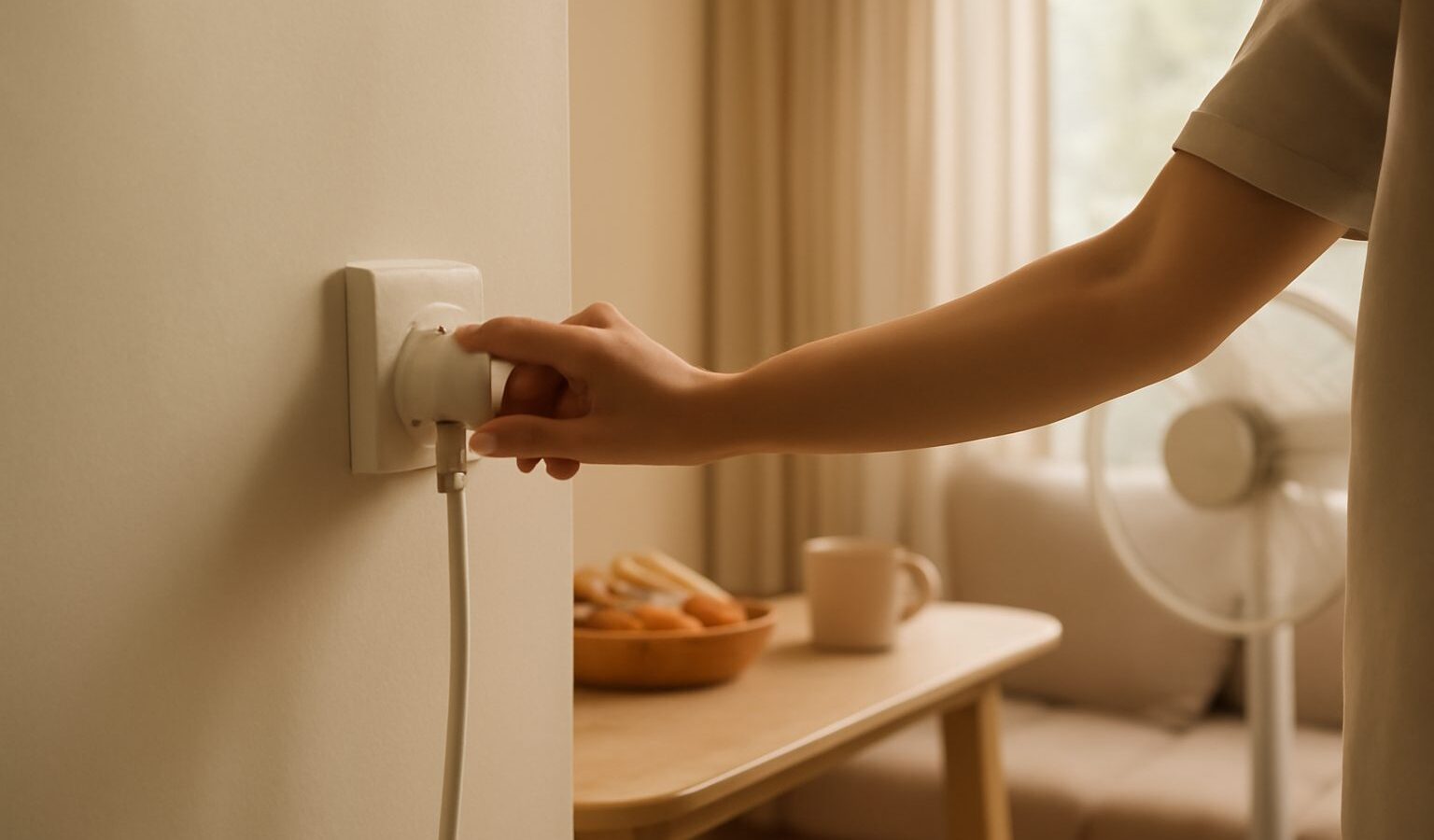
- Switch off at the wall socket when a device is not in use. Our sockets have handy switches, so use them.
- Group your entertainment gear on a power strip so you can cut everything with one flick.
- Unplug chargers once your phone or laptop is full; a charger left in the socket keeps drawing a trickle.
- When you go away for a weekend or a trip, power down everything that does not need to stay on.
Lighting, Water Heating and the Everyday Habits
Beyond cooling, a handful of ordinary routines shape your bill.
Lighting. If you still have older incandescent or halogen bulbs, switching to LEDs is one of the simplest upgrades: they use far less energy for the same brightness and last much longer. Make the most of Singapore’s abundant daylight, switch off lights when you leave a room, and choose the right brightness rather than over-lighting a space.
Water heaters. Instant heaters only draw power while you are showering, so switch them off after. Storage tank heaters reheat water to stay hot, so turn them on ahead of your shower and off afterwards rather than leaving them running all day. In our climate, many people are happy with cooler showers anyway.
Laundry. Wash full loads rather than half-empty ones, use shorter or eco cycles for lightly worn clothes, and skip the tumble dryer. Singapore’s warm air is perfect for line or rack drying, which costs nothing and is gentler on fabrics.
Fridge. The fridge runs around the clock, so it rewards good habits. Leave a gap behind it for airflow, keep the door seals clean and closed, avoid stuffing hot food straight in, and set a sensible temperature rather than the coldest possible.
Know Your Usage and Where Your Power Comes From
You cannot manage what you do not measure. Track your monthly consumption on your utilities bill or app and watch how it shifts across seasons and habits, so you can see which changes actually move the needle. If one month spikes, think about what ran differently.
It also helps to understand the market you buy from. Singapore’s electricity retail market is open, and the Energy Market Authority (EMA) oversees it, so households can choose a retailer and price plan that suits them. Whether a particular plan saves you money depends on your usage pattern and the plans available at the time, so compare current options through EMA’s resources rather than assuming any single plan is cheapest. Being an informed buyer complements all the efficiency habits above.
Where the Savings Really Come From
Here is a quick way to see which areas deserve your attention first, since effort spent on a big energy user goes much further than fiddling with a small one.
| Appliance or area | Practical saving tip |
|---|---|
| Air-conditioning | Raise the set temperature, pair it with a fan, cool only occupied rooms, clean filters |
| Fans | Use as the first line of cooling before reaching for the aircon |
| Major appliances (fridge, washer, aircon) | Compare tick ratings and estimated yearly use before buying |
| Standby and phantom load | Switch off at the wall and use power strips for clusters of devices |
| Lighting | Switch to LEDs, use daylight, turn off empty rooms |
| Water heater | Turn on just before showering and off straight after |
| Laundry | Full loads, eco cycles, air-dry instead of tumble drying |
None of this asks you to overhaul your life. Pick one or two habits, let them become automatic, then add another. Cooling smarter and cutting standby alone will show up on your next bill, and every unit you do not use is a little less gas burned on your behalf.
Explore more
Cooling is the biggest lever in most homes, so start with our deeper guide to reducing aircon use in Singapore. When it is time to replace something, let our guide to choosing energy-efficient appliances in Singapore help you read the tick labels and pick a model that pays you back in lower running costs.