
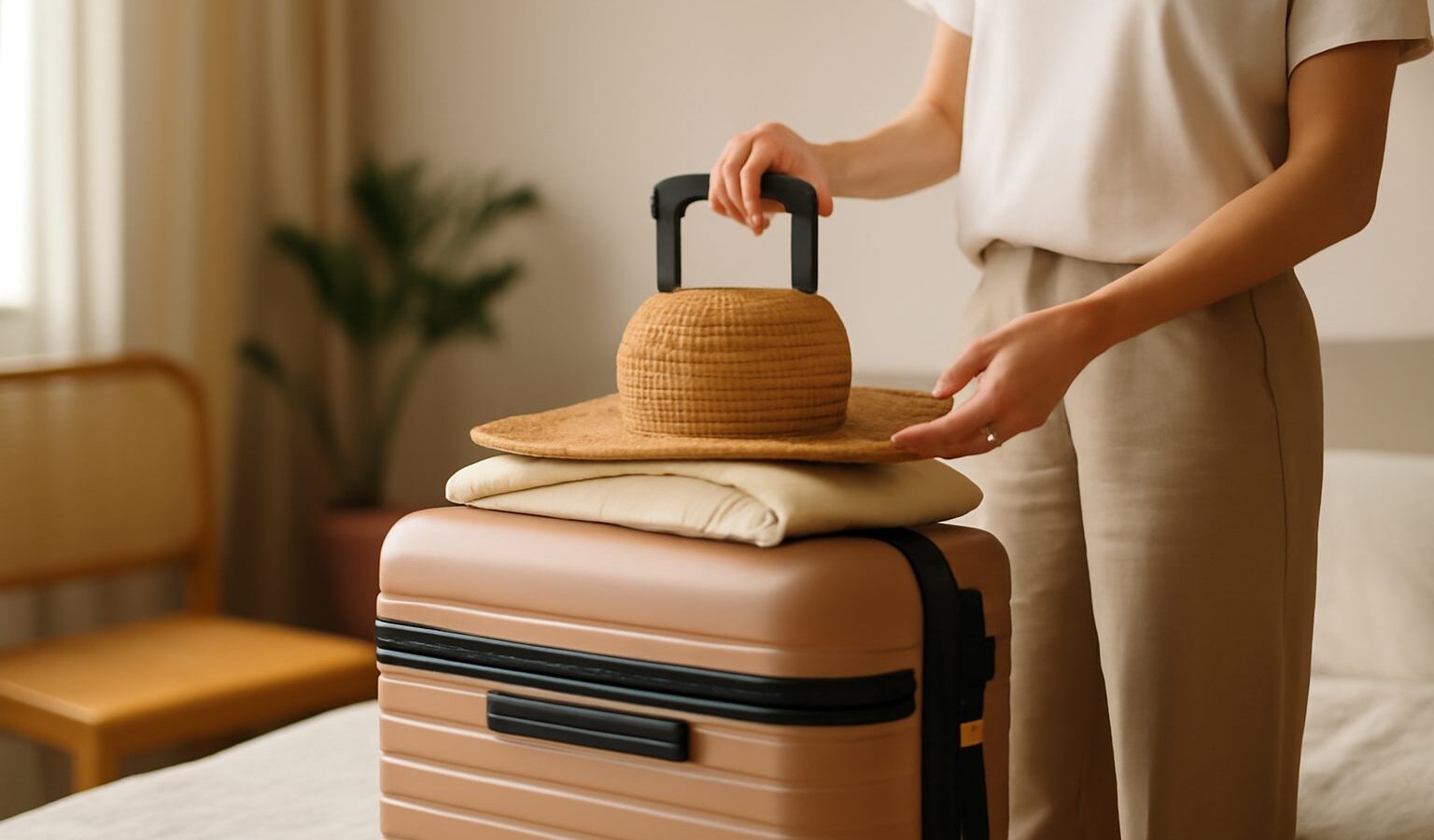
Buying a suitcase feels simple until you stand in front of a wall of them. Knowing how to choose travel luggage really comes down to matching the bag to the trips you actually take and the way you pack, rather than to the shiniest case on the shelf. Get it right and a good bag lasts years across dozens of journeys. This guide walks through the decisions that matter so you buy once and buy well.
Start with how you travel
Before comparing features, be honest about your habits. Ask yourself:
- Do you mostly take short trips, longer holidays, or a mix?
- Are you a carry-on-only traveller or do you check a bag?
- Do you face cobbled streets and stairs, or mostly smooth airport floors and taxis?
- Do you overpack, or pack lean?
Your answers point you towards the right size, type and number of bags far better than any single product feature. If you lean towards travelling light, our guide to packing light and carry-on only pairs well with a smaller case.
Hard shell vs soft shell
The first big fork is hard case or soft case. Both are good; they simply suit different people.
Hard shell cases, made of moulded plastics, protect fragile contents well, resist rain, wipe clean easily and often look smart. They clamshell open into two equal halves, which some people love and others find awkward in tight hotel rooms. They do not squeeze into an overstuffed overhead bin, and scuffs show.
Soft shell cases, made of fabric, flex to fit tight spaces, usually have external pockets for quick access, and absorb knocks without cracking. They can be lighter, though they offer less crush protection and are more exposed to rain and stains.
Getting the size right
Suitcases are sold by height and by capacity in litres. As a rough framework:
- Cabin or carry-on size suits short trips and light packers, and lets you skip the check-in queue and baggage carousel.
- Medium size covers a week or so for most people and is the versatile all-rounder.
- Large size suits long trips, families sharing a case or heavy packers, but it is easy to overpack until it is too heavy to lift.
A common mistake is buying big. A case that is slightly too small forces useful discipline; one that is too large invites you to haul more than you need.
Carry-on rules, in general terms
Airlines set their own cabin baggage limits for both dimensions and weight, and these differ between carriers and between economy and premium fares. Budget airlines are often stricter and may charge for anything beyond a small personal item. A case sold as cabin-sized is not automatically within every airline’s limit.
The rule of thumb: always check your specific airline’s current cabin allowance before you fly, and if you fly one airline often, buy to its limit. Weight matters as much as size, so choose a lighter empty case if you fly carry-on only.
Wheels, handles and materials
The rolling gear is what you will curse or bless on every trip.
Wheels
- Two-wheel (roller) bags tilt and pull behind you and cope better with rough pavements and kerbs.
- Four-wheel (spinner) bags roll upright in any direction and glide easily on smooth floors, which is kinder on your wrist and back in airports, though they can drift on slopes.
Check that wheels feel sturdy and, ideally, are replaceable, as they are the most common failure point.
Handles and zips
A telescopic handle should feel solid with no wobble and lock at a height that suits you. Look at the zips, since chunky, robust zips or secure closures are worth having. On soft bags, a good grab handle on more than one side helps when lifting into overhead bins or car boots.
Materials
Hard cases made from tougher, more flexible polymers resist cracking better than cheap rigid plastic. For soft cases, denser woven fabrics resist abrasion and tearing. Weigh material toughness against overall weight rather than assuming heavier means better.
Comparison: hard shell vs soft shell
| Factor | Hard shell | Soft shell |
|---|---|---|
| Protection for fragile items | Stronger | Softer, more give |
| Water and stain resistance | Better | Weaker |
| Fits into tight or full spaces | Less forgiving | Squeezes in |
| External pockets | Rare | Common |
| Weight | Varies, can be light | Often light |
| Look after heavy use | Scuffs show | Hides wear |
Warranty and buying to last
Luggage takes a beating, so warranty terms are a real feature, not marketing. Longer, clearer warranties that cover the parts most likely to fail, such as wheels, handles and zips, signal a maker that expects the bag to survive. Read what is actually covered and for how long, and keep your receipt. A slightly dearer bag that lasts a decade is cheaper per trip than replacing a bargain case every couple of years.
Match the bag to your packing style
Finally, buy for the way you actually pack. If you like everything visible at a glance, a clamshell hard case laid flat suits you. If you grab items on the move, soft cases with outer pockets win. Frequent short-haul flyers benefit from a lightweight cabin bag sized to their main airline, while occasional long-trip travellers get more from one versatile medium case. If you pack in cubes, focus on internal volume and a clean rectangular interior over fancy compartments.
The short version
Choose travel luggage by starting from your trips and your habits, then pick hard or soft, the smallest size that genuinely fits your needs, reliable wheels and handles, and a warranty that backs it up. Confirm cabin limits with your airline before you fly. Do that, and your suitcase becomes a quiet, dependable companion rather than a source of airport stress.
Explore more: Packing light and carry-on only · Packing tips for tropical and cold trips · Pre-travel checklist for Singapore