
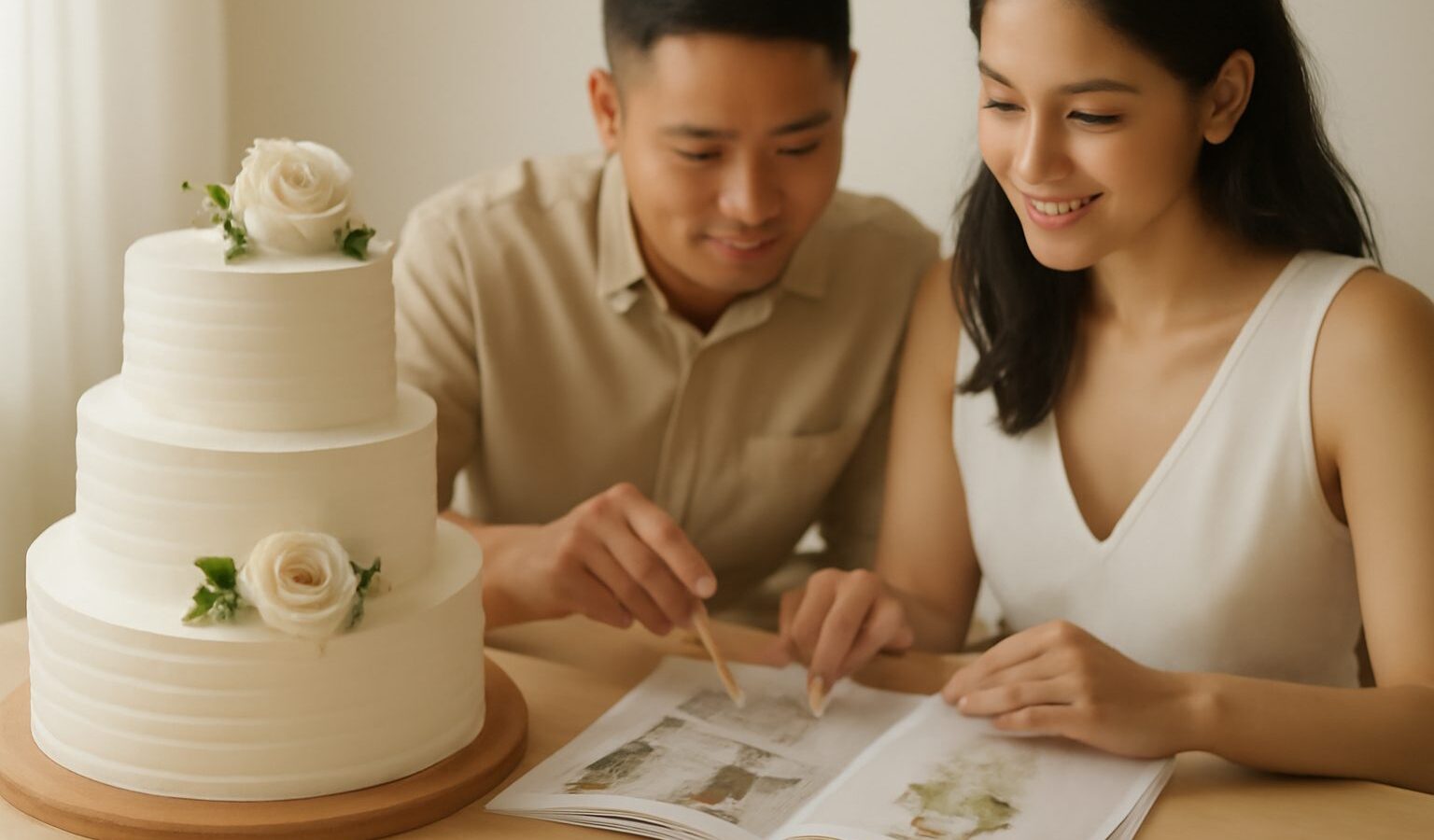
The cake is one of the small pleasures of a wedding that guests genuinely remember, and choosing a wedding cake in Singapore is really about matching a design and flavour to your day rather than chasing the biggest tower on the table. Whether you want a classic white tiered centrepiece or a single elegant round to cut for photos, a little planning early on saves money and stress later. This guide walks through what a wedding cake actually does at a Singapore celebration, how to choose one, what to weigh up, and the common mistakes couples make.
What the Wedding Cake Is For
At most local weddings the cake plays two roles: it is a decorative centrepiece, and it is the focus of the cake-cutting moment. That moment is often the first thing a couple does together on stage at a hotel banquet or restaurant reception, sometimes paired with a champagne pour or a toast, and it gives your photographer and videographer a clear, well-lit shot.
Because the cutting is symbolic, the cake does not need to feed every guest. Many Singapore banquets already serve dessert as part of the set menu, so the wedding cake is there for the ritual and the pictures more than for filling stomachs. Knowing this upfront changes how much cake you actually need to buy, which is the single biggest way to control cost.
Some couples like to give the cake a bit more meaning by choosing a flavour that means something to them, a colour that ties into their theme, or a topper that nods to a shared hobby. None of this is required, so treat it as an option rather than a rule.
How to Choose Your Cake
Start with the setting. A tall, multi-tier cake looks stunning in a hotel ballroom with high ceilings, but it can overwhelm a small restaurant or an intimate solemnisation at home. Look at your venue, the table it will sit on, and the general style of your day, then let the cake follow.
Next, think about the format. You have three broad choices:
- A real cake, fully edible, cut and served or boxed for guests.
- A dummy cake, where some or all tiers are decorated foam (“dummy” tiers) with one real slice section for the cutting.
- A dessert display in place of a formal cake, which pairs naturally with a spread of sweets. If you are leaning this way, our guide to wedding dessert table ideas in Singapore is a good next read.
Then choose flavour. Popular local choices range from classic vanilla and chocolate to lighter options that hold up in our humidity, such as chocolate ganache or a fruit-forward sponge. Buttercream and fondant both work, though heavy fondant can sweat if the cake sits out of air-conditioning for long, so ask how your cake will be stored and displayed.
Finally, book a tasting where one is offered. Tasting sessions let you compare textures and sweetness levels, and they are the moment to raise anything specific you want, including how sweet is too sweet for your family’s palate.
What to Weigh Up: Cost, Size and Practicality
A wedding cake sits at the intersection of looks, budget and logistics, and it helps to see the trade-offs side by side before you commit.
| Option | Best suited to | Cost pattern | Watch-outs |
|---|---|---|---|
| Real tiered cake | Couples serving or boxing cake for guests | Priced by servings, so it rises with size | Needs cool storage; heavier to transport |
| Dummy tiers with a real cutting slice | Big visual impact on a tighter budget | Lower, since foam tiers cost less than cake | Only a small edible portion, so plan dessert separately |
| Single-tier or naked cake | Intimate receptions and solemnisations | Usually the most affordable | Modest presence in a large ballroom |
| Dessert display instead of a cake | Relaxed, buffet-style celebrations | Varies with spread and variety | Less of a single “cutting” moment for photos |
The main lesson from the table is that you are paying largely for edible servings and for labour on intricate decoration. If your banquet already includes dessert, a dummy-tier cake or a smaller real cake gives you the photo without the waste. Defer the actual figures to your baker and your venue, since pricing depends on size, detail and delivery, but let the format decision, not the icing, drive the budget.
Practical points to raise with whoever supplies the cake:
– Delivery and set-up timing, so it arrives crisp and cold rather than early and softening.
– Who provides the cake knife, stand and table, your baker or your venue.
– Whether the venue charges a fee to serve an outside cake, which some hotels do.
– How leftovers are handled, boxed for you, shared with guests, or sent home with family.
Fitting the Cake Into Your Day
The cake does not exist on its own; it is one beat in the flow of your reception. Decide early where the cutting sits in the running order, usually as guests are seated or between courses, and make sure your host or emcee cues it so the room is watching. If you are working with a planner, our note on hiring a wedding day coordinator in Singapore explains how a coordinator keeps moments like this on schedule.
Think about the shot, too. Position the cake table where your photographer has room and decent light, ideally not tucked in a dim corner. If you are building a fun, interactive reception, the cake table can sit near your other guest-facing features, such as a wedding photo booth and guest book, so guests drift naturally between them.
A few finishing touches make the cake feel like yours: a topper that suits your theme, fresh flowers that echo your bouquet (ask for food-safe blooms), or a simple ribbon in your colour. Keep it in proportion so the decoration flatters the cake rather than swamping it.
Common Mistakes to Avoid
- Buying far more cake than you need. If dessert is already served, size for the ritual, not for feeding the room.
- Ignoring the humidity. Fondant and delicate sugar work can suffer outside air-conditioning; ask how the cake will be kept cool.
- Skipping dietary needs. Have an option in mind for guests who are halal-conscious, vegetarian, or managing allergies, and confirm what your baker can accommodate.
- Leaving delivery vague. Pin down arrival time, who receives the cake, and where it is stored on-site.
- Forgetting the cutting logistics. Confirm the knife, the stand and the exact cue so the moment is not fumbled.
- Overcomplicating the design. Intricate detail costs more and can date quickly; a clean, well-made cake photographs beautifully.
Choose the cake that suits your venue, your budget and your appetite for fuss, sort out the practical details in advance, and the cake-cutting will be one of the easiest and happiest moments of your day.
Explore more: wedding dessert table ideas, hiring a wedding day coordinator, and photo booth and guest book ideas.