
If you have just moved into a private condominium in Singapore, the entry systems can feel like a small puzzle. There is a card for the gate, the lift may only go to your floor, a guard asks visitors for their details, and a panel on the wall buzzes when someone arrives. Once you understand how a condo access card in Singapore works alongside the intercom and the guardhouse, daily life becomes smooth.
This guide explains the common systems you will meet, how to let in guests and deliveries, and what to do if a card goes missing. Every development sets its own rules, so treat this as a general introduction and check the details with your management office.
Who Runs the Entry Systems
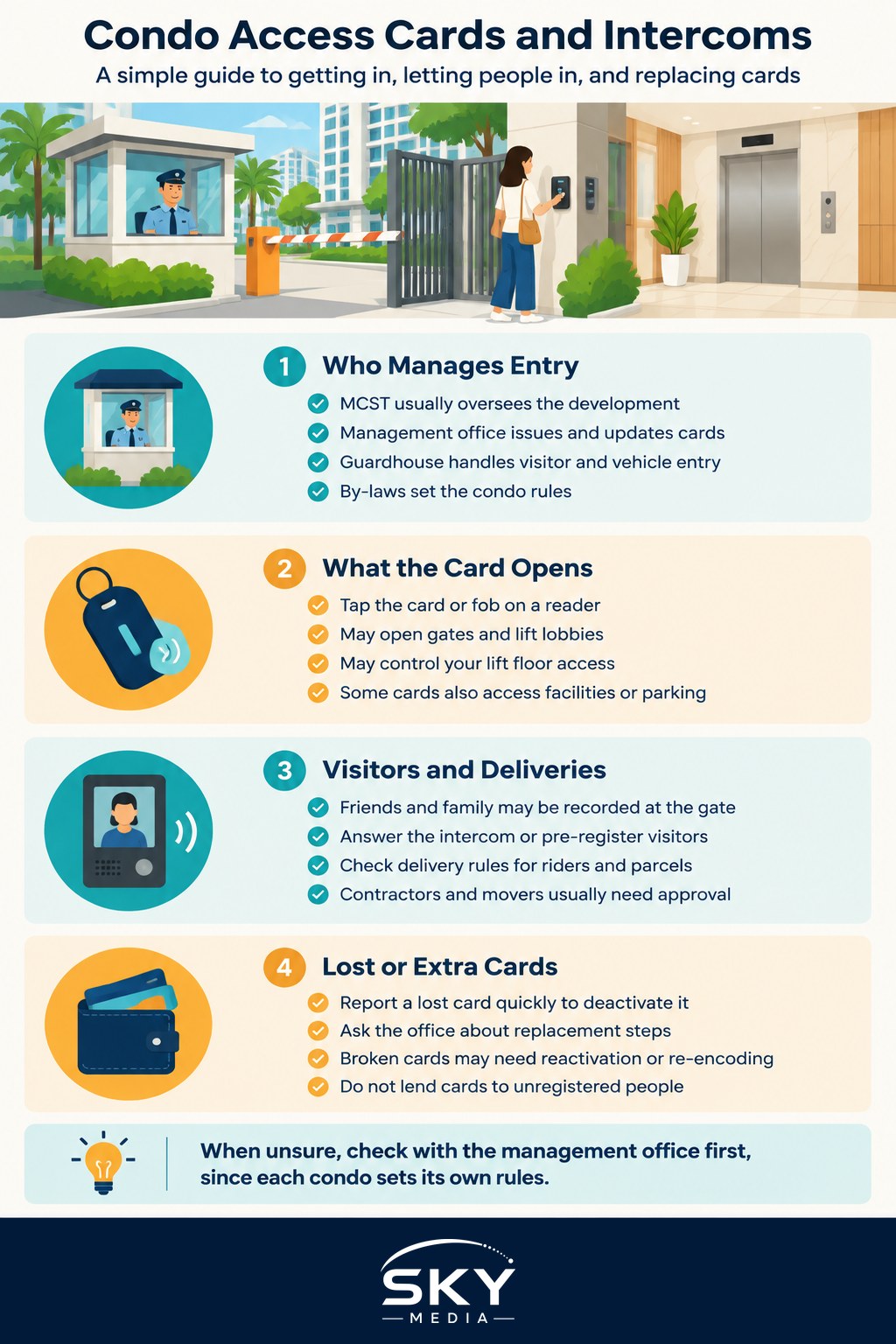
Most condos are managed by a Management Corporation Strata Title, or MCST. This is the body made up of all the owners in the development, usually represented by an elected council. The MCST typically appoints a managing agent, who runs the management office on site, and a security company, which staffs the guardhouse.
For residents, this means:
- The management office issues access cards, handles replacements and keeps resident records.
- The guardhouse controls vehicle and visitor entry and is usually staffed around the clock.
- The by-laws set the rules on cards, visitors, moving in and facility use.
It is worth reading the by-laws early. Our guide to understanding condo by-laws explains how they work and why they matter.
The Access Card and What It Opens
Access cards are usually plastic cards or small key fobs that you tap on a reader. Depending on the development, one card may open several points:
- Pedestrian gates at the main and side entrances.
- Lift lobbies on the ground floor and basement car park.
- The lift itself, which may only let you select your own floor and common floors such as the pool deck.
- Facilities such as the gym, function room or BBQ pits, sometimes after booking.
- The car park barrier, though some condos use a separate vehicle tag or number plate recognition instead.
Cards are linked to your unit in the management system. If your card stops opening a door you used to access, it may have been deactivated, damaged or not yet updated after a change, so the office is your first stop.
How many cards you get
The number of cards issued per unit, and whether you can buy extra ones, is set by each development. Some limit cards to registered occupants. Ask the office what applies, and keep a note of how many you received.
If you are renting
Tenants usually receive cards from the landlord or agent at handover, not directly from the office. You may need to register as a tenant with the management office, often with a copy of the tenancy agreement and identification. When you move out, return every card you received. Missing cards can be raised at the handover inspection.
How the Intercom Works
The intercom links the entrance, the guardhouse and each unit. Common setups include:
- A wall panel inside your unit that rings when a visitor dials your unit number at the gate or lift lobby panel. Many have a screen so you can see who is there.
- An unlock button on the panel that releases the door or gate for your visitor.
- A call button to the guardhouse, useful for reporting a problem or checking on a delivery.
- Smartphone apps, now used by some developments, which let you answer the intercom, grant entry or register visitors remotely.
Spend a few minutes learning your panel’s buttons when you move in. If you are not sure, ask the office for the user guide.
Letting Visitors and Deliveries In
Visitor procedures vary, but this comparison shows the usual patterns.
| Visitor type | What usually happens | What you may need to do |
|---|---|---|
| Friends and family | Guard records their details, or they call your unit from the gate panel | Answer the intercom and unlock, or pre-register them if your condo uses an app |
| Food and parcel delivery | Rider calls via the intercom or leaves items at the guardhouse, depending on the condo rules | Check whether riders may go up to your door or must hand over at the lobby |
| Contractors and movers | Usually need prior approval from the management office | Apply in advance, follow working hours and any deposit or booking rules |
| Domestic helper or regular cleaner | May be issued a card or registered as a regular visitor | Ask the office how regular helpers are registered |
Remember that guards are following procedures set by the MCST. Being patient and courteous with them makes every visit smoother.
Lost, Broken or Extra Cards
Cards get lost, left in pockets through the wash or simply stop working. Here is what to do:
- Report a lost card promptly to the management office so it can be deactivated. This protects your unit and the development.
- Request a replacement. Most offices charge a replacement fee and may ask for a form and identification. Fees and procedures are set by each MCST, so ask for the current amount.
- If a card stops working, bring it to the office. It may only need to be reactivated or re-encoded.
- For extra cards, check whether the development allows them and for whom.
Do not lend your card to people who are not registered, and avoid letting strangers follow you through a gate. Most by-laws treat this seriously because it affects everyone’s security.
Settling Into Condo Life
Access systems are one of the first things newcomers notice about condo living, and one of the easiest to get used to. Within a week or two, tapping in and answering the intercom will feel routine.
If you are still deciding where to live, our guide on what to check when viewing a condo includes security and management questions worth asking. For buyers of new launches, TOP and CSC for new condos explains the handover stage, when access cards are typically first issued to owners.
When in doubt, the management office is your best friend. A quick visit or email usually settles any question about cards, visitors or the intercom.
Frequently Asked Questions
Can I get a spare condo access card for my helper or parents? Often yes, but it depends on your development’s by-laws, which set how many cards each unit receives and who may hold one. Ask the management office how extra cards or helper registration work, what they charge and what identification they need. Keep a note of how many cards you hold.
What if I am locked out of my condo by a dead access card? Contact the guardhouse or management office, which can verify who you are and tell you what to do next. A card that stops working may simply need reactivating or re-encoding. If it was lost, report it promptly so it is deactivated, then ask about replacement.
Can visitors enter a condo if I am not at home to answer the intercom? Usually not unless they are pre-registered. Guards follow procedures set by the MCST, so let the guardhouse know in advance who is coming, or use your condo’s app if it has one. Never ask a stranger to be let in by someone else. Check your development’s by-laws on visitor rules.
Do I need approval to let movers or contractors into my condo unit? Most developments require prior approval from the management office for movers and contractors, along with working hour rules and sometimes a deposit or booking. Apply well before the date, since last-minute requests may be turned down. Ask the office for its current forms and requirements.
What happens to my access card when I sell my condo unit? Your cards generally need to be handed over or deactivated as part of the handover to the new owner, and the management office updates its records. Ask the office what it needs from you, and return every card you received so none remains active in your name.