
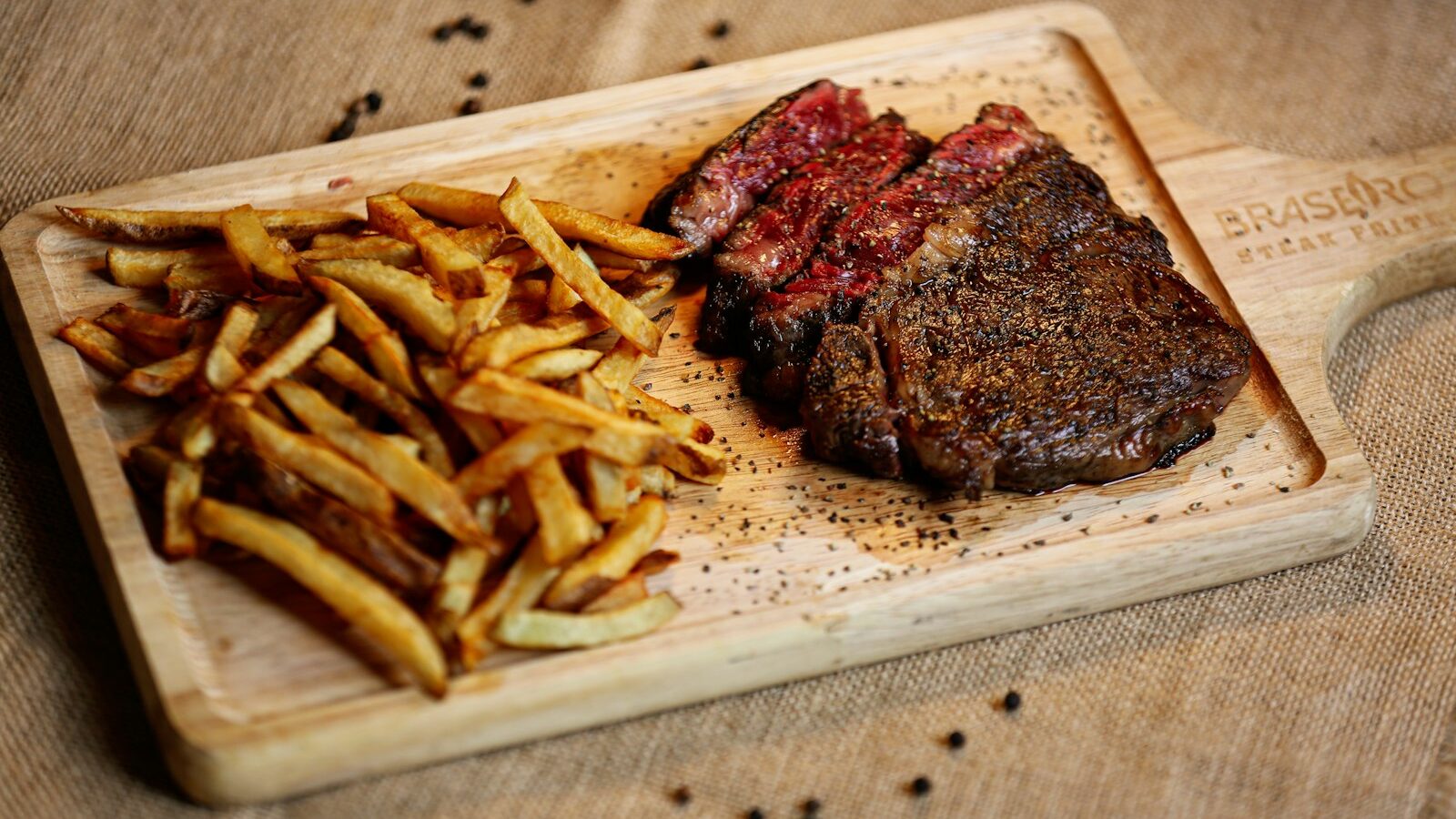
A good steak dinner does not need a restaurant booking. With the right cut, a heavy pan and a little patience, you can cook steak at home that is crusty outside and juicy inside. The main skills are simple: buy well, dry the meat, get the pan very hot, take it off at the right moment and let it rest.
This guide suits a typical Singapore kitchen, including small HDB kitchens with a gas or induction hob and no grill.

Choosing a Cut: What to Look for at the Supermarket or Butcher
Supermarkets, online grocers and independent butchers in Singapore sell beef from several countries, commonly Australia, the US, New Zealand, Japan and South America. Labels often show the origin, whether the cattle were grain-fed or grass-fed, and sometimes a marbling grade. What matters most is matching the cut to how you will cook it.
| Cut | Texture and flavour | Best way to cook | Good for |
|---|---|---|---|
| Ribeye | Well marbled, rich, very forgiving | Hot pan sear, then baste | First-timers who want juiciness |
| Striploin (sirloin) | Firmer bite, beefy, a strip of fat on one side | Hot pan sear, render the fat edge | Everyday steak nights |
| Tenderloin (fillet) | Very tender, mild, little fat | Quick sear, careful not to overcook | Special occasions, smaller portions |
| Flank, skirt or hanger | Coarse grain, strong flavour, can be chewy | Very hot, fast sear, slice thinly across the grain | Steak salads, rice bowls, sharing |
| Rump | Lean and flavourful, slightly chewy | Sear to medium-rare, slice thinly | Budget-friendly weeknights |
A few buying tips:
- Thickness matters more than weight. Aim for steaks about 2.5 cm to 4 cm thick. Thin steaks overcook in the time it takes to get a crust.
- Look at the marbling. Fine white streaks of fat through the meat melt as it cooks and keep it moist. Grain-fed beef usually has more marbling; grass-fed tends to be leaner with a stronger, more mineral flavour.
- Chilled versus frozen. Chilled beef is convenient for cooking the same week. Frozen steaks can be very good too; thaw them slowly in the fridge overnight, still in the packaging on a plate, rather than on the counter or in hot water.
- Ask the butcher to cut steaks to your preferred thickness.
Preparing the Steak Before It Hits the Pan
Most home steak problems start before cooking. Spend ten minutes on preparation:
- Take it out of the fridge early. Leave the steak out for 20 to 30 minutes so the chill comes off the surface. In Singapore’s warm kitchens, do not leave raw meat out for long periods; half an hour is plenty.
- Pat it completely dry. Use paper towels on every side. Moisture is the enemy of a crust, because the pan has to boil off water before it can brown the meat.
- Season generously. Salt both sides well just before cooking, or salt it up to a day ahead and leave it uncovered on a rack in the fridge, which dries the surface further. Add black pepper just before or after cooking, as it can burn in a very hot pan.
- Choose the right pan. A heavy cast iron or thick stainless steel pan holds heat best. Non-stick pans are not designed for very high heat, so check the manufacturer’s guidance before using one for searing.
- Prepare your kitchen. Turn on the hood, open the window and move anything flammable away from the stove. Searing creates smoke.
How to Pan-Sear Steak Step by Step
This method works on gas and induction hobs.
- Heat the pan. Put the empty pan on high heat for several minutes until it is very hot. Add a thin layer of oil with a high smoke point, such as canola, sunflower or peanut oil. It should shimmer almost immediately.
- Lay the steak away from you. Place it gently in the pan and leave it alone. You should hear a loud sizzle. If the sizzle is weak, the pan is not hot enough.
- Flip regularly or once. You can flip once after a few minutes when a deep brown crust has formed, or flip every minute or so for more even cooking. Frequent flipping is more forgiving for beginners.
- Render the fat edge. For striploin, use tongs to stand the steak on its fatty edge for a minute or two so the fat crisps and melts.
- Baste with butter. In the last couple of minutes, lower the heat to medium, add a knob of butter, a few crushed garlic cloves and a sprig of thyme or rosemary. Tilt the pan and spoon the foaming butter over the steak repeatedly.
- Check the doneness (see below), then move the steak to a board or plate to rest.
For very thick steaks, more than about 4 cm, try the reverse sear: cook the steak gently in a low oven until it is close to your target temperature, then sear it hard in a hot pan for a minute or so per side. It gives even colour from edge to centre.
Judging Doneness Without Guesswork
Cooking times vary with thickness, your hob and the pan, so recipe timings are only rough guides. The most reliable tool is an instant-read meat thermometer, which is inexpensive and widely available. Insert it horizontally into the thickest part of the steak.
Commonly used guide temperatures, measured when you take the steak off the heat (it rises a few degrees while resting):
- Rare: about 48 to 50°C, cool red centre
- Medium-rare: about 52 to 54°C, warm red centre
- Medium: about 57 to 60°C, pink centre
- Medium-well: about 62 to 65°C, slight pink
- Well done: about 68°C and above, no pink
Without a thermometer, press the centre: rare feels soft, medium springy and well done firm. Until you have practised, cut a small slit to check.
A note on food safety: whole cuts of beef are commonly served pink in the middle because surface bacteria are killed by searing. Minced beef, burgers and rolled or tenderised meat are different and should be cooked through. Pregnant women, young children, older adults and people with weakened immunity may be advised to choose more thoroughly cooked meat; check with your doctor if unsure.
Resting, Slicing and Serving
Resting is the step people skip. While the steak cooks, the juices move towards the centre. Resting for about five to ten minutes, roughly half the cooking time, lets them settle back through the meat.
- Rest the steak on a warm plate or board, loosely covered with foil if your kitchen is cool. In a warm Singapore kitchen, foil is often unnecessary and can soften the crust.
- Pour any juices that collect back over the sliced steak.
- Slice across the grain. Look for the lines of muscle fibre and cut at right angles to them. This matters most for flank, skirt and rump, where slicing the wrong way makes the meat chewy.
Easy sides that suit a home steak night include mashed or roasted potatoes, a green salad, sautéed mushrooms, garlic butter rice or stir-fried greens. For a local twist, serve sliced steak over rice with a spoon of black pepper sauce, or toss it into a fried rice. Our guides to cooking fluffy rice on the stove and restaurant-style fried rice help with leftovers.
Common Mistakes and Quick Fixes
- Grey, steamed steak: the pan was not hot enough, the meat was wet, or the pan was overcrowded. Cook one or two steaks at a time.
- Burnt outside, raw inside: the steak was very thick and the heat was too high throughout. Lower the heat after the crust forms, or use the reverse sear.
- Tough and chewy: overcooked, under-rested or sliced along the grain.
- Bland: under-salted. Season more generously than feels natural.
Building your home cooking repertoire? Try hawker favourites at home next.
Frequently Asked Questions
Can I cook a good steak without a cast iron pan? Yes, a heavy stainless steel pan also holds heat well enough for a good crust. Non-stick pans are not made for very high heat, so check the manufacturer’s guidance before searing in one.
Is it okay to eat steak pink if I am pregnant? Pregnant women are often advised to choose more thoroughly cooked meat, so ask your doctor what suits you. Whole cuts are commonly served pink because searing kills surface bacteria, but weakened immunity, young children and older adults call for the same caution.
Which steak cut is best on a tight budget? Rump is the budget-friendly pick, as it is lean and flavourful. Sear it to medium-rare and slice it thinly across the grain so it is not chewy. Flank and skirt are also good value for rice bowls and salads.
Should I salt the steak the day before or just before cooking? Either works. Salting just before cooking is simplest, while salting up to a day ahead and leaving the steak uncovered on a rack in the fridge dries the surface further for a better crust. Add black pepper later, since it can burn.
How do I deal with smoke when searing steak in an HDB kitchen? Turn on the hood, open the window and clear anything flammable from the stove before the pan gets hot. Use an oil with a high smoke point such as canola, sunflower or peanut oil. A thick steak can also be finished by the reverse sear method, which reduces time in a smoking pan.