
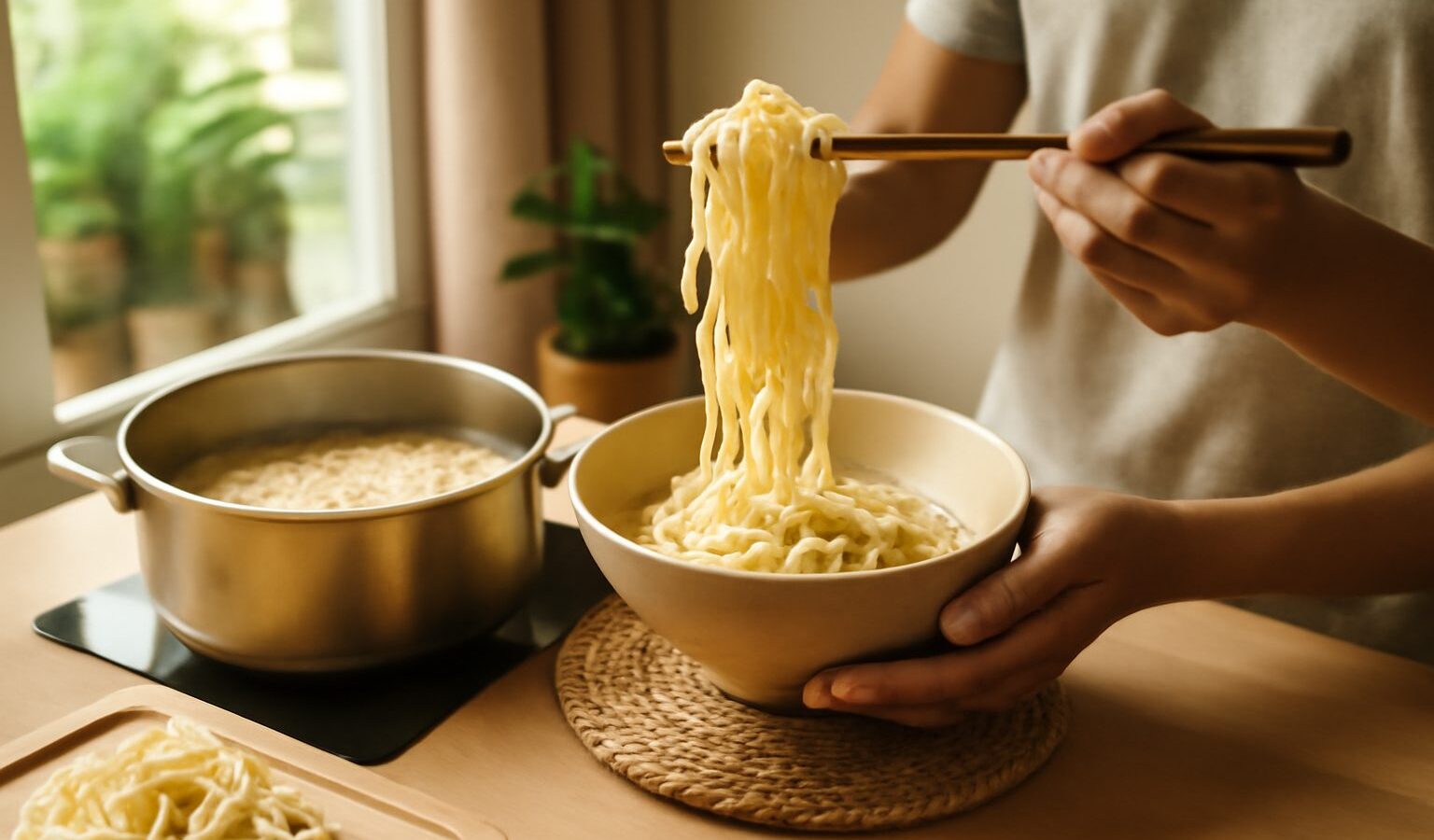
Few things are more comforting than a good bowl of noodles, and few things are more disappointing than a clumpy, mushy, stuck-together mess. Cooking noodles at home in Singapore should be one of the easiest wins in your kitchen, yet the results are wildly inconsistent for most people because every noodle type behaves differently. Fresh yellow mee is nothing like dried bee hoon, and neither is treated like kway teow. Once you learn the handful of rules behind each, you can turn out springy, separate, properly seasoned noodles every time.
We are spoilt for choice. The supermarket and wet market carry an entire wall of noodles: yellow mee, bee hoon, kway teow, mee tai mak, wonton noodles, instant packets and more. Here is how to treat each so they shine at home.
Know your noodle types first
The single biggest reason home noodles fail is treating them all the same. They cook differently and need different handling.
- Fresh yellow noodles (mee): already cooked and oiled, they need only a brief blanch in boiling water to loosen and heat through, often under a minute. Overboil them and they go soft and slimy.
- Dried bee hoon (rice vermicelli): thin and quick. Many people soak them in warm water until pliable, then a very short boil or straight into a stir-fry finishes them. They overcook in a flash.
- Kway teow (flat rice noodles): fresh ones are delicate and tear easily, so handle gently and cook briefly. If they are cold and stuck, loosen gently with warm water first.
- Dried wheat and wonton noodles: boil like pasta until springy, then usually rinse or shock to stop the cooking and rinse off surface starch.
- Instant noodles: boil the block until just loosened, and consider draining and using fresh water for the seasoning so it is less starchy and cloudy.
Read the pack for a rough guide, but trust your own tasting more than the printed time.
The rules that stop clumping and mush
Sticky, clumpy noodles come down to a few fixable errors. Get these right and the texture problem largely disappears.
Use plenty of water and keep it at a proper boil. A big pot of rapidly boiling water gives the noodles room to move so they do not glue together. A small pot of barely simmering water is how you get a stuck lump.
Do not overcook. This is the golden rule, especially for fresh and rice-based noodles that go from perfect to mush in seconds. Pull them a touch early, because they keep softening from their own heat and again when they hit a hot sauce or soup.
Shock or toss right after draining. For noodles going into a cold or tossed dish, a quick rinse under cool water stops the cooking and washes off sticky surface starch. For noodles heading straight into soup or a stir-fry, drain well and toss immediately with a little oil or sauce so they do not clump while waiting.
Finally, have everything else ready before the noodles are. Noodles wait for no one. Your soup, sauce or wok should be hot and ready so the drained noodles go straight in rather than sitting and sticking.
Matching noodles to dishes
Different dishes call for different noodles and different cooking approaches. This quick reference helps you pick and time them.
| Noodle | Typical dish | How to cook | Key tip |
|---|---|---|---|
| Fresh yellow mee | Mee goreng, soupy mee | Quick blanch, seconds | Do not overboil, drain fast |
| Bee hoon | Fried bee hoon, soup | Soak then brief cook | Overcooks in seconds |
| Kway teow | Char kway teow, soup | Gentle, brief heat | Handle gently, they tear |
| Wonton noodles | Wonton mee, dry noodles | Boil then shock | Rinse off starch, toss with sauce |
| Instant noodles | Quick meals | Boil block, refresh water | Fresh water for clearer broth |
The pattern is clear: fresh and rice noodles want speed and a gentle hand, while dried wheat noodles behave more like pasta and want a proper boil followed by a shock.
Season, sauce and finish well
Perfectly cooked noodles still taste of nothing without seasoning, and this is where home versions often fall flat. For soup noodles, the broth does the work, so a good stock and a properly seasoned soup matter more than the noodles themselves. A homemade stock lifts everything.
For dry or tossed noodles, build a sauce at the base of the bowl before the noodles land: a mix of dark and light soy, a little oyster sauce, sesame oil, maybe a spoon of chilli or fried shallot oil. Add the hot drained noodles and toss immediately so every strand is coated while still warm. Taste and adjust; noodles usually need more seasoning than you expect.
For fried noodles, keep the wok hot and work fast. Have your aromatics, protein, vegetables and sauce all prepped and within reach, because a stir-fry moves quickly and there is no time to chop halfway. Add the noodles, toss to coat, and resist the urge to stir constantly, letting them sit briefly to pick up a little char and wok flavour.
Storage and small-kitchen tips
Fresh noodles do not last long in our heat and humidity, so buy them close to when you will cook and keep them chilled. Use fresh yellow mee and kway teow within a day or two, and check for any sour smell before cooking; if in doubt, throw it out. Dried bee hoon and wheat noodles keep for months in a sealed container away from moisture, which makes them the handy standby for a quick meal.
Cooked noodles are best eaten fresh. If you must keep leftovers, cool them promptly and refrigerate rather than leaving them out in the heat, and toss them with a little oil to stop clumping. Reheat gently in a hot wok or a quick dip in boiling water.
In a small HDB kitchen, keep a couple of packs of dried bee hoon and instant noodles in the cupboard as your reliable base for a fast dinner. With a good sauce, some eggs and whatever vegetables you have, a bowl of proper noodles is only minutes away.
Explore more
Great noodles lean on the rest of your skills. Ladle them into a homemade soup with our guide to making stock and broth from scratch, master the wok heat you need for fried noodles with stir-frying basics, and top your bowl with perfectly cooked eggs.