
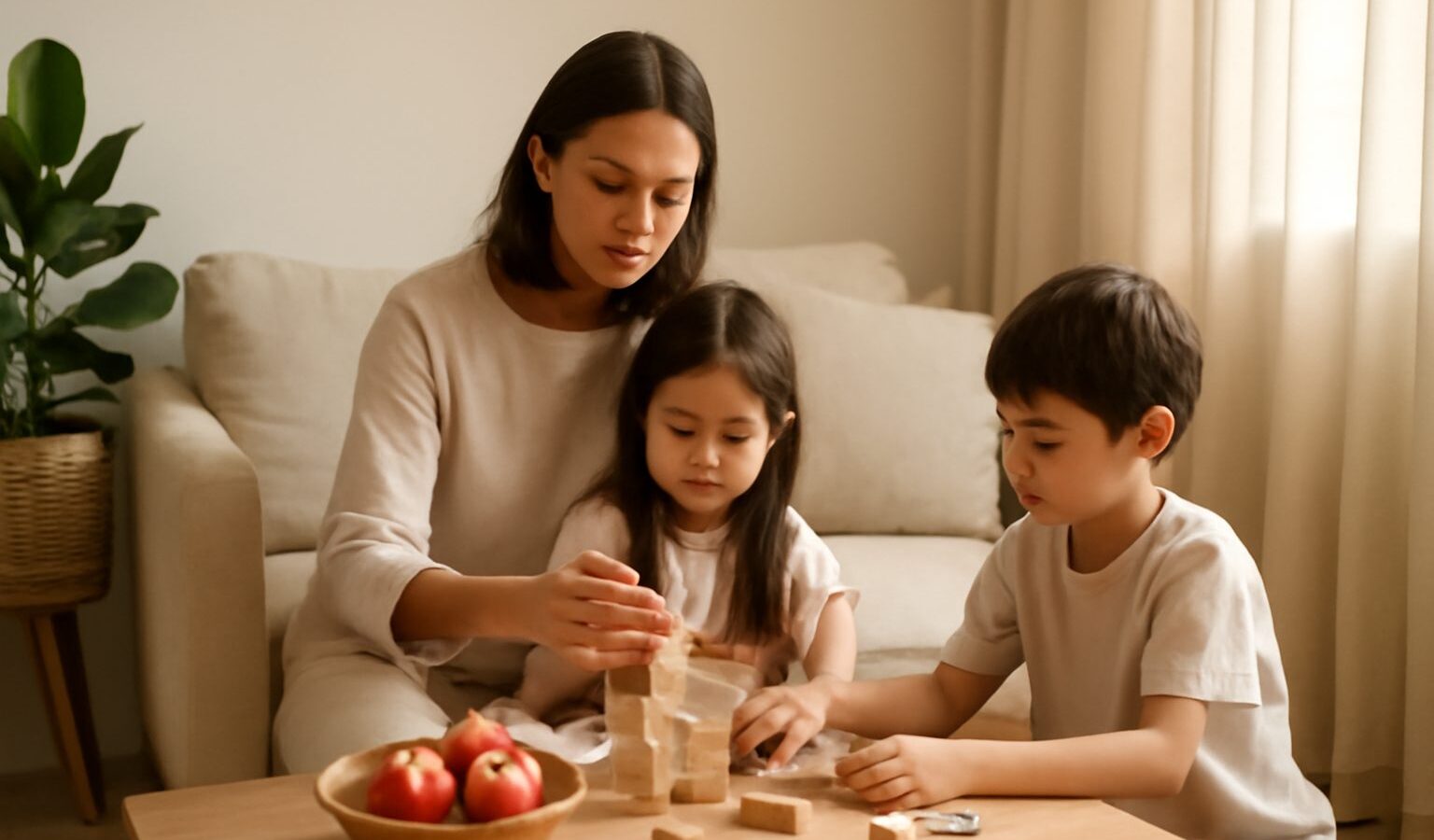
A tidy, peaceful home can feel like an impossible dream when you have children, school bags exploding by the door and toys underfoot. The aim of an organised family home singapore parents can actually maintain is not a showroom that stays perfect. It is a home that functions smoothly, feels calm enough to relax in, and does not leave you exhausted keeping it up. This guide offers realistic, kind ideas suited to family life and local living, whether you are in a compact HDB flat or a larger home, and whatever your family setup.
Calm Comes From Systems, Not Perfection
The first shift is a mental one. A calm home is not the same as a spotless one. Families are busy and lived-in, and chasing perfection usually adds stress rather than removing it. What creates real calm is having systems, dependable ways of doing everyday things, so the household runs without constant firefighting.
Think about the moments that reliably cause friction. Mornings before school, the after-work-and-school scramble, and bedtime are common flashpoints. If you can build simple, repeatable routines around these, much of the daily chaos eases. A hook by the door for school bags, a set place for keys and wallets, and clothes laid out the night before are tiny systems that quietly prevent daily meltdowns. Predictable routines help children too, giving them a sense of security and reducing the nagging that wears everyone down.
Start small. You do not need to overhaul your whole home in a weekend. Pick the one part of the day that stresses you most and design a simple system for it. Once that becomes second nature, move to the next.
Decluttering Without the Overwhelm
Clutter is the enemy of calm, and small Singapore homes fill up fast, especially with children’s things multiplying by the month. The goal is not minimalism for its own sake but keeping only what your family uses and loves, so the space breathes.
A gentle, sustainable approach works better than a dramatic purge:
- Declutter in short bursts. One drawer or shelf at a time is far more manageable than a whole room, and you are more likely to keep it up.
- Give everything a home. Items scatter when they have nowhere to belong. When each thing has a spot, tidying becomes quick and children can help.
- Use vertical space. In compact flats, shelves, over-door organisers and under-bed storage free up precious floor area.
- Rotate toys. Keeping some toys out of sight and swapping them periodically reduces mess and, happily, makes old toys feel new again.
- Let things go regularly. As children outgrow clothes and toys, pass them on. A steady trickle out prevents the tide from rising.
Involve the children in age-appropriate ways. Even young ones can learn that tidying up is part of the rhythm of the day rather than a punishment, and building this habit early supports their growing independence. Our guide to building your child’s independence and life skills has more on nurturing helpful habits.
Sharing the Load as a Household
An organised home should never rest on one person’s shoulders. Resentment builds quickly when one parent carries the whole mental load of running the household. Calm homes tend to be shared projects.
Divide responsibilities openly with your partner, and adjust as seasons change. Give children chores suited to their age, not only to lighten your load but because contributing helps them feel part of the family and builds real skills. In many local households, grandparents or a helper are part of daily life, and a calm home depends on everyone following the same basic systems, so it is worth talking through routines together rather than assuming. When everyone knows where things go and what the rhythms are, the home more or less runs itself.
Keep expectations humane. Some days the systems will collapse, the flat will be a mess, and that is simply family life. The point of good systems is that you can reset quickly the next day rather than starting from scratch. A home that helps a family cope also becomes a place of steadiness in a crisis, which pairs well with building a family emergency plan.
Protecting the Calm, Not Just the Tidiness
Organisation is a means to an end, and the end is a home that feels good to be in. Alongside the practical systems, protect the atmosphere. Carve out screen-free pockets, keep some corners restful, and make room for connection rather than filling every surface and every hour. A calm home supports everyone’s wellbeing, children and parents alike. If the relentlessness of it all is leaving you frazzled, be kind to yourself and revisit recharging and self-care for parents, because a rested parent keeps a calmer home.
A Practical Wrap-Up
Creating a calm, organised family home is about workable systems rather than perfection. Build simple routines around your busiest moments, declutter gently and give everything a home, and share the load across the whole household. Keep your expectations realistic, involve the children, and remember that the goal is a home that functions smoothly and feels peaceful, not one that could pass a white-glove inspection. Start with one small change today, and let calm build from there.