
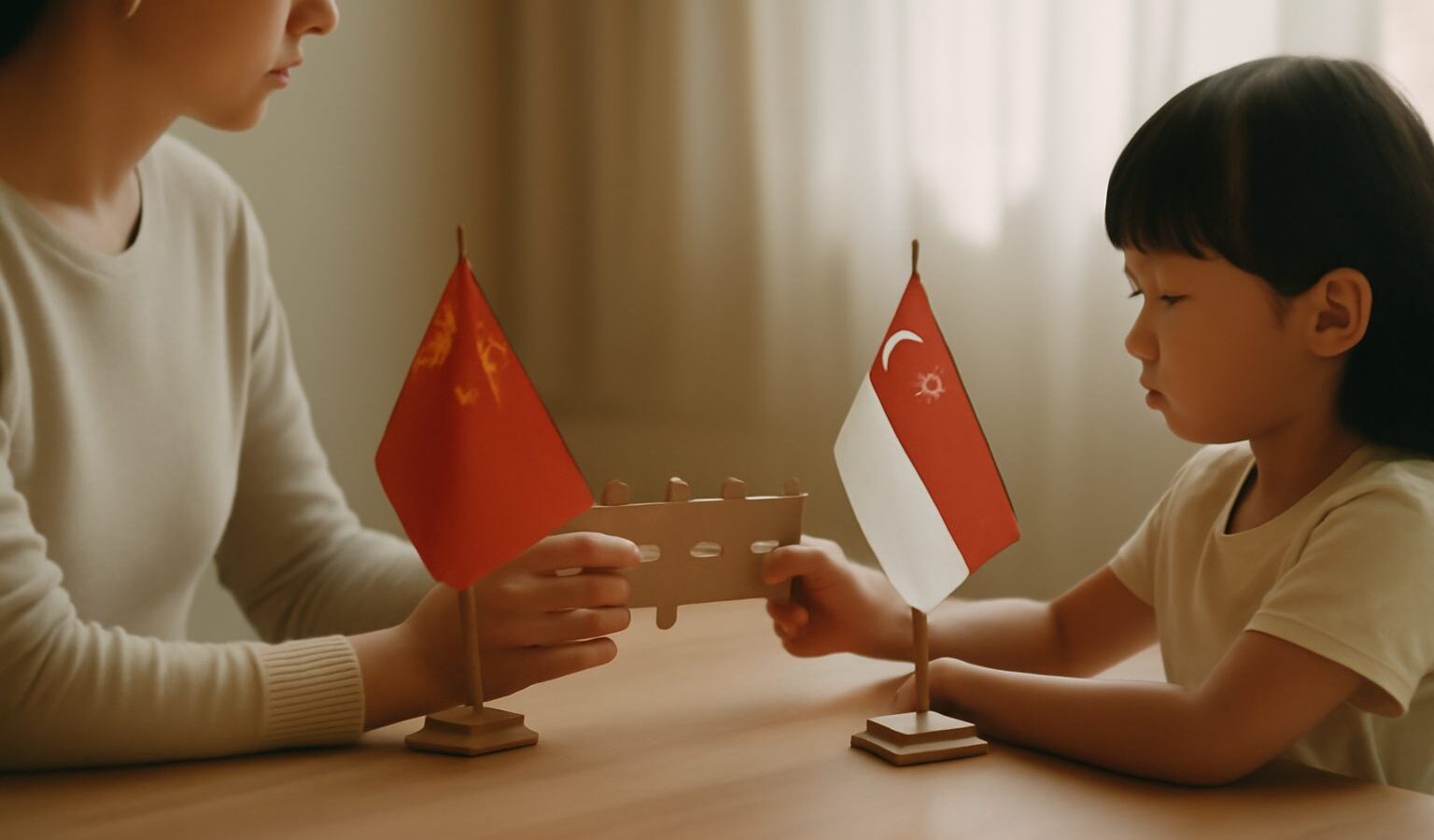
Few situations are as painful as a family breaking down when parents, and sometimes children, are split between two countries. If you are a newcomer from mainland China facing questions about your children after a separation or divorce, cross-border custody in Singapore is one of the most complex areas of family law you can encounter. This guide offers careful, general information to help you understand the landscape and the questions to ask. It is not legal advice, and every family situation is different. The single most important step you can take is to consult a qualified family lawyer experienced in cross-border cases as early as possible.
Please read this in that spirit. Nothing here should be treated as a rule that applies to your specific circumstances, because the outcome depends on the particular facts, the countries involved, where the children live, and how the courts view what is in the child’s best interests. Our aim is only to help you feel less lost and more prepared for the conversations ahead.
Why cross-border cases are so complex
When a family lives entirely within one country, custody questions are hard enough. When two countries are involved, several additional layers appear at once, and they interact in ways that are difficult to predict without professional guidance.
The first layer is jurisdiction, meaning which country’s courts have the authority to decide the matter. This can depend on where the child habitually lives, where the parents are based, and other connecting factors. It is possible for more than one country to feel it has a claim, which can lead to parallel proceedings and considerable stress. The second layer is recognition and enforcement, meaning whether an order made by a court in one country will be honoured and carried out in the other. An order that is perfectly valid in Singapore may not automatically be enforceable in China, and the reverse is also true, so a paper victory in one place does not always translate into a real outcome in the other.
A third layer concerns relocation, which is where one parent wishes to move the children to another country, whether back to China or elsewhere. Courts approach relocation carefully, weighing the child’s welfare, the relationship with both parents, and the practical realities of the proposed move. A fourth and especially serious layer is international child abduction, which is the term used when a child is wrongfully taken across borders or kept in another country without the other parent’s consent or a court’s permission. This is a grave matter with legal consequences, and it is one reason you should never act unilaterally by taking or keeping a child abroad without proper legal advice.
Key concepts and where they are decided
In Singapore, family matters are handled by the Family Justice Courts, which deal with divorce, custody, care and control, and access. It helps to understand a few terms, since they are often confused. Custody usually refers to the authority to make major decisions about a child’s upbringing. Care and control refers to whom the child lives with day to day. Access, sometimes called visitation, refers to the time the other parent spends with the child. A parent might share custody yet not have day-to-day care and control, so these are separate questions rather than one single prize.
Throughout, courts in Singapore are guided by the welfare of the child as the paramount consideration. This means the focus is on what serves the child’s best interests, not on rewarding or punishing either parent. Cultural background, each parent’s ability to provide a stable home, the child’s own needs, and the importance of a relationship with both parents can all form part of that assessment.
Because China and Singapore have different legal systems, an arrangement or order in one may need separate steps to be recognised or acted upon in the other. Frameworks for cooperation between countries on family matters exist but are not uniform, and whether and how they apply to your case is exactly the kind of question a specialist lawyer must assess. The Ministry of Social and Family Development, known as MSF, and its related agencies can also be involved where a child’s welfare and protection are concerned.
Here is a simple summary of common terms and issues to discuss with your lawyer.
| Concept | What it broadly means | Why it matters across borders |
|---|---|---|
| Jurisdiction | Which country’s courts can decide | Two countries may both feel involved |
| Recognition and enforcement | Whether an order is honoured abroad | A valid order may not carry over automatically |
| Care and control | Whom the child lives with daily | Distinct from legal custody |
| Relocation | Moving a child to another country | Requires consent or a court’s permission |
Getting the right help and protecting your child
Given everything above, the practical guidance is consistent and clear. Speak to a family lawyer who has genuine experience with cross-border cases between China and Singapore, and do so before you make any major decision, not after. Bring your marriage and birth documents, any existing court orders, and a calm written summary of the situation. Ask directly about jurisdiction, about whether an order here can be enforced where your former partner or children are, and about the risks of any move you are contemplating. If cost is a worry, ask about legal aid eligibility and community resources, as some support may be available.
Try, as far as you are able, to keep communication with the other parent civil and to keep the children out of the conflict. Courts look favourably on parents who support the child’s relationship with the other side, and children cope far better when they are shielded from adult disputes. Keeping records of agreements and arrangements in writing can also help avoid misunderstandings later.
Above all, do not take matters into your own hands by removing a child from the country, or refusing to return one, without proper legal advice. What may feel like protecting your child can have serious legal consequences and can harm your position, as well as the child. If you believe a child is at risk of being taken, or is in danger, seek legal help urgently, and in an emergency in Singapore call the police on 999.
This is a heavy road to walk, and you do not have to walk it uninformed or alone. With the right specialist beside you and a steady focus on your child’s wellbeing, you can approach even the hardest questions with more clarity and less fear.