
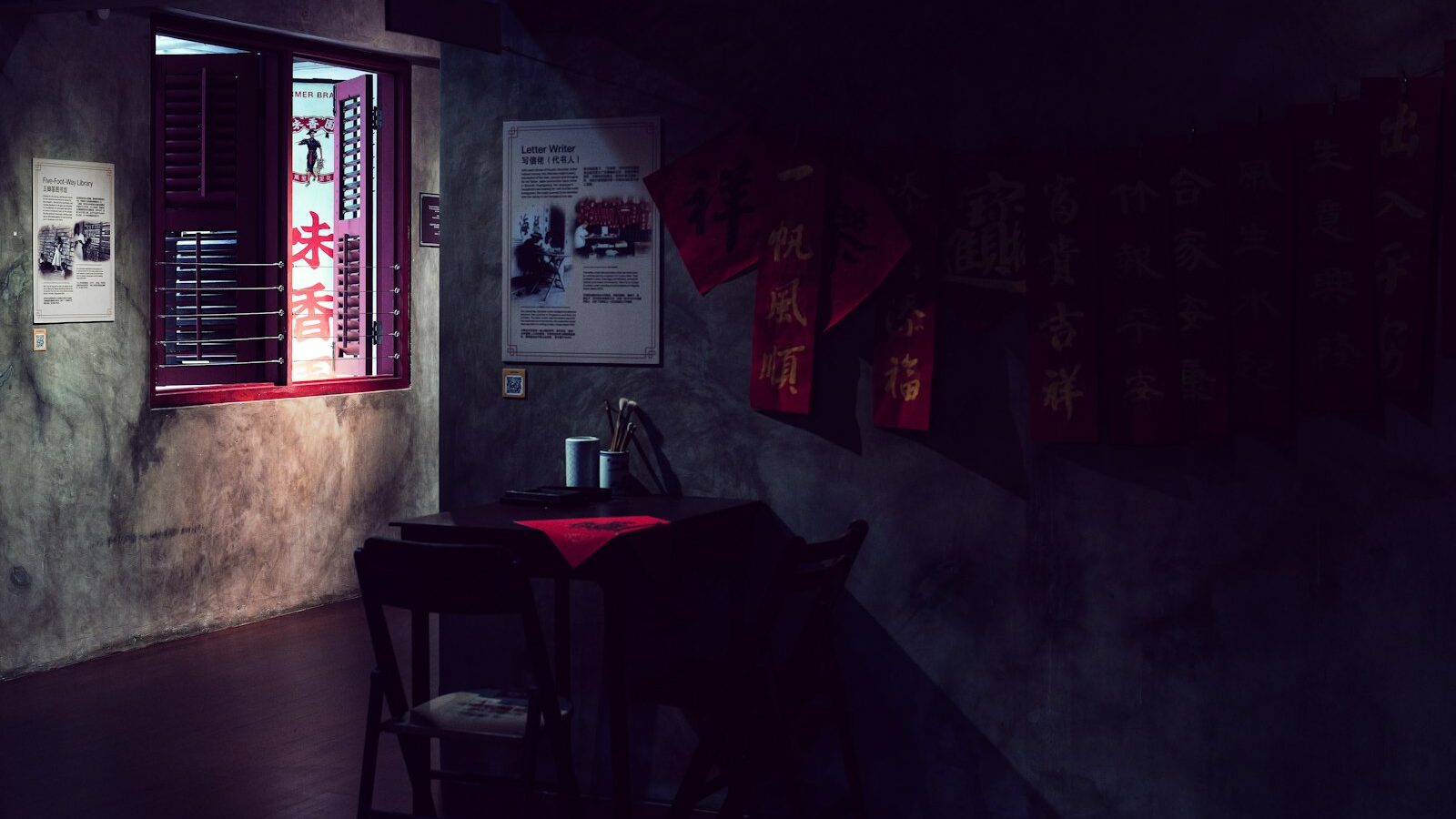
Bold, atmospheric and full of character, the dark and moody look is one of the most striking ways to decorate a home. A dark and moody interior swaps bright, airy neutrals for deep, saturated colours, rich textures and warm, layered lighting to create a space that feels intimate and dramatic. Here is how to pull it off in a Singapore flat without turning your home into a cave.
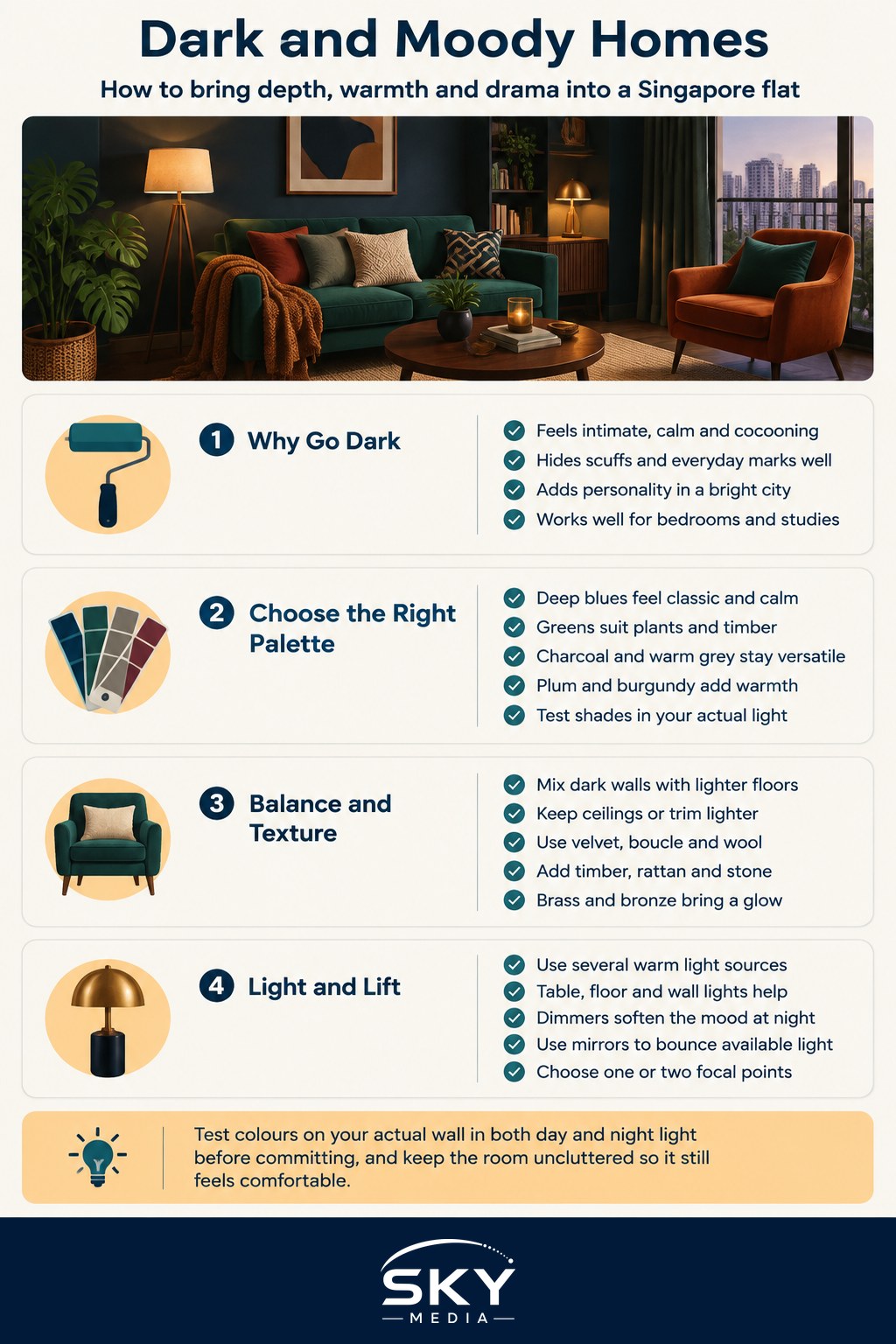
The Appeal of Going Dark
There is something reassuring about a deeply coloured room. Dark walls wrap around you, hide imperfections and make a space feel cocooning and calm. In a city of bright, glassy interiors, a moody room stands out as personal and grown up. The look is also surprisingly practical: deep colours disguise scuffs and everyday marks far better than pale walls, which is handy in a busy household.
The style works especially well in rooms where you want atmosphere rather than brightness, such as a bedroom, a study, a dining corner or a media area. It is less obvious in a room you use mainly for bright, practical tasks, though even a kitchen can carry darker cabinetry beautifully.
Choosing Your Dark Palette
The foundation of the look is colour, so choose it with care. You do not have to go pure black. In fact, the richest moody interiors usually lean on deep, complex colours.
- Inky blues and navy for a calm, classic depth.
- Forest and olive greens, which pair naturally with plants and timber.
- Charcoal and warm greys for a softer, versatile base.
- Deep plum, burgundy or oxblood for warmth and drama.
- Near black shades with a hint of brown or green, which feel warmer than flat black.
Test your chosen colour on the actual wall and look at it across the day. Singapore light is strong, and a shade can look very different at noon and at night.
Comparing Popular Moody Colours
Use this to match a colour to the mood you want.
| Colour | Mood it creates | Pairs well with |
|---|---|---|
| Navy blue | Calm, classic, grounded | Brass, warm timber, cream |
| Forest green | Natural, restful, rich | Rattan, plants, tan leather |
| Charcoal grey | Modern, soft, versatile | Pale wood, chrome, linen |
| Deep plum | Warm, cosy, luxurious | Gold, blush, dark wood |
| Warm near-black | Dramatic, intimate, bold | Marble, brass, deep green |
Balance the Darkness
The biggest risk with this style is a room that feels heavy or gloomy. The fix is contrast and balance. Let the dark colour dominate, then introduce lighter or warmer elements to lift it. A pale timber floor, a cream rug, brass hardware or a lighter ceiling all stop the room from closing in. Many people paint the walls dark but keep the ceiling and trim lighter, which preserves a sense of height. In a compact flat, you might paint only one or two walls, or reserve the deepest colour for a single feature area such as the bed wall.
Layer in Rich Textures
Texture is what makes a dark room feel luxurious rather than flat. Because colour recedes in a moody scheme, the tactile details carry the interest.
Textures that work hard
- Velvet and boucle upholstery, which catch the light softly.
- Natural timber and rattan for warmth against the dark.
- Metal accents in brass, bronze or matte black for a glint of shine.
- Marble or stone surfaces for a touch of cool elegance.
- Chunky knits, wool and linen in throws and cushions.
Mixing several textures in a similar tonal range gives the room depth without needing bright colour. A velvet cushion, a wool throw and a timber side table together feel far richer than a single flat surface.
Get the Lighting Right
Lighting can make or break a dark interior. Bright, cold overhead light flattens the mood and turns cosy into clinical. Instead, layer several warm, low level sources around the room. Table lamps, floor lamps, wall lights and even candles create pools of warm glow that flatter deep colours and add atmosphere. Choose warm toned bulbs, and consider dimmers so you can soften the light in the evening. The aim is warmth and shadow, not flat, even brightness. In darker rooms, more light sources at different heights beats one bright ceiling fixture every time.
Add Contrast and Focal Points
A moody room loves a hero moment. Let a single striking element stand out against the dark backdrop: a bold piece of art, a statement mirror in a brass frame, a leafy plant or a sculptural light. Metallics really sing against deep colours, so a brass lamp or gold framed picture adds instant polish. Plants are especially effective, as the green foliage pops against dark walls and softens the overall effect. Keep focal points few so each one has room to shine.
Making It Work in a Small Flat
You can absolutely go dark in a compact HDB flat, but a few tactics keep it comfortable.
- Use dark colour on a feature wall rather than every surface if you are nervous about it.
- Keep the floor and ceiling lighter to preserve a sense of space.
- Add mirrors to bounce what light you have and create depth.
- Maximise natural light by day with sheer or light curtains, then embrace the cosy mood at night.
- Choose a few larger pieces over many small ones, so the room feels considered rather than cluttered.
Common Mistakes to Avoid
A few missteps can tip the look from dramatic to dreary. Do not rely on a single bright ceiling light, which kills the atmosphere. Avoid matching everything in flat black, since a room with no contrast or texture feels lifeless. Do not forget to test colours in your own light before committing. And resist overcrowding, because a dark room needs a little breathing space to feel intentional rather than oppressive.
Bring It Together
A dark and moody interior is a bold, rewarding choice that brings warmth, intimacy and real personality to a home. Start with a deep, complex colour, balance it with lighter floors and warm metals, layer in rich textures, then light the room softly with several warm sources. Add a hero focal point or two, keep it uncluttered, and your Singapore flat becomes a cosy, dramatic retreat that feels anything but ordinary.
Explore more: Choosing paint colours for your HDB · How to plan lighting for every room · Interior design styles in Singapore
Frequently Asked Questions
Will dark walls make my small HDB flat feel smaller? Not if you balance them. Deep colours can feel cocooning rather than cramped, especially with a lighter floor and ceiling, mirrors and layered lamps. If you are nervous, start with one feature wall, such as behind the bed, and judge the effect before painting more.
Does dark paint need special preparation or extra coats? Often it needs more coats than a pale shade to look even, and prep matters. Ask your paint supplier about primers and finishes suited to the colour and your walls, and test a sample on the actual wall first.
Which room should I try the dark and moody look in first? A bedroom, study or dining corner is a good start, as these are rooms where atmosphere matters more than brightness. A small, quiet room lets you test the colour in your own light before committing the whole flat.
Will painting my walls dark make the room hotter? Interior wall colour has little effect on heat compared with sun exposure and airflow. What dark walls do change is brightness, since they absorb light and the room may feel dimmer. Keep curtains sheer by day and add warm lamps for the evening.
Can I repaint dark walls back to a light colour when I move out? Yes, but it usually takes primer and several coats to cover a deep shade. If you are renting, read your tenancy agreement and ask your landlord before painting, since you may be required to restore the original colour.