
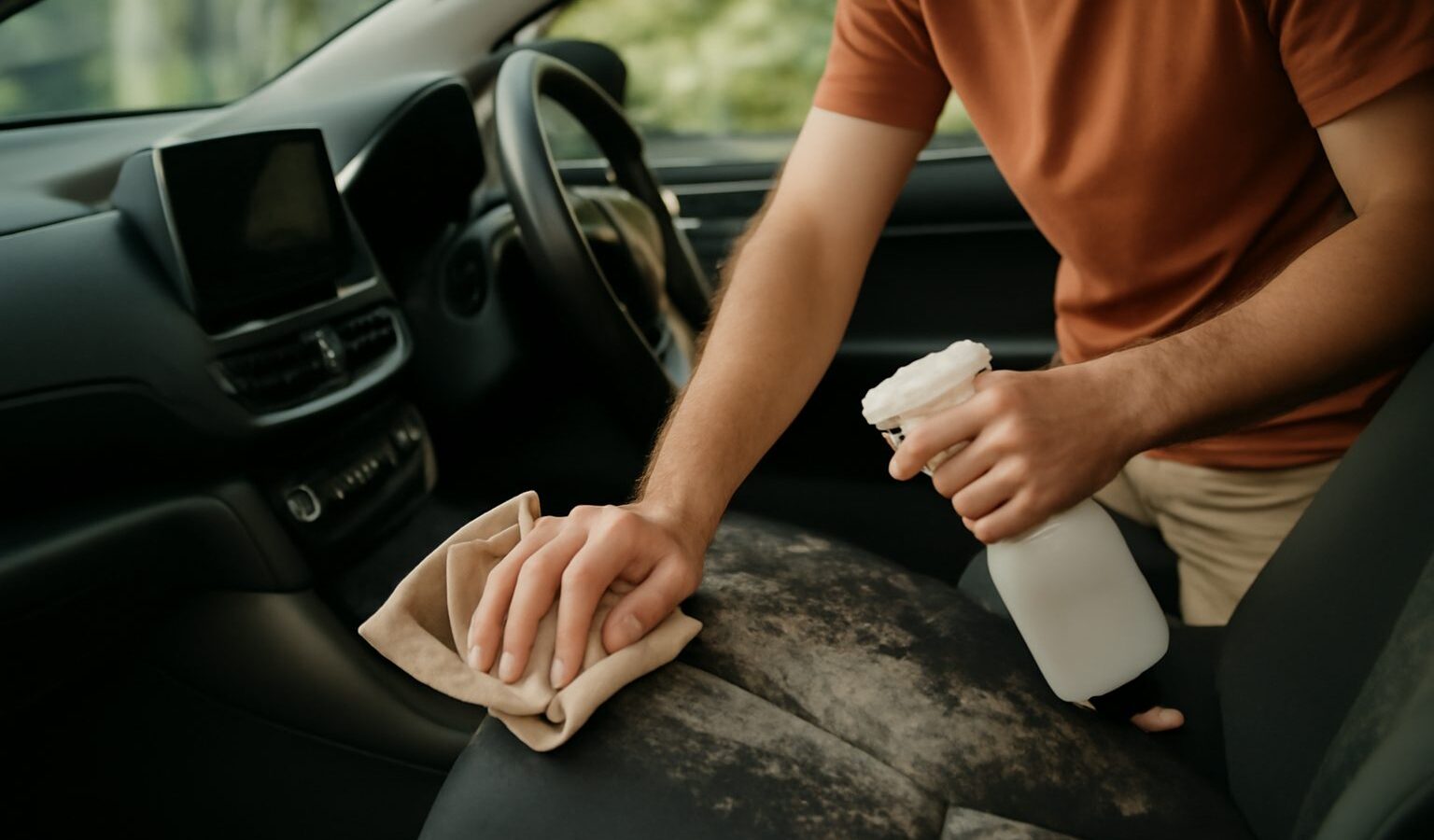
Few things sour a drive faster than opening the door to a damp, musty whiff. In Singapore’s year-round humidity, car mould is not a sign that you are careless; it is what happens when warm, wet air, a bit of moisture, and an enclosed cabin meet. Mould and mildew need only a little dampness and something to feed on, and a parked car in the tropics offers both in abundance. The good news is that the problem is almost always preventable and, caught early, very fixable. This guide walks through what causes that smell, how to keep it away, how to clean it safely yourself, and when the job is better left to a professional.
This is general information, not professional or medical advice. If mould is widespread or anyone in the car is sensitive to it, get expert help rather than pressing on.
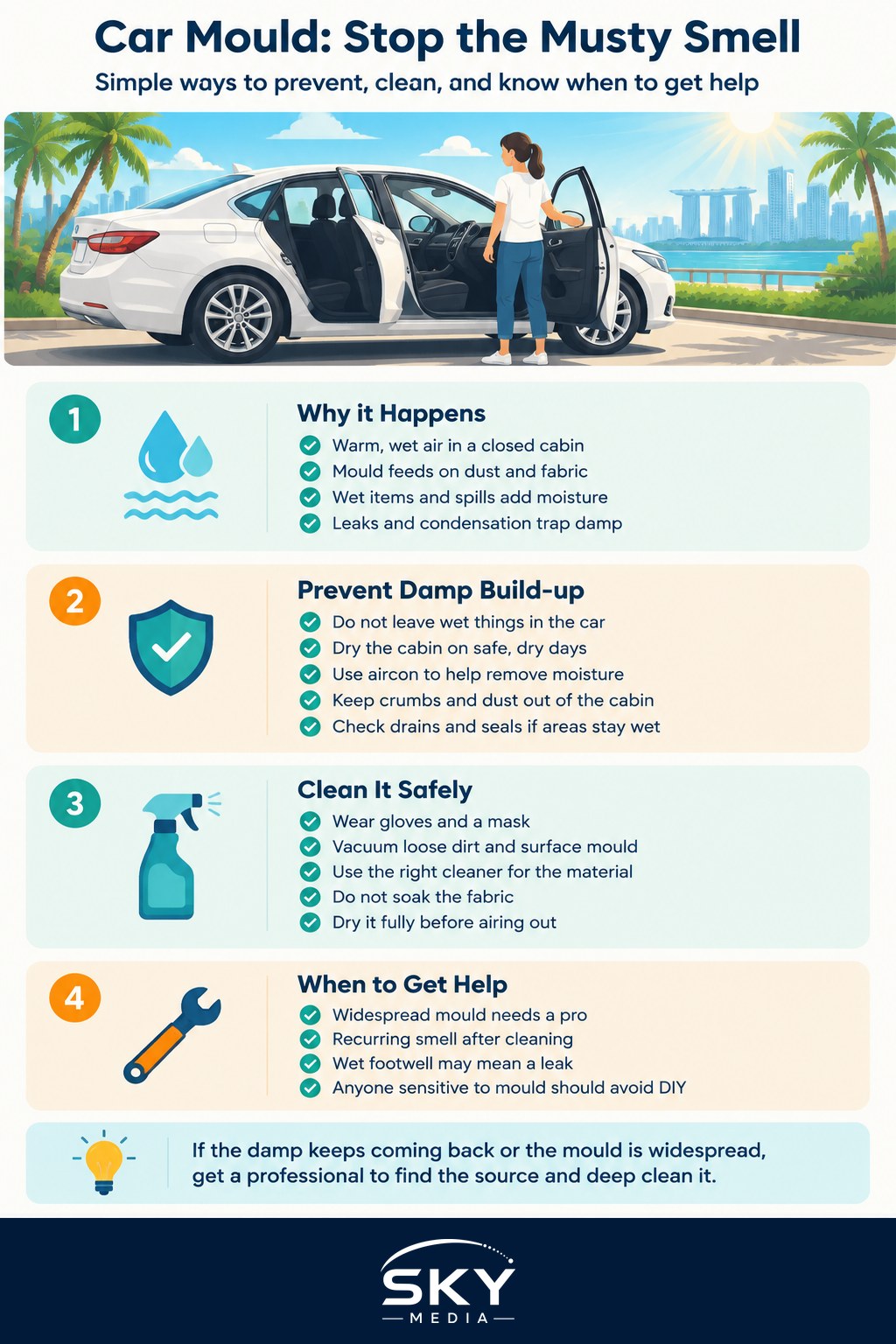
Why Cars Turn Musty in Singapore
Mould is a living thing. It grows wherever there is moisture, warmth, and a food source such as dust, fabric fibres, food crumbs, or the oils from our skin. A car in Singapore ticks every box. The heat is constant, the humidity is high, and a closed cabin traps damp air with nowhere to escape.
The moisture usually comes from a handful of everyday sources:
- Wet feet and umbrellas after a downpour, dripping onto carpets and mats.
- Damp clothes, towels, or gym kit left in the boot or on the seats.
- Spilt drinks or food that soaks into upholstery and is forgotten.
- A leak, such as a worn door or windscreen seal, a blocked aircon drain flooding the footwell, or a sunroof drain that has clogged.
- Condensation, when a cool cabin meets warm humid air and moisture settles on cold surfaces.
Because the cabin stays warm and shut for hours in a carpark, any trapped moisture lingers. Within days that damp turns into the telltale musty smell, and left longer it becomes visible mould on seats, carpets, the headliner, or the seat belts.
Keeping Damp and Mould Out
Prevention is far easier than a cure, and most of it costs nothing. Build these habits in and you will rarely smell mustiness again:
- Never leave anything wet in the car. Take home damp towels, umbrellas, and gym clothes rather than letting them sit.
- Dry the cabin out. On dry days, park in the shade and leave the windows open a crack where it is safe and legal, or run the fan on fresh air to move the damp out.
- Use your aircon to dehumidify. Running it removes moisture; finishing a drive with the cooling off and the fan on fresh air helps dry the system so it does not breed mould of its own.
- Clean up spills immediately and blot fabric dry rather than leaving it to soak in.
- Keep the interior free of crumbs and dust, since these feed mould. A regular vacuum removes the food source.
- Consider a moisture absorber, such as a tub of desiccant or silica gel sachets, in a cabin that sits unused for long stretches.
- Check the drains. Clear leaves and grime from the base of the windscreen so the aircon and sunroof drains do not back up.
If your footwell keeps getting wet with no obvious spill, do not just keep drying it. A blocked drain or a failing seal is likely, and a workshop should trace it before the damp does lasting damage.
Cleaning Mould Safely Yourself
If the smell is mild or you can see a small patch of mould, you can often tackle it at home. Work in a well-ventilated spot, open all the doors, and protect yourself, because disturbing mould releases spores.
- Protect yourself. Wear gloves and a mask, and work outdoors or in an airy area so you are not breathing in spores in a closed cabin.
- Vacuum first. Remove loose dirt, crumbs, and surface mould with a vacuum, ideally one with a good filter, then empty it outside.
- Clean the affected surfaces. Wipe hard surfaces with a suitable interior cleaner. For fabric and carpet, use a cleaner made for car upholstery and a soft brush, working gently so you do not spread the patch.
- Do not soak the fabric. Adding too much water makes the problem worse. Use as little liquid as you can and blot rather than drench.
- Dry it thoroughly. This is the most important step. Leave the doors open in the sun, run the fan, or use a fan indoors until the fabric is completely dry. Any leftover damp lets the mould return.
- Deodorise and finish. Once fully dry, air the car out fully. Avoid masking the smell with a strong fragrance while damp remains, as that hides the cause rather than fixing it.
Test any cleaner on a hidden patch first, and follow the product’s instructions. Avoid mixing cleaning chemicals, since some combinations give off dangerous fumes.
When to Call a Professional Detailer
Some situations are beyond a home clean, and there is no shame in handing them over. Here is a rough guide to who should do what.
| Situation | Handle it yourself | Call a professional |
|---|---|---|
| A faint musty smell, cabin still dry | Yes | Not needed |
| A small visible patch on a seat or mat | Yes, with care | If it keeps returning |
| Mould across seats, carpets, or headliner | No | Yes, deep clean |
| A wet footwell that will not stay dry | No | Yes, find the leak first |
| Anyone in the car reacts to the smell | No | Yes, remove it properly |
A professional detailer has the tools to extract moisture deep from carpets and seats, treat the source rather than the surface, and reach the padding under the upholstery where mould hides. If the damp comes from a leak, fix the leak at a workshop first, because even the best clean will not last while water keeps coming in. Widespread mould, or a smell that returns within days of cleaning, is a clear sign to bring in help.
Living With the Climate
You cannot change Singapore’s weather, but you can stop it colonising your car. The pattern is simple: keep the interior dry, never leave wet items inside, clear away the dust and crumbs that feed mould, and act on the first musty hint rather than waiting for a visible bloom. Treat a persistently wet footwell as a leak to trace, not a puddle to mop.
Do that, and car mould becomes a rare annoyance rather than a recurring battle. A dry, clean cabin is more pleasant to drive in, kinder to anyone sensitive to spores, and easier to keep that way once you are on top of it. In our climate a little routine care is the whole secret to a fresh-smelling car.
Related across Sky Media: How to Remove Musty Smells and Odours at Home
Frequently Asked Questions
Can car mould make me sick? Mould releases spores when disturbed, and people who are sensitive may react to the smell or spores. If mould is widespread or anyone in the car reacts, get professional help and speak to a doctor about symptoms.
Will leaving the windows slightly open stop my car from getting musty? It helps dry the cabin, but only where it is safe and legal to do so. It will not fix a leak or damp that is already trapped, so combine it with removing wet items and keeping the interior clean.
What can I put in my car to absorb moisture? A tub of desiccant or silica gel sachets can help, especially in a cabin that sits unused for long stretches. They support good habits like drying the interior but will not replace finding the source of dampness.
How do I find out where the water in my car is coming from? Common causes are a worn door or windscreen seal, a blocked aircon drain flooding the footwell or a clogged sunroof drain. If the footwell keeps getting wet with no spill, have a workshop trace the leak.
Does perfume or an air freshener get rid of a musty smell? No, it only masks it. Strong fragrance over damp hides the cause rather than fixing it. Dry the cabin thoroughly, remove the source of moisture and clean first, then air the car out.
Further reading: Car Sunroof Leaks: Causes, Drain Cleaning and Repairs