

Few things worry a pet owner faster than finding a mess on the floor and a subdued cat or dog beside it. Tummy upsets are common, and a single episode is often nothing serious. But knowing how to handle pet vomiting in Singapore, and when the runs and retching signal something urgent, helps you respond calmly and safely. This article is general information, not veterinary advice, and it is not a way to diagnose your pet at home. Vomiting and diarrhoea have many causes, some mild and some dangerous, so your vet is always the right person to assess anything that worries you.
The aim here is simple: to help you tell an ordinary passing upset from a warning sign, and to know exactly when to pick up the phone.
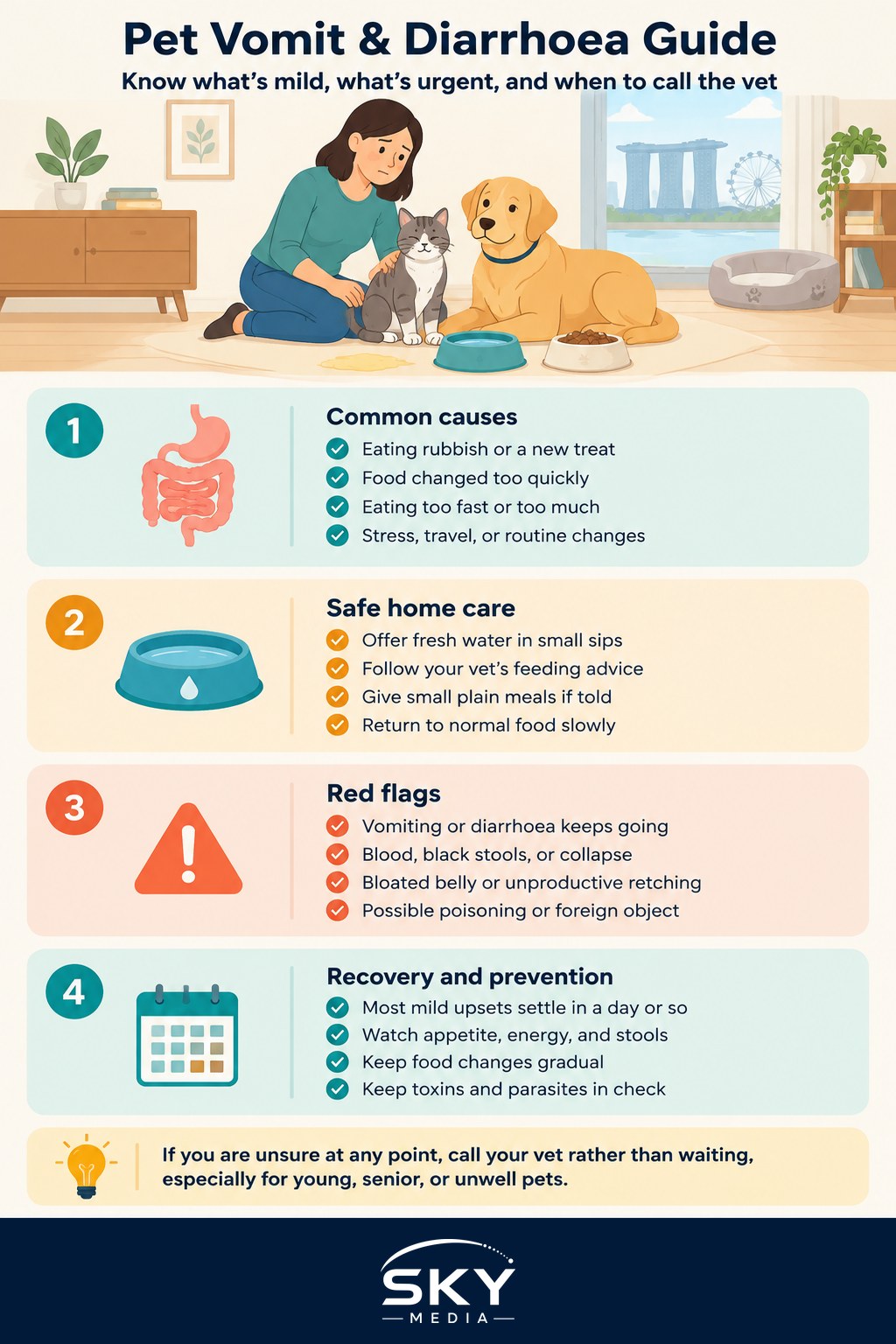
Common causes of tummy upsets
Cats and dogs get upset stomachs for all sorts of reasons. Some of the more common include:
- Eating something they should not, from bin scraps to a new treat their stomach dislikes
- A sudden change in diet, especially switching food too quickly
- Eating too fast or too much
- Hairballs in cats, or grass eating in dogs
- Stress, travel, or changes in routine
- Intestinal parasites or worms
- Infections, and in more serious cases, toxins, blockages, or underlying illness
Prevention helps a lot. Introducing any new food gradually over several days is far gentler on the gut, and our guide to choosing pet food in Singapore explains how to do this well. Keeping up with a sensible worming routine also reduces one common cause, and deworming and parasite schedules for pets covers what that looks like locally. Because our warm, humid climate suits parasites, staying on top of prevention is time well spent.
Home care for a mild, one-off upset
If your pet has a single vomit or one soft stool but is otherwise bright, alert, drinking normally, and behaving like themselves, a little supportive care at home is often reasonable while you keep a close eye on them.
- Make sure fresh water is always available, as small, frequent sips help
- Follow your vet’s advice on whether to briefly rest the stomach and what to feed
- If your vet advises reintroducing food, offer small, plain, easily digested meals as they direct
- Return to the normal diet slowly once things settle
- Keep the environment calm and let your pet rest
Do not give any human anti-sickness or anti-diarrhoea medicines, and never use leftover medication from another pet, as many human medicines are toxic to animals and dosing is easy to get wrong. If you are at all unsure whether home care is suitable, call your vet for guidance rather than waiting. Puppies, kittens, senior pets, and those with existing health conditions have far less reserve, so they should be seen sooner rather than watched at home.
Urgent red flags that need a vet
This is the part that matters most. Some tummy upsets are genuine emergencies. Contact your vet or a 24-hour emergency clinic straight away if you notice any of these:
- Repeated or persistent vomiting or diarrhoea, or being unable to keep water down
- Blood in the vomit or stool, or black, tarry stools
- Great lethargy, weakness, collapse, or a hunched, painful posture
- A swollen, hard, or bloated belly, or unproductive retching, which can signal a life-threatening emergency in dogs
- Suspected poisoning, or eating something toxic or a foreign object
- Signs of dehydration, such as tacky gums, sunken eyes, or low energy
- A very young puppy or kitten, a senior pet, or a pet with a known illness
- Fever, difficulty breathing, or ongoing pain
When in doubt, always err on the side of caution and call. Repeated vomiting can lead to dehydration quickly, and some causes, such as a blockage or poisoning, get worse by the hour. If you think your pet has swallowed something toxic, contact your vet immediately and, if you can, tell them what and how much. Our guides to foods that are toxic to pets and recognising a pet emergency can help you judge the situation, though they never replace a call to your vet.
Helping your pet recover and stay well
Most mild upsets pass within a day or so with rest and gentle care. As your pet recovers, reintroduce their normal food slowly, keep water available, and watch that their energy, appetite, and toilet habits all return to normal. If anything lingers, worsens, or recurs, book a check-up so your vet can look for an underlying cause.
Looking ahead, feed a consistent, quality diet, change foods gradually, keep bins and toxic items well out of reach, and stay on top of parasite prevention. A calm, watchful approach is your best tool. Trust what you know about your pet’s normal habits, act quickly on the red flags, and let your vet take the lead whenever something feels off.
Frequently Asked Questions
How long can a dog or cat go without eating after vomiting? It depends on the pet’s age and health, so there is no safe universal answer. Your vet may suggest a short rest for the stomach for a healthy adult, but puppies, kittens, seniors and sick pets have less reserve. Call your clinic if your pet refuses food or water.
Is yellow or foamy vomit a cause for concern? Occasional yellow or foamy vomit can happen when the stomach is empty, but repeated episodes, other symptoms or a subdued pet need a vet’s attention. Note what it looks like and how often it happens, and tell your vet.
Can I give my pet human anti-diarrhoea medicine? No. Many human medicines are toxic to cats and dogs, and doses are easy to get wrong. Call your vet for advice on what is safe. Only give treatment they prescribe, and never use another pet’s leftovers.
How do I switch my pet’s food without causing an upset stomach? Change over gradually across several days, mixing a little of the new food into the old and increasing it slowly. Follow the transition advice on the pack or from your vet. A sudden switch is a common cause of loose stools or vomiting.
What should I bring to the vet when my pet has diarrhoea? Bring a fresh stool sample if you can, plus notes on when it began, how often it happens and what your pet ate. Photos help, and so does the food label. Mention any possible toxins or objects your pet may have swallowed.