

A dropped square of chocolate, a grape rolling under the table, a bit of onion gravy licked off a plate: everyday kitchen moments can turn into emergencies for our pets. Many foods that are perfectly safe, even healthy, for us are genuinely dangerous for dogs and cats, whose bodies process things very differently. Knowing which foods are toxic to pets, and acting fast when one is eaten, can save a life. This article is general information to help you keep your home safe. It is not veterinary advice, and if your pet has eaten something dangerous, your first move should always be to call a vet.
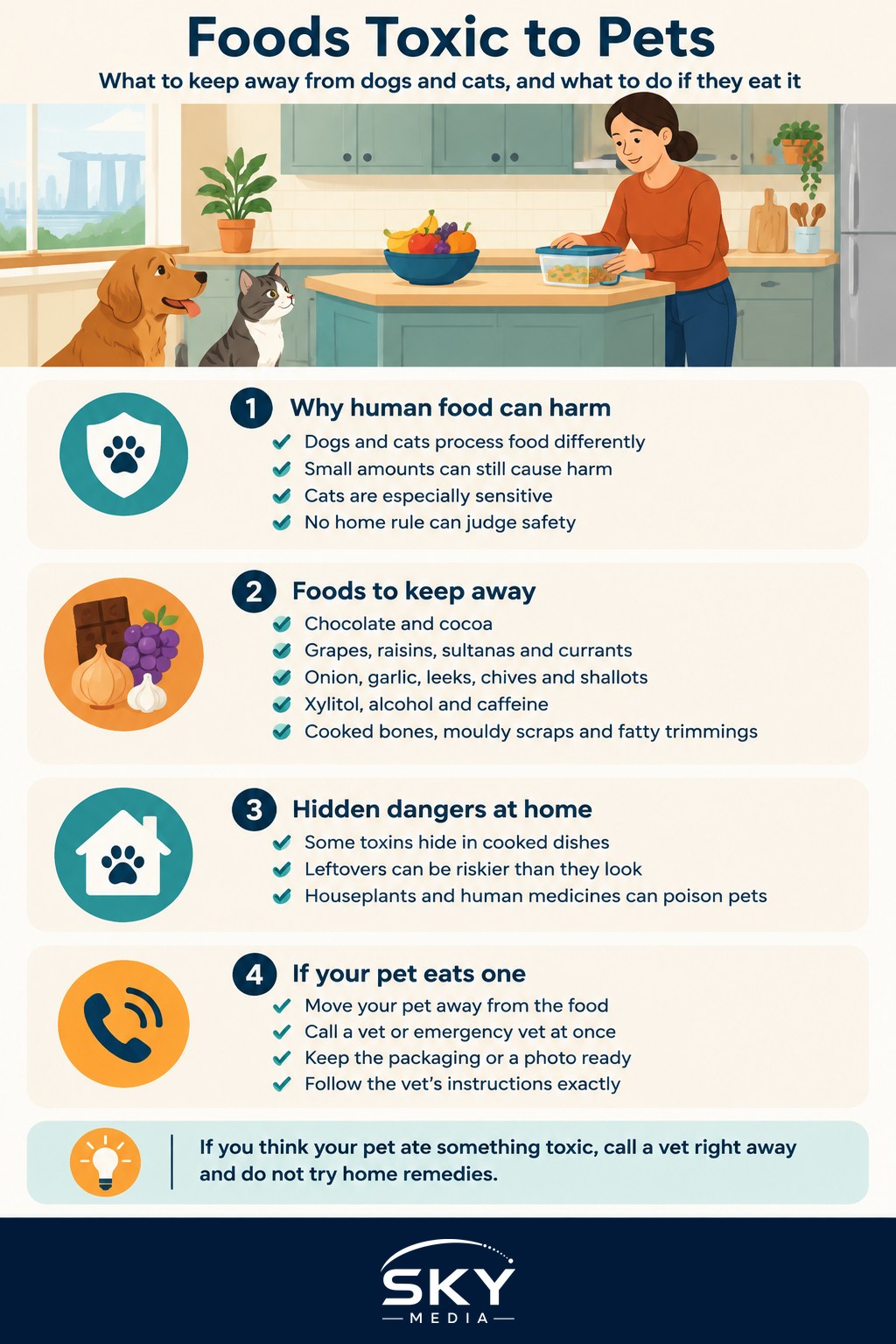
Why Some Human Foods Are Dangerous
Dogs and cats are not small people. Their bodies lack some of the enzymes we rely on to break certain foods down, and their smaller size means even a modest amount can have an outsized effect. Cats are especially sensitive because of how their livers handle certain compounds, and they are obligate carnivores whose systems are not built for many of the things in our kitchens.
Sensitivity varies with the individual animal, its size, its health and how much was eaten, which is exactly why there is no safe home rule of thumb to lean on. What causes a mild upset in one pet can seriously harm another. Because of this, you should never try to judge for yourself whether an amount was small enough to ignore. When something toxic has been eaten, the safe response is to treat it as urgent and let a professional guide you.
Common Foods to Keep Away From Pets
The list below covers foods widely recognised as risky for dogs, cats or both. It is not exhaustive, so when in doubt, keep human food out of reach and check before sharing.
- Chocolate, cocoa and anything containing them, which affect the heart and nervous system.
- Grapes, raisins, sultanas and currants, linked to kidney problems in dogs.
- Onions, garlic, leeks, chives and shallots, raw, cooked or powdered, which damage red blood cells.
- Xylitol, a sweetener found in sugar-free gum, sweets, some peanut butters, baked goods and even some medicines and toothpastes.
- Alcohol in any form, including raw bread dough that ferments in the stomach.
- Caffeine in coffee, tea, energy drinks and their grounds or leaves.
- Macadamia nuts, and large amounts of other nuts, which are fatty and hard to digest.
- Cooked bones, which can splinter, and fatty trimmings that can trigger serious illness.
- Mouldy or spoiled food scraps, which can contain harmful toxins.
- Avocado and unripe or green parts of tomatoes and potatoes.
Cats face particular danger from onion and garlic and from any lily plant, and both dogs and cats can be poisoned by many houseplants and by human medicines left within reach. Store the whole lot well out of paw and counter range.
How Toxic Foods Compare at a Glance
Different foods cause different kinds of trouble. The table below groups a few well-known culprits so you can see why none of them belong in a pet’s bowl. Treat every one as a reason to call your vet, not as a scale of what is acceptable.
| Food | Mainly affects | Examples in the home |
|---|---|---|
| Chocolate and caffeine | Heart and nervous system | Sweets, cocoa, coffee, tea, energy drinks |
| Grapes and raisins | Kidneys (dogs) | Fresh fruit, trail mix, fruitcake, buns |
| Onion and garlic family | Red blood cells | Gravy, stir-fries, curry pastes, seasoning |
| Xylitol | Blood sugar and liver | Sugar-free gum, sweets, some peanut butter |
| Alcohol and raw dough | Whole body, breathing | Drinks, fermenting bread dough |
Notice that some of these hide inside everyday cooked dishes and packaged snacks, not just in obvious treats. That is why a shared plate of leftovers can be riskier than it looks.
What to Do If Your Pet Eats Something Toxic
If you suspect your pet has eaten a toxic food, act quickly and calmly. Time matters, and the right response depends on what was eaten and how much.
- Move your pet away from the food and safely gather up whatever is left so no more is eaten.
- Call your vet, or the nearest 24-hour emergency vet, immediately. Do this even if your pet seems fine, because signs can be delayed.
- Have the details ready: what was eaten, roughly how much, when it happened, and your pet’s size and any health conditions. Keep the packaging or a photo to show.
- Follow the professional’s instructions exactly.
Do not try home remedies, and do not try to make your pet vomit unless a vet specifically tells you to. Inducing vomiting at home can be dangerous with certain substances and can cause more harm than the food itself. There is no safe DIY antidote to reach for, so let the experts direct you. If poisoning is suspected, calling a vet immediately is the single most important thing you can do.
Warning Signs of Poisoning
Symptoms can appear within minutes or take many hours, and they vary with the food. Contact a vet urgently if you see any of these, whether or not you saw your pet eat something:
- Repeated vomiting or diarrhoea, drooling, or refusal to eat.
- Weakness, wobbliness, tremors, twitching or seizures.
- Difficulty breathing, a racing or irregular heartbeat, or collapse.
- Extreme restlessness, disorientation or sudden lethargy.
- Pale or unusual gum colour, or blood in vomit or stool.
Any of these deserve an emergency call, and collapse, seizures or trouble breathing mean go now. It is always better to phone and be reassured than to wait and watch a treatable problem become a crisis.
Building Safer Habits at Home
Prevention beats any cure. Keep human food, sweets and medicines in closed cupboards, not on counters a determined nose can reach. Brief everyone in the household, including visitors and children, that feeding scraps under the table is not a kindness. Take extra care during festive seasons and gatherings, when chocolate, cake, grapes, alcohol and rich dishes are everywhere and a hungry pet has more chances to help itself. Choose treats made for pets, and ask your vet before adding any new human food to the diet. A little vigilance in the kitchen keeps mealtimes joyful instead of frightening.
Explore More
A quick, calm response makes all the difference in a poisoning scare, so it helps to prepare in advance. Learn how to recognise a pet emergency so you know when to act, and put together a pet first-aid kit with your vet’s numbers ready to hand. If your pet lives with a long-term illness, our guide to caring for a pet with a chronic condition covers safe daily routines too.
Frequently Asked Questions
How long after eating something toxic will my dog show symptoms? Signs can appear within minutes or only after many hours, depending on the food, so a pet that looks fine is not necessarily safe. Phone a vet straight away rather than waiting for symptoms. Giving the vet details of what was eaten, how much and when lets them judge how urgent it is.
Are Chinese New Year and festive treats dangerous for pets? They can be, since festive tables often hold chocolate, grapes, raisins, alcohol, rich dishes and sweets that are risky for pets. Visitors may not know the rules and slip scraps under the table. Keep treats out of reach and tell guests, including children, not to feed your pet.
Which common houseplants are poisonous to cats? Lilies are among the most dangerous for cats, and many other houseplants can also cause poisoning in both cats and dogs. Check any plant before bringing it home, and keep those you are unsure about out of reach. If your cat chews a plant, call a vet at once and bring a sample or photo.
Can I make my pet vomit at home after it eats something bad? No, do not induce vomiting unless a vet specifically tells you to. With some substances it can cause more harm than the food itself, and there is no safe do-it-yourself antidote. Call your vet or the nearest 24-hour emergency clinic first and follow their instructions exactly.
Is sugar-free gum really dangerous for dogs? It can be, because many sugar-free gums and sweets contain xylitol, a sweetener that affects a dog’s blood sugar and liver. Even a small amount can be a concern, so treat it as an emergency and call a vet. Check labels on sugar-free products, and keep bags and handbags where dogs cannot reach.
Further reading: Pet Bakeries and Dog Birthday Cakes in Singapore · Homemade Pet Food and Safety · How to Read Pet Food Labels