

Debate has a strong following in Singapore schools, and many parents are curious whether it would suit their child. Done well, it builds confident speaking, clear thinking and the ability to see both sides of an issue. If you are weighing up debate classes in Singapore or a school debating CCA (co-curricular activity), this guide explains how debating works, the formats your child is likely to meet, and how school and external options compare.
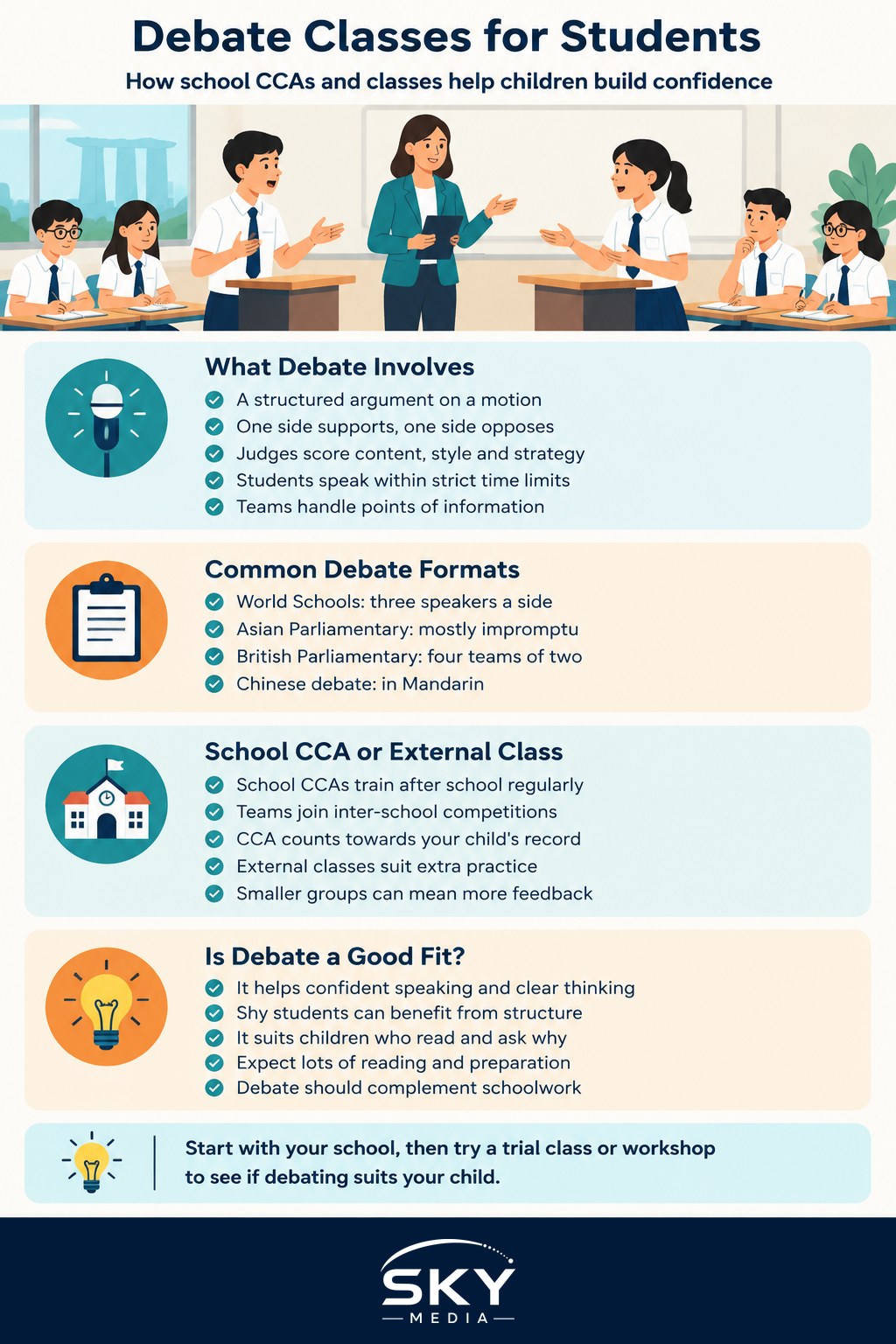
What Students Actually Do in Debate
A debate is a structured argument between two sides on a topic, called a motion, such as “This House would ban homework in primary school”. One team, the proposition or government, argues for the motion. The other, the opposition, argues against. Adjudicators (judges) decide which team argued more persuasively, based on content, style and strategy rather than which side they personally agree with.
Students are often assigned a side regardless of their own view. That is the point: it trains them to research, anticipate objections and reason carefully. Typical skills practised include:
- Building a clear case with arguments, examples and evidence
- Listening closely and rebutting the other side in real time
- Speaking within a strict time limit
- Working as a team, dividing roles and supporting each other’s points
- Handling “points of information”, short interjections from the other side during a speech
In “prepared” motions, teams know the topic in advance. In “impromptu” motions, they receive it shortly before the round and prepare under time pressure, which is a big part of the challenge.
Common Debate Formats in Singapore
Your child will likely meet one of a few established formats. Rules vary by competition, so treat the following as a general guide:
| Format | Structure | Where students commonly meet it |
|---|---|---|
| World Schools style | Two teams of three speakers, plus reply speeches, mix of prepared and impromptu motions | Many secondary school and junior college competitions |
| Asian Parliamentary | Government versus Opposition, three speakers each, mostly impromptu | Some school and tertiary tournaments in the region |
| British Parliamentary | Four teams of two, two on each side, competing against all others | Mainly university and some senior school events |
| Chinese debate (华文辩论) | Teams debate in Mandarin, with formats that may include cross-examination and free debate segments | Mother Tongue debate CCAs and Chinese language competitions |
In primary schools, debate is often introduced through simpler public speaking or class debates rather than a full competitive format. Secondary schools and junior colleges are where competitive debating CCAs are most active.
School Debating CCAs Versus External Debate Classes
There are two main routes, and many students do both at different stages.
School debating CCA
Most debaters in Singapore start through their school. Debating CCAs typically:
- Hold regular training sessions after school, led by teacher-in-charge and often external coaches engaged by the school
- Send teams to inter-school competitions and friendly matches
- Count towards your child’s CCA record, alongside other achievements and leadership roles
Selection varies. Some schools take in anyone interested, while others hold trials, especially for competitive teams. If you are still exploring options, our guide on choosing CCAs and extracurriculars explains how CCA selection generally works, and understanding CCA choices before secondary school is useful for Primary 6 families.
External debate classes
Private enrichment centres and independent coaches offer debate and public speaking classes for different ages. These can suit:
- Younger children not yet in a school debating programme
- Students whose school does not offer debate as a CCA
- Debaters wanting extra practice before a competition
- Children who are quiet in class and want to build confidence in a smaller group
When choosing a class, ask:
- Who teaches? Look for coaches with real competitive or adjudicating experience and experience with your child’s age group.
- What is the class size? Small groups give each child more speaking time and feedback.
- How is progress measured? Good classes give individual feedback on content and delivery, not just praise.
- Is it debate or general public speaking? Both are valuable, but they are different. Make sure the class matches what you want.
- What are the fees, trial options and make-up class policies? These vary widely between providers.
Competitions and What They Involve
Competitive debate in Singapore ranges from friendly inter-school matches to national championships for secondary schools and junior colleges, as well as international events for top teams. There are also Mother Tongue debate competitions, which can be a wonderful way to build language confidence.
Competitions usually involve several preliminary rounds, followed by knockout rounds for the strongest teams. Students may face a mix of prepared and impromptu motions on topics such as current affairs, technology, education, the environment and ethics. Preparation time can be intense near tournament dates, so families should plan around exams and other commitments. Our guide to balancing CCA and studies has practical tips for busy seasons.
Is Debate Right for Your Child?
Debate is not only for children who already love talking. Many shy students find the clear structure reassuring, because they know exactly when to speak and for how long. Signs your child might enjoy it include:
- They like asking “why” and arguing a point at the dinner table
- They read widely or follow the news
- They enjoy teamwork and friendly competition
- They want to improve their oral and writing skills
It is also worth being realistic. Debate involves a lot of reading, research and preparation. Losing rounds is common, especially at the start, and children need to accept feedback from adjudicators gracefully. If your child is anxious about public speaking, start with a low-pressure public speaking class or a school club before a competitive team.
How Debate Supports Schoolwork
The skills from debate overlap with what students practise in school:
- Oral examinations: structured speaking and giving opinions with reasons, which helps with oral components in English and Mother Tongue, including PSLE oral.
- Argumentative essays: planning points, using examples and addressing counter-arguments.
- General Paper and Humanities: at upper secondary and junior college levels, debate builds the habit of weighing perspectives and evidence.
- Life skills: listening, staying calm under pressure and disagreeing respectfully.
Debate should complement, not replace, steady schoolwork and rest. Encourage your child to keep a healthy balance, and talk to the teacher-in-charge if training starts to affect their wellbeing or studies.
Getting Started
If your child is curious, start by asking their school what debate or public speaking opportunities exist, from CCAs to class activities. Watch a few recorded debates together online and talk about which arguments were strongest. Then try a trial class or a holiday workshop to see if the spark is there. With encouragement and practice, debate can give your child a voice they carry well beyond school.
Frequently Asked Questions
What age is best to start debate classes? There is no single age. Primary-age children can begin with simple public speaking or class debates, while competitive formats are usually met at secondary level. Choose a class pitched at your child’s age, so it feels fun and not overwhelming.
Can debating help with Direct School Admission to secondary school? Some schools consider achievements and talents in activities such as debate or public speaking for DSA, but criteria vary by school and year. Check the school’s own DSA information and MOE guidance rather than assuming.
Will debate make my child argumentative at home? It teaches children to argue with reasons and listen to the other side, which can change how they talk at home. Set the ground rules early: debate skills are for structured discussion, and respect still comes first.
Does my child need strong English to join a debate CCA? Good English helps, but debate is also a way to improve it. Many schools welcome beginners, and Mother Tongue debate offers another route. Start with a school club or class where the coach is patient with learners.
How much time does a debate CCA take each week? It varies by school and by the competition season, and training can intensify near tournaments. Ask the teacher-in-charge about the schedule, and plan around exams so your child can balance the commitment with schoolwork and rest.