
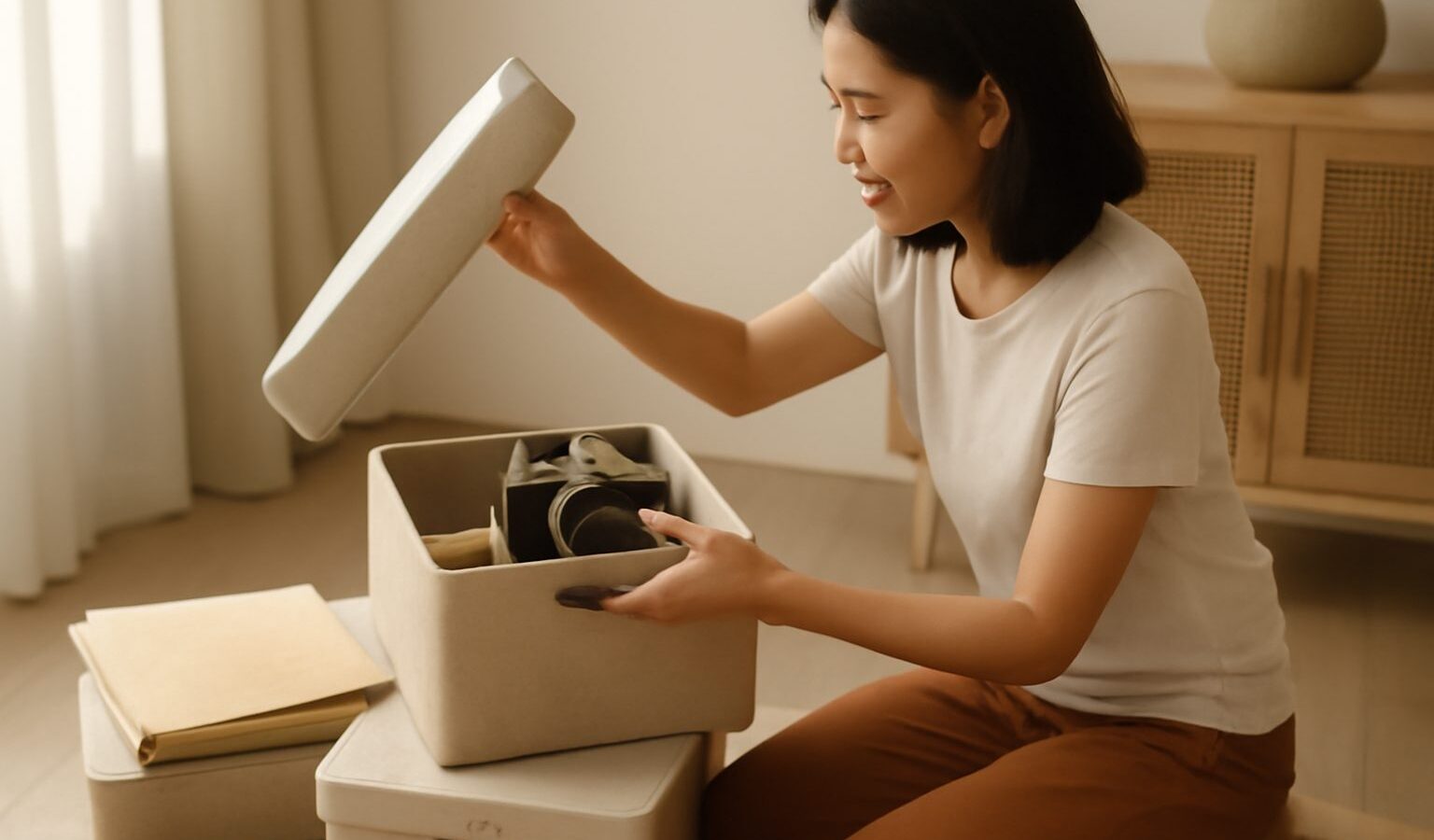
Sentimental items are the hardest things to declutter. A child’s first drawings, old letters, wedding cards, a grandparent’s watch, holiday photos, the concert tickets you kept for no clear reason. Each one carries a memory, so tossing it feels like tossing the memory itself. Yet keeping everything means boxes of clutter you never open, and in Singapore it means watching humidity slowly destroy the very things you were trying to preserve. The goal with sentimental keepsakes singapore homes accumulate is not to keep nothing, and not to keep everything, but to keep the meaningful few well and let the rest go with a clear conscience.
This guide covers how to decide what to keep and, just as importantly, how to store it so our tropical climate does not ruin it.
Deciding what to keep
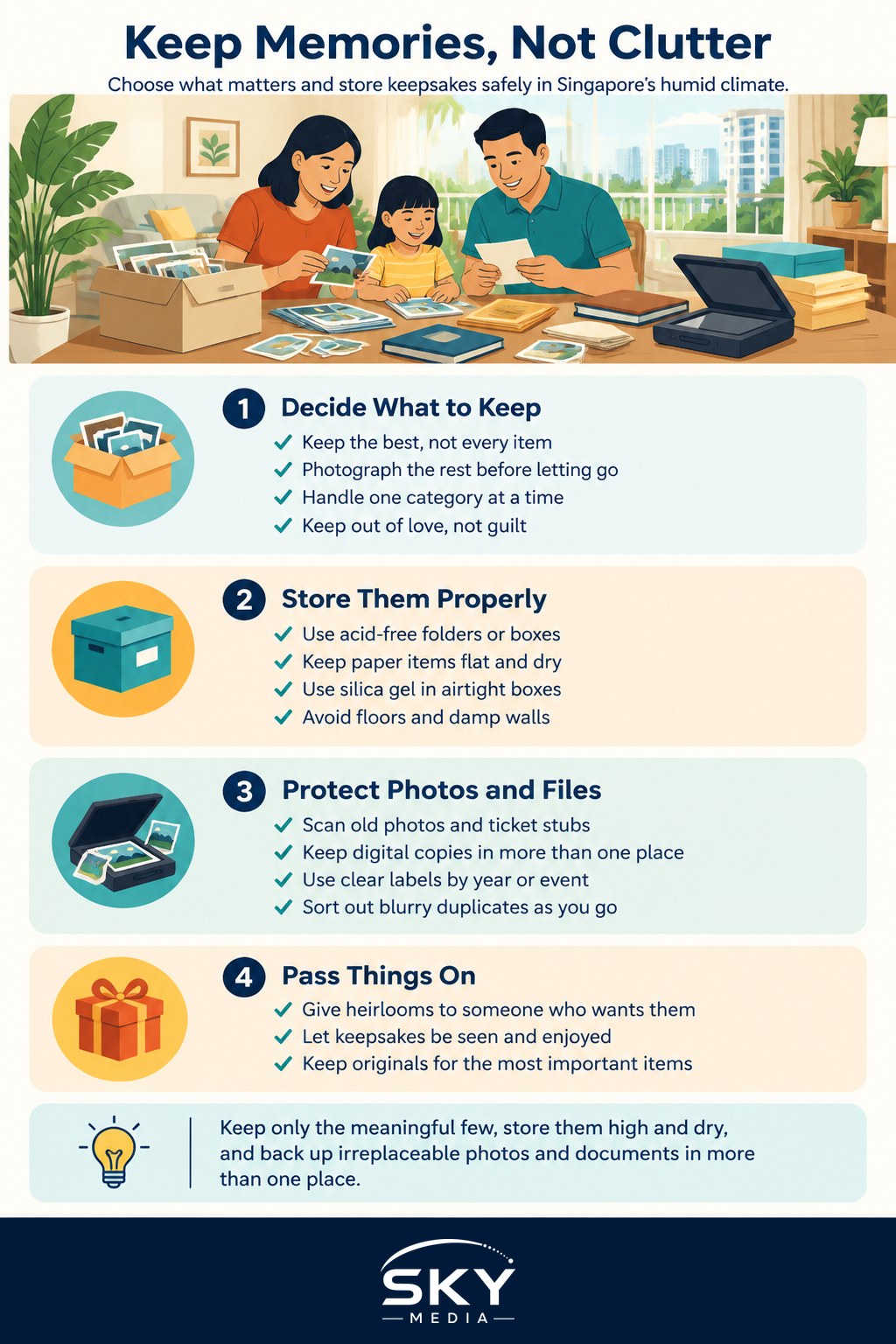
Give yourself permission to keep less than you own but more than pure logic suggests. Sentimental clutter is emotional, so the usual decluttering rules bend a little here. The trick is to be selective rather than all or nothing. Instead of keeping every one of your child’s forty drawings, keep the five best and photograph the rest. Instead of a whole box of a loved one’s clothing, keep one meaningful piece. The memory lives in you, not in the volume of objects, and a small curated collection honours it far better than a bulging carton you never open.
Handle one category at a time rather than the whole pile at once, which is overwhelming. Do the letters one day, the photos another, the children’s schoolwork another. For each item, ask whether it genuinely sparks a strong memory or feeling, or whether you are keeping it out of guilt or habit. Guilt is not a good enough reason to give something permanent house room in a small flat. Our guide to decluttering your home has a gentle method you can apply to the emotional categories too.
Digitising is the single most powerful tool for sentimental clutter, because it lets you keep the memory while releasing the physical object. Photograph or scan children’s artwork, cards, certificates and ticket stubs, then keep the originals of only the very best. Bulky items like trophies or a wedding bouquet can be photographed and then let go, with the picture preserving the memory in a fraction of the space. We will come back to digitising photos, since they deserve special care.
Consider passing some things on rather than storing them. A relative may treasure a family heirloom you have no room for, and giving it to someone who will display and enjoy it is often better than sealing it in a box. Keepsakes are meant to be seen and remembered, not entombed.
Storing keepsakes safely in a humid climate
Once you have decided what to keep, storage is where Singapore homes go wrong. Our constant humidity, occasional leaks and warm temperatures attack paper, photos, fabric and metal. Damp foxes and yellows paper, breeds mould on photos and cloth, and rusts metal. A shoebox on top of a wardrobe is not protection, it is a slow death sentence for anything precious.
Use the right materials. For paper items, letters, certificates and children’s artwork, store them flat in acid-free folders or boxes, since ordinary cardboard and plastic can be acidic and speed up yellowing over time. Interleave photographs with acid-free tissue rather than letting them stick face to face, which they will do in humidity. Keep fabric items clean and dry before storing, and avoid sealing damp textiles away, which guarantees mould.
Control moisture inside the container. An airtight box with a few silica gel packs or a moisture absorber is the core of good keepsake storage in our climate. The airtight seal keeps humid air out, and the desiccant pulls down whatever moisture is trapped inside. Check and replace the packs periodically, because a saturated pack does nothing. Avoid storing keepsakes on the floor where a burst pipe or a monsoon leak could soak them, and keep them away from external walls that suffer condensation. A high, dry interior shelf is better than a low corner. Our guide to protecting your home from humidity has more on keeping stored items dry.
For documents that are both sentimental and important, birth and marriage certificates, property deeds, wills, treat them differently from ordinary keepsakes. Keep the originals in a fireproof and waterproof document box or a bank safe deposit box, and keep digital copies as backup. Our guide to paper and document organisation at home covers how to sort and protect the paperwork that actually matters.
Digitising and backing up your memories
Old printed photos are the keepsake most at risk in Singapore, because the emulsion is vulnerable to humidity and the images fade with time. Digitising them protects the memory permanently and makes it shareable. You can scan photos yourself with a flatbed scanner or a phone scanning app, or use a photo digitising service for large collections. Scan at a decent resolution so the images stay usable, and take the chance to sort out the blurry duplicates as you go.
A digital archive is only as safe as its backup. A single copy on one laptop or phone can be lost to a dropped device, theft or a failed hard drive. Follow a simple rule of keeping the memory in more than one place, for example on your computer plus a cloud service, or on an external drive kept separately. Storing valuables and irreplaceable data in more than one location is the same principle whether it is a hard drive or a family heirloom.
Curate rather than hoard your digital files too, since a folder of thousands of unsorted images is nearly as useless as a box you never open. A little labelling by year or event turns a data dump into an archive you will actually browse. Keep the meaningful few, store them well against our climate, and back up what cannot be replaced, and your memories will outlast the objects that carry them.
Frequently Asked Questions
How many keepsakes should I actually keep? There is no set number, but keep fewer than you own and more than pure logic suggests. For example, keep the five best of a child’s forty drawings and photograph the rest. A small curated collection honours the memory better than a box you never open.
Is it okay to throw away things from a loved one who has passed away? Yes, it is okay, and keeping one meaningful piece, such as a single item of clothing, can hold the memory better than a whole box. Take your time, do one category at a time and consider passing items to relatives who would treasure them.
How do I scan old photos at home? Use a flatbed scanner or a phone scanning app, or a photo digitising service for large collections. Scan at a decent resolution so the images stay usable, discard blurry duplicates as you go and label files by year or event.
Where should I keep original birth and marriage certificates? Treat them differently from ordinary keepsakes. Keep originals in a fireproof and waterproof document box or a bank safe deposit box, with digital copies as backup. Avoid shelves where leaks or damp can reach them.
Can I store keepsakes in a regular cardboard box or shoebox? It is not ideal, as ordinary cardboard can be acidic and speed yellowing, and a shoebox offers no protection from damp. Use acid-free folders or boxes inside an airtight container with silica gel, kept on a high, dry shelf.