

For anyone with a sweet tooth, a dessert buffet in Singapore is one of the most indulgent ways to spend an afternoon. Instead of a few spoonfuls of cake at the end of a big meal, the whole spread is about pastries, chocolate, kueh, ice cream and tarts. Hotels, cafes and restaurants run them in many forms, from elegant afternoon tea spreads to themed chocolate or fruit buffets that appear for limited seasons.
Because menus, prices and operators change often, this guide does not rank individual venues. Instead, it explains the main types of dessert buffet, what to check before you book, and how to plan your visit so you leave happy rather than overwhelmed. For broader buffet coverage, see our editorial shortlist of the best buffets in Singapore.
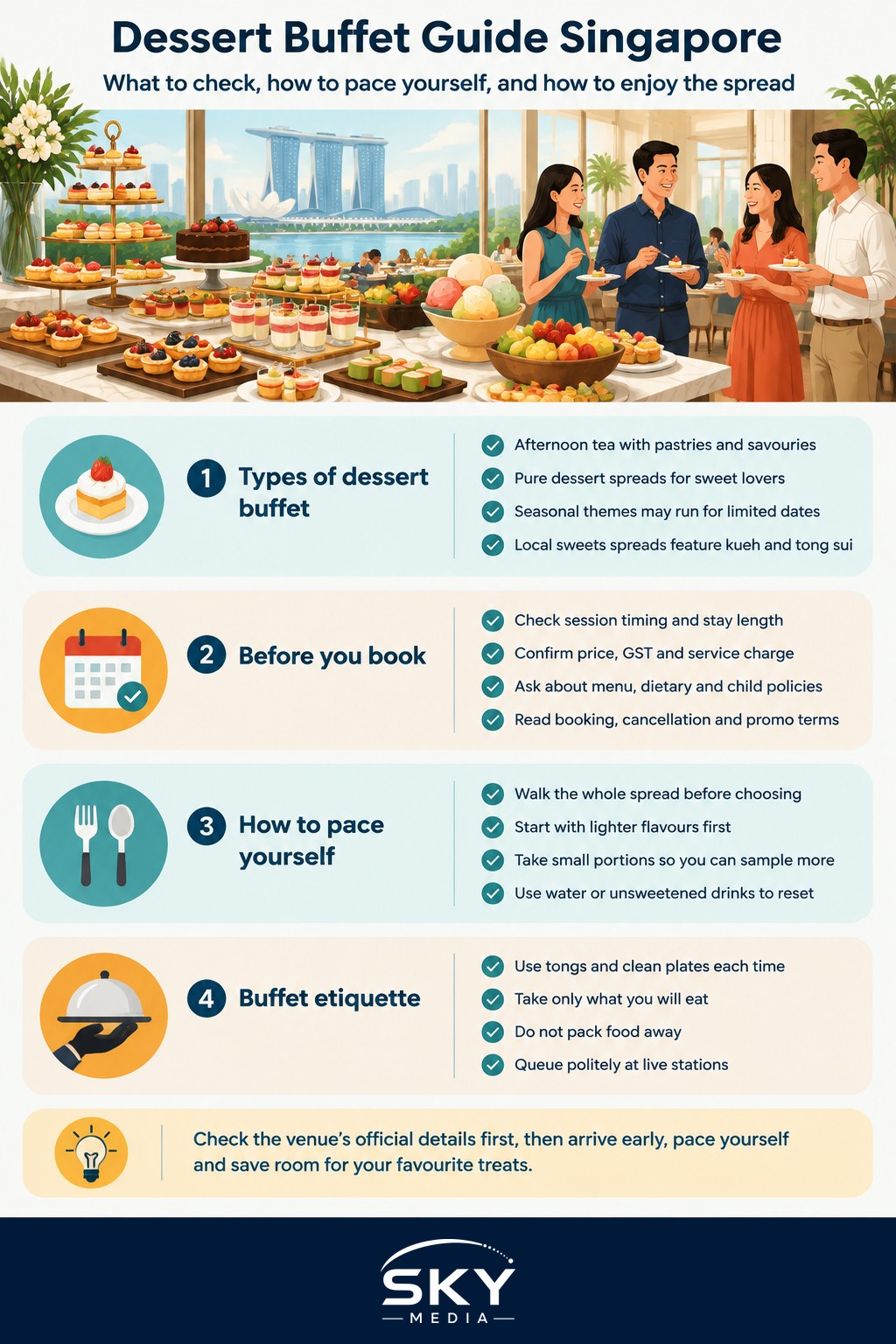
The Main Types of Dessert Buffet
Not every sweet buffet is the same. Knowing the format helps you choose one that fits your taste and occasion.
| Buffet type | What it usually offers | Best for | Things to note |
|---|---|---|---|
| Afternoon tea buffet | Pastries, scones, finger sandwiches, tea and coffee | Relaxed catch-ups, birthdays, visiting family | Often has a few savoury items alongside sweets |
| Pure dessert buffet | Cakes, tarts, chocolate, ice cream, puddings | Dedicated sweets lovers | Fewer savoury choices, so pace yourself |
| Themed or seasonal buffet | Spreads built around one ingredient or festival | Trying something new | Usually limited-time, so check current dates |
| Dinner buffet with large dessert section | Full meal plus an extensive sweet corner | Groups with mixed preferences | Dessert may vary in depth between venues |
| Local sweets spread | Kueh, nyonya cakes, tong sui, chendol style desserts | Fans of local flavours and older relatives | Often appears at festive or heritage-themed events |
Some hotels and cafes also run chocolate-focused spreads, durian-themed sessions or fruit buffets during particular seasons. If durian is your thing, our guide to durian tasting and buffets covers that niche in detail.
What to Check Before You Book
A little research prevents disappointment. Before you book, look for the following on the venue’s official website or by calling them directly.
- Session timing. Many dessert buffets run in fixed time slots, often in the afternoon. Note the start time and how long you can stay.
- Price and what it includes. Check whether the advertised price includes service charge and GST, and whether drinks like coffee, tea or soft drinks are free-flow or charged separately.
- Weekday versus weekend. Prices and menus may differ between weekdays, weekends and public holidays.
- Current menu. Menus rotate. If you are going for a particular cake or theme, confirm it is still running.
- Dietary options. Ask about halal certification, vegetarian, eggless, nut-free or gluten-free choices if anyone in your group needs them. Do not assume a dessert is free from an allergen; ask staff each time.
- Children’s pricing. Some venues have child rates based on age or height. Check the current policy.
- Booking and cancellation terms. Popular weekend slots fill up quickly, and some places require deposits or charge for no-shows.
- Card and bank promotions. Some venues run discounts with specific credit cards or dining apps. Terms change, so read the fine print.
How to Pace Yourself at a Sweet Buffet
The biggest mistake at a dessert buffet is filling up on the first few items. A simple plan helps you taste more and feel better afterwards.
- Walk the whole spread first. Look at every station before taking anything. Decide on your must-try items.
- Start with lighter flavours. Fruit tarts, sorbets, panna cotta and light sponge cakes come before rich chocolate and cream.
- Take small portions. Half a slice or one piece of each item lets you sample widely. You can always return for favourites.
- Break up the sweetness. If there are savoury bites, fresh fruit or plain bread, use them to reset your palate.
- Drink unsweetened tea, coffee or water. Sugary drinks add up quickly and dull your taste for desserts.
- Save room for made-to-order items. Crepes, waffles or plated desserts prepared fresh often taste best, so leave space for them.
- Slow down. A dessert buffet is a social occasion. Chat between rounds and let your body catch up.
Dessert Buffet Etiquette
Buffets work best when everyone is considerate. A few simple courtesies:
- Use the serving tongs and clean plates each time you go back to the spread.
- Take only what you will eat. Many venues discourage food wastage, and some may charge for excessive leftovers. Check the venue’s policy.
- Do not pack food away. Buffet food is usually for dining in only.
- Let children explore with supervision. Help younger kids reach high trays and handle tongs safely.
- Be patient at live stations. Queue politely and avoid hovering over chefs.
Making It Special for Celebrations
Dessert buffets are a popular choice for birthdays, anniversaries, baby celebrations and festive meet-ups.
- Mention the occasion when you book. Some venues offer a small gesture, such as a candle or message plate, but do not count on it.
- Choose a time when everyone can attend. Afternoon sessions suit families with young children and older relatives.
- Consider dietary needs early. If someone has diabetes or a strict diet, choose a buffet with fruit, savoury options or unsweetened drinks, and let them decide what suits them.
- Plan photos. Pretty dessert stations make great backdrops. Take your photos before the crowd thins the trays.
A Note on Sugar and Moderation
A dessert buffet is a treat rather than a regular meal. Health Promotion Board (HPB) resources encourage Singaporeans to watch sugar intake as part of a balanced diet. If you are managing a health condition, speak to your doctor or dietitian about how occasional indulgences fit your plan. Eating slowly, choosing smaller portions and balancing the rest of your day with lighter meals and some movement can help.
Alternatives When You Want Something Smaller
Not every sweet craving needs an all-you-can-eat session. If a full buffet feels like too much, a dessert cafe offers more control over portions and cost. Our round-up of dessert cafes and sweet treats in Singapore is a good place to start, especially for a quick after-dinner stop.
Whichever you choose, the best dessert buffet in Singapore is the one that matches your taste, your group and your appetite. Check the details before booking, arrive with a plan, and enjoy every bite.
Frequently Asked Questions
Is it worth paying for a dessert buffet instead of a dessert cafe? It depends on your appetite and group. A buffet suits big sweet eaters and celebrations because you can sample widely, while a dessert cafe gives more control over portions and cost. Compare the price per head with what you would realistically eat.
How much dessert can I realistically eat at a buffet? Less than most people expect, because rich items fill you up fast. Walk the whole spread first, take half portions and start with lighter flavours such as fruit tarts and sorbets. Unsweetened tea or water helps you taste more.
Are dessert buffets suitable for people with diabetes? They can be an occasional treat, but they are heavy on sugar. Someone managing diabetes should ask their doctor or dietitian how occasional indulgences fit their plan, and may prefer fruit, savoury items and unsweetened drinks.
Can I take leftover cake home from a buffet? Usually not. Buffet food is normally for dining in only, and some venues may charge for excessive leftovers. Take only what you will eat, and ask the venue about its policy if you are unsure.
How do I check if a dessert buffet is halal or allergy-safe? Ask the venue directly, and check for halal certification on its official website or by calling. For allergies, never assume a dessert is free from an allergen. Ask staff each time, because menus rotate and cross-contact can happen.